
Blind Spots, Mirrors, and the Gaps Every Driver Should Know
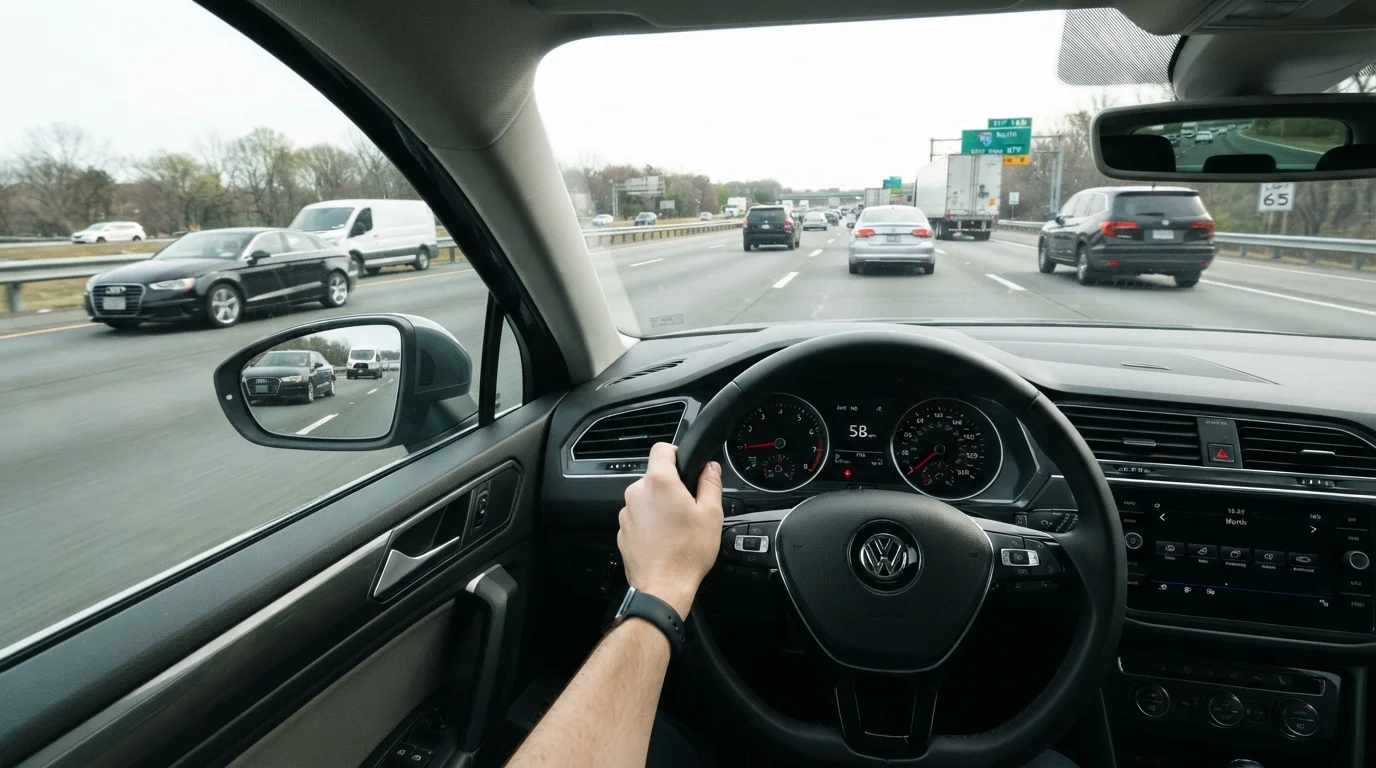
Photo credit: TrendingFaqs.com
In this article
Every vehicle has zones mirrors cannot cover. Learn how to position mirrors correctly and when to rely on a head check instead.
What a blind spot actually is
A blind spot is any zone around your vehicle that your mirrors cannot show you. Every car has them. The size and position of those zones depend on the vehicle's body shape, mirror size, and how the mirrors are adjusted.
The most dangerous blind spots sit on both rear quarters of the car, roughly where the rear doors meet the trunk or cargo area. A vehicle in that zone, even a full-size sedan, can disappear completely from all three mirrors simultaneously. Motorcycles and bicycles are especially easy to miss there because of their narrow profile.
Larger vehicles have larger blind spots. A pickup truck or SUV has rear quarters that extend further back and outward than a compact car. Drivers who switch between vehicle classes should recalibrate their sense of where these zones fall.
Blind spot
A zone around a vehicle that cannot be seen through any mirror from the driver's normal seated position. All vehicles have at least two primary blind spots on their rear quarters.
Head check
A brief glance over the shoulder toward the intended direction of travel, used to visually verify the blind spot before a lane change or merge. Also called a shoulder check.
Blind spot monitoring
An electronic driver assistance feature that uses sensors to detect vehicles in the side blind zones and alerts the driver, usually through a light in or near the side mirror.
Rear quarter
The area of a vehicle between the rear door or rear window and the tail of the car, on either side. This is where the most significant blind spots typically occur.
For new drivers building their foundational habits, safe driving habits often skipped over covers how blind spot awareness fits into the broader picture of early road safety.
How to position your mirrors to cover the most ground
Most drivers set their side mirrors so they can see the edge of their own car. That feels natural, but it wastes mirror real estate on metal you already know is there.
A more effective approach: sit in your normal driving position, then adjust each side mirror outward until you can barely see the rear corner of your vehicle at the inside edge of the mirror. From the driver's seat, that pushes the mirror's field of view further into the lane beside you, where other traffic actually travels.
The rearview mirror should show the full rear window with minimal adjustment. If your car has a day/night lever on the rearview mirror, use the night position after dark to cut glare from headlights behind you. The night driving safety guide has more on managing visibility after dark.
Even with mirrors set correctly, a gap remains on both sides. That gap is why the head check exists.
| Primary blind spot location | Rear quarters on both sides of the vehicle |
| Head check duration | Approximately 1 second |
| Mirrors needed for basic coverage | 3: left side, right side, rearview |
| Blind spot monitoring reliability | Variable; may not detect cyclists or pedestrians |
| When a head check is required | Every lane change, merge, or highway exit |
The head check: when and how to use it
A head check (also called a shoulder check) means briefly turning your head toward the window on the side you intend to move toward, to see into the zone your mirrors cannot cover. It takes about one second and should happen every time you change lanes, merge, or exit a highway.
The check should be a quick glance, not a prolonged look. Your eyes need to return to the road ahead within a second or two. Turning too far or holding the glance too long shifts your steering and can pull the car toward whatever you are looking at.
When merging onto a highway from an on-ramp, the head check is especially important because vehicles may be approaching quickly from behind. The article on safe merging techniques explains how to time that check alongside your speed adjustment.
Bad weather and low light make blind spots more dangerous, not less, because vehicles in those zones are harder to see even when you do look. See driving in rain, fog, and snow for habits to carry into those conditions.
Technology that helps, and where it stops
Blind spot monitoring systems use radar or ultrasonic sensors to detect vehicles in your side blind zones and alert you, typically with a light in or near the side mirror. Some systems add an audible alert or steering resistance if you signal while a vehicle is present.
These systems are useful, but they have limits. Most are calibrated for other cars and trucks traveling at highway speeds. Cyclists, pedestrians, or very slow-moving objects may not trigger them reliably. Sensor coverage also varies by vehicle, and sensors can be affected by dirt, ice, or damage.
Treat blind spot monitoring as a backup, not a replacement for mirror positioning and head checks. A clean, properly adjusted mirror costs nothing and works in any condition. Small safety components like mirror glass and sensor housings should be kept clean and free of cracks for these systems to work correctly.
Following distance also affects how much time you have to react when you do spot something. The two-second rule for following distance gives you the room to respond safely after a blind spot check.

Author
Cars Editorial Team
Cars Editorial Team is the collective byline for our editorial team and contributor network. Articles published under this byline or an editorial pen name are researched, written, and reviewed according to our editorial standards for clarity, consistency, and independence before publication.
View all articles →