
A Reference Guide to Common Travel Terms and Acronyms
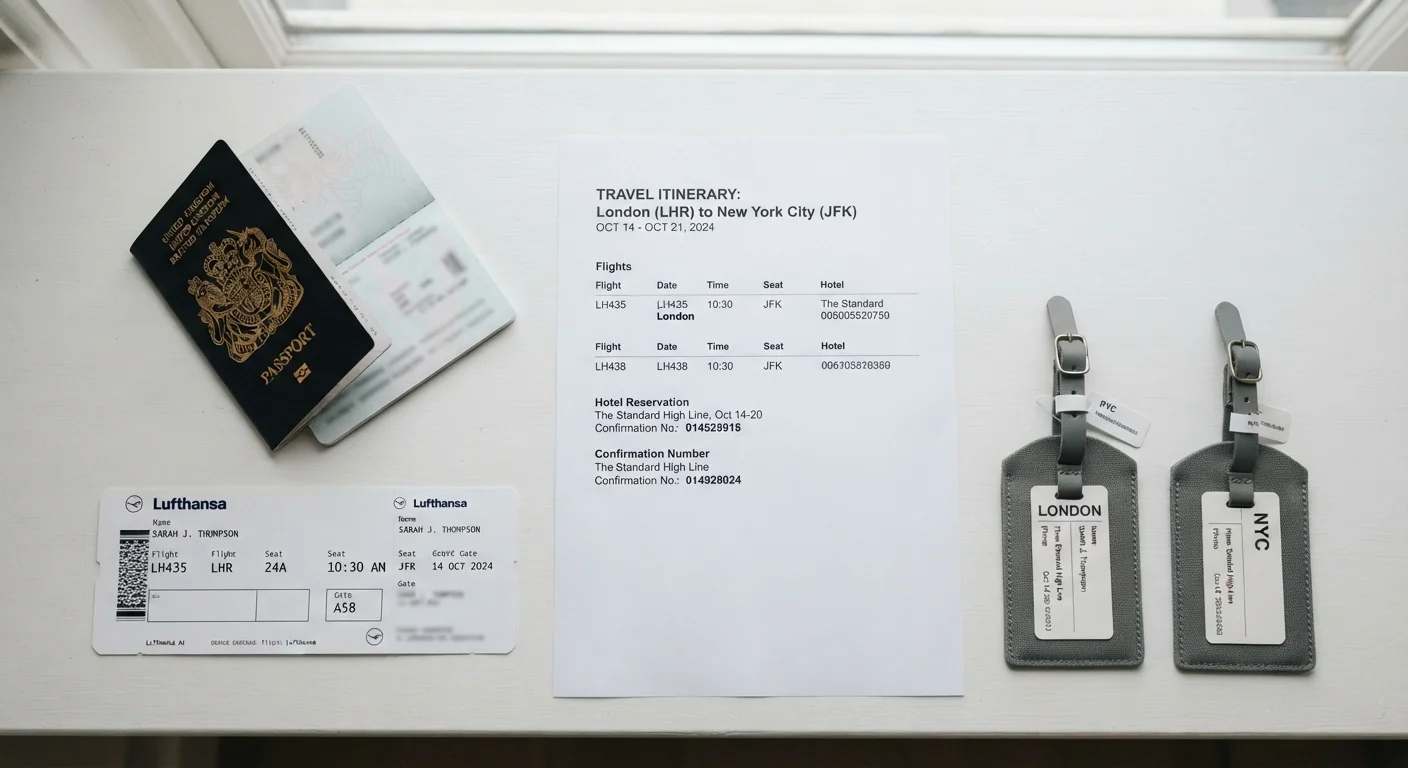
Photo credit: TrendingFaqs.com
In this article
GDS, OTA, open-jaw, codeshare: a plain-language glossary of travel industry terms every trip planner should know.
Why travel jargon matters for trip planning
Travel booking sites, airline confirmations, and hotel contracts use a shorthand that insiders take for granted. For everyone else, terms like GDS, open-jaw, and codeshare can turn a straightforward itinerary into a puzzle. Understanding what these terms actually mean helps you read your booking correctly, catch errors before they become problems, and communicate clearly with airlines, hotels, and travel agents.
This guide covers the terms that come up most often when planning a trip, arranged by category so you can scan straight to what you need.
Codeshare
An arrangement where two airlines sell seats on the same flight under different flight numbers. The plane is operated by one airline while the other markets and sells tickets for it.
GDS
Global Distribution System. A network platform that connects travel agents and booking sites to real-time inventory for flights, hotels, and car rentals from multiple suppliers simultaneously.
OTA
Online Travel Agency. A website that aggregates and sells travel products on behalf of airlines, hotels, and other providers. Booking through an OTA differs from booking directly with a supplier.
Open-jaw itinerary
A flight booking where you arrive in one city and depart home from a different city. The traveler arranges their own transport between the two cities.
PNR
Passenger Name Record. A unique alphanumeric code in an airline's reservation system that ties all the details of your booking together. Also called a confirmation code or record locator.
ESTA
Electronic System for Travel Authorization. A mandatory pre-travel clearance required for nationals of countries in the U.S. Visa Waiver Program who want to enter the United States.
Fare class
A letter code assigned to each airline ticket that determines its price, flexibility, and applicable rules. Different fare classes can exist within the same cabin on the same flight.
FIT
Fully Independent Traveler. A term used in the travel industry for a person who books each component of a trip separately rather than through a pre-packaged tour product.
Flights: the terms behind your ticket
Airline tickets carry more information than most travelers read. Here is what the common terms mean.
- Codeshare - Two airlines sell seats on the same physical flight under their own flight numbers. You might book through one carrier and board a plane operated by a different one. Check the operating carrier before you travel, because baggage rules and seat selection tools can differ.
- Open-jaw itinerary - You fly into one city and depart from a different city on the return. For example, flying into Paris and home from Rome. Ground transport between those two cities is your responsibility to arrange.
- Interline agreement - A formal arrangement between two airlines allowing them to check your luggage through to your final destination even when your flights are on separate tickets from separate carriers.
- PNR (Passenger Name Record) - The booking reference number that ties your whole reservation together in the airline's system. You will see it on your confirmation email, often labeled as a confirmation code or record locator.
- Segment - A single takeoff-to-landing leg of a journey. A one-stop flight from Chicago to London via Dublin has two segments.
- Fare class / booking class - A letter code that determines the rules and price attached to your seat, not just the cabin. Two passengers in economy class on the same flight may have different fare classes, with different change and cancellation policies.
| What PNR stands for | Passenger Name Record |
| What OTA stands for | Online Travel Agency |
| What GDS stands for | Global Distribution System |
| What ESTA stands for | Electronic System for Travel Authorization (U.S. Customs and Border Protection) |
| What FIT stands for | Fully Independent Traveler |
| U.S. travel advisory levels | 4 levels (1 = Normal, 4 = Do Not Travel) (U.S. Department of State) |
Hotels, OTAs, and distribution
The systems that hotels and booking platforms use to manage inventory have their own vocabulary.
- OTA (Online Travel Agency) - A third-party website that sells travel products on behalf of airlines, hotels, and other suppliers. Examples include any major travel booking aggregator site. Booking through an OTA versus directly with the hotel can affect loyalty point accrual, cancellation flexibility, and customer service routing if something goes wrong.
- GDS (Global Distribution System) - A centralized network that travel agents and OTAs connect to in order to search and book airline seats, hotel rooms, and car rentals in real time. The major GDS networks include Amadeus, Sabre, and Travelport, though travelers rarely interact with them directly.
- Room block - A set of rooms held by a hotel for a group at a negotiated rate, common for weddings and conferences. Rooms in a block typically must be booked by a cutoff date or they release back to general inventory.
- Rate parity - A contractual obligation some hotels accept requiring them to list the same base room price across all distribution channels. In practice, differences still appear through member rates, packages, and perks.
Cruises and package travel
Cruise bookings and package vacations have their own set of terms that affect how you pay, what is covered, and what options you have if plans change.
- Port of embarkation / debarkation - The city where your cruise begins (embarkation) and ends (debarkation). These can be the same port on a round-trip itinerary, or two different ports on a one-way cruise.
- Positioning cruise - A sailing that moves a ship from one region to another between seasons, such as from the Caribbean to the Mediterranean in spring. These itineraries are typically longer and may be priced differently from standard sailings.
- FIT (Fully Independent Traveler) - A trip planned without a pre-packaged tour, where the traveler books each component separately. Travel agents sometimes use this term when pricing custom itineraries.
- Land package / land tour - A bundle that combines hotels, ground transport, and sometimes guided tours into a single product, without flights. Often sold as an add-on to a cruise or as a standalone trip.
- Deadhead - In cruise terms, a leg of a voyage where the ship travels without passengers, usually to reposition. Travelers will not book a deadhead segment; it is an operational term you may see in itinerary notes.
Documentation and entry requirements
Visa rules, passport requirements, and entry regulations change and vary by country. Always verify current requirements with your government's official travel advisory service and the destination country's embassy or consulate before you travel. The terms below explain what these documents and processes are.
- Visa on arrival - A travel authorization granted at the port of entry rather than applied for in advance. Not available for all nationalities at all destinations. Check eligibility before booking.
- eTA (Electronic Travel Authorization) - A digital pre-entry permission required by some countries, such as Canada, for visa-exempt foreign nationals arriving by air. It is different from a visa but still mandatory. Applying takes minutes, but do it before you book flights.
- Travel advisory - An official government assessment of safety and entry conditions at a destination. The U.S. Department of State issues these on a four-level scale for countries worldwide.
- ESTA (Electronic System for Travel Authorization) - The U.S. pre-travel authorization required for nationals of Visa Waiver Program countries visiting the United States. Visitors must have an approved ESTA before boarding a flight to the U.S.
This article is for general informational purposes only. Entry requirements, visa rules, and travel conditions change frequently. Always verify current requirements with official government sources before making travel decisions.

Author
Travel Editorial Team
Travel Editorial Team is the collective byline for our editorial team and contributor network. Articles published under this byline or an editorial pen name are researched, written, and reviewed according to our editorial standards for clarity, consistency, and independence before publication.
View all articles →