
Carrying Cash Abroad vs. Relying on Cards
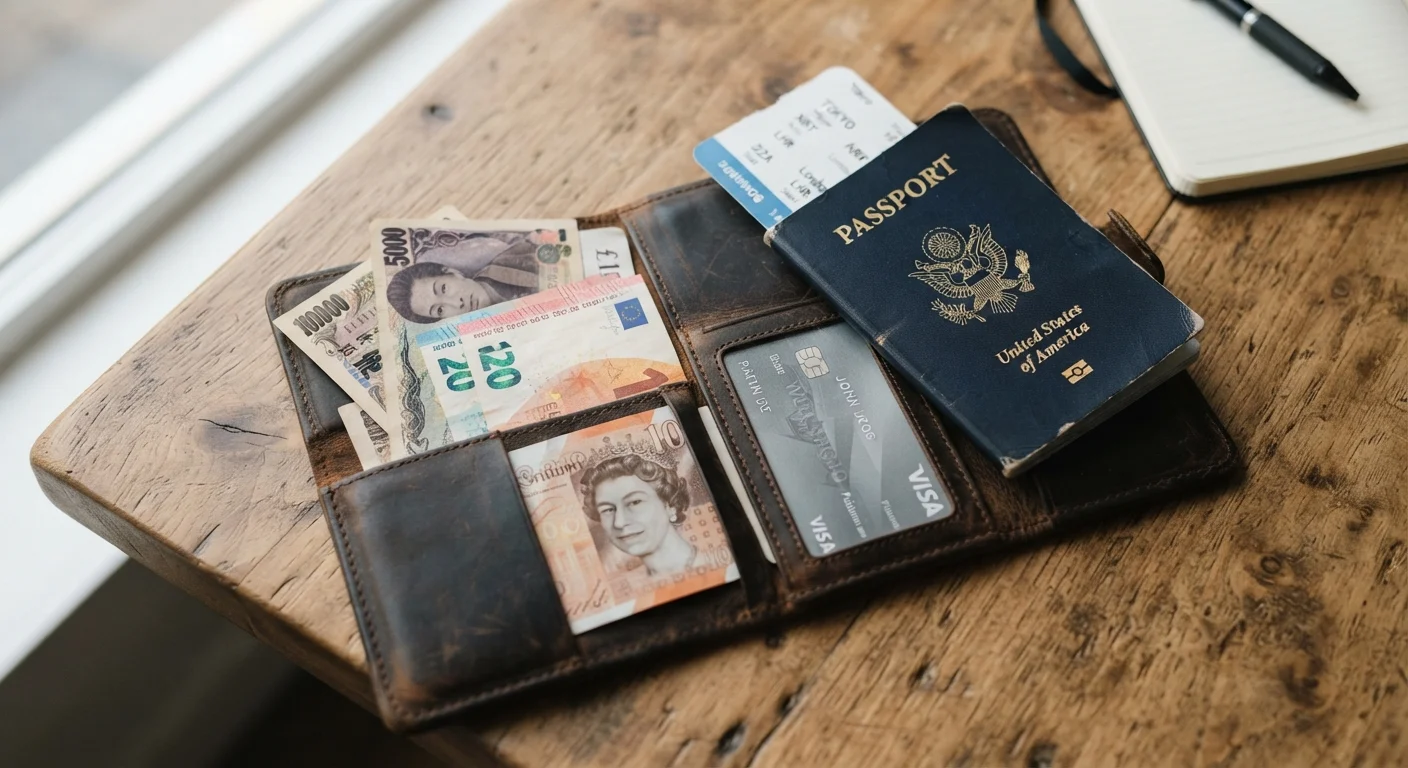
Photo credit: TrendingFaqs.com
In this article
Each approach has trade-offs depending on your destination. Here's a side-by-side look at using cash versus cards when traveling internationally.
Key Takeaways
- Cash is widely accepted but carries theft and loss risk with no recovery option.
- Cards offer fraud protection and convenience but can fail at smaller vendors or in rural areas.
- Foreign transaction fees and dynamic currency conversion can quietly increase card costs abroad.
- A combination of both methods covers most international travel scenarios more reliably than either alone.
- Always notify your bank before travel to avoid cards being blocked for suspicious activity.
How cash and cards each work abroad
When you pay with local currency, the transaction is straightforward: no network, no conversion at the register, no additional fee layers. You exchange dollars before departure or at an ATM upon arrival, and the money works wherever cash is accepted. The catch is that you absorb whatever exchange rate your bank or exchange bureau applies, and any cash you lose is simply gone.
Cards work differently. Your issuer converts the foreign-currency charge to dollars at a wholesale interbank rate, then may add a foreign transaction fee, typically 1 to 3 percent per purchase. That margin is real money on a longer trip. Some cards carry no foreign transaction fees at all, which changes the math considerably. Cards also create a digital record of every purchase, which helps with trip budgeting and is useful if a dispute arises.
One common pitfall is dynamic currency conversion (DCC). Some foreign merchants and ATMs offer to charge you in dollars instead of local currency. This sounds convenient but usually applies a worse exchange rate than your card issuer would. Choosing local currency at the terminal consistently produces a better rate. For a broader look at how exchange costs can add up quietly, see commonly overlooked travel expenses.
Where cash has the advantage
Plenty of the world still runs on cash. Local markets, street food stalls, rural guesthouses, shared minibuses, and small family restaurants in many countries either do not accept cards or add a surcharge for card use. Southeast Asia is a clear example: major hotels in Bangkok or Ho Chi Minh City take cards, but much of the day-to-day spending at local vendors does not. The trade-offs across Southeast Asian countries vary enough that checking payment norms for each specific destination matters.
Cash also works during outages. If a card network goes down, a point-of-sale terminal fails, or your card gets blocked by a fraud alert while you are mid-trip, having local currency available keeps things moving. Some travelers find a power dynamic benefit too: paying cash at a market or small shop can make price negotiation more natural in cultures where bargaining is expected.
| Criterion | Carrying Cash | Relying on Cards |
|---|---|---|
| Acceptance | Universal, including small vendors | Broad in cities, limited in rural areas |
| Theft recovery | None | Cancel and dispute; zero-liability policies common |
| Exchange rate transparency | Varies by bureau or ATM | Near-wholesale rate; fees vary by card |
| Foreign transaction fees | Absorbed at point of exchange | 0% to 3% per transaction depending on card |
| Budget control | Tangible spending limit | Requires active tracking |
| Multi-country use | Requires re-conversion at each border | Single card works across countries |
| Tech dependency | None | Requires network and working terminal |
Where cards have the advantage
Cards carry consumer protections that cash simply cannot match. If a merchant charges you incorrectly or a card is stolen and used fraudulently, you have a dispute process. Cash stolen from your wallet has no equivalent path to recovery. This matters especially in unfamiliar cities where pickpocketing is common.
Cards also eliminate the need to carry large sums or find a reputable exchange bureau on arrival. Withdrawing cash from ATMs as needed keeps you from over-converting currency you may not spend. For multi-country trips, cards with no foreign transaction fees are particularly practical because each currency change with physical cash costs another round of exchange fees.
Before departure, notify your bank and card issuers of your travel dates and destinations. A fraud alert triggering a card block in a foreign country is a genuinely disruptive experience, and a quick phone call or app notification beforehand usually prevents it. Packing the right documents for international travel is equally important; the international travel documents checklist covers what to have in order before you leave.
The practical case for carrying both
1%-3%
Typical foreign transaction fee per card purchase
Most major U.S. card issuers charge between 1 and 3 percent on purchases made in a foreign currency, though some travel-oriented cards waive this fee entirely.
$5-$10
Average ATM withdrawal fee abroad
Between your home bank's out-of-network fee and the foreign ATM operator's fee, a single withdrawal commonly costs several dollars, making fewer larger withdrawals more cost-efficient than many small ones.
2%-7%
Typical dynamic currency conversion markup
When a foreign terminal offers to charge you in U.S. dollars instead of local currency, the conversion rate applied often carries a markup in this range compared to standard interbank rates.
Most experienced travelers settle on a hybrid approach because the two methods cover each other's gaps. A reasonable starting point for many international trips is arriving with a small amount of local currency for immediate needs (transport from the airport, a first meal) and relying on a no-foreign-transaction-fee card for larger purchases, hotels, and tracked spending. ATM withdrawals in local currency fill the cash wallet as needed.
How you weight the split depends on your destination. A trip through rural Cambodia or parts of Central America calls for more cash on hand. A trip through Western Europe or major East Asian cities lets cards carry more of the load. Either way, keeping cards and cash in separate locations (one set in a bag, one in a pocket) reduces the risk of losing everything at once. For a broader perspective on how financial preparation connects to travel confidence, the concepts around liquidity and access to funds apply more directly to travel planning than many people expect.

Author
Travel Editorial Team
Travel Editorial Team is the collective byline for our editorial team and contributor network. Articles published under this byline or an editorial pen name are researched, written, and reviewed according to our editorial standards for clarity, consistency, and independence before publication.
View all articles →