
Crawl Space Basics: What Lurks Beneath Your Home and Why It Matters
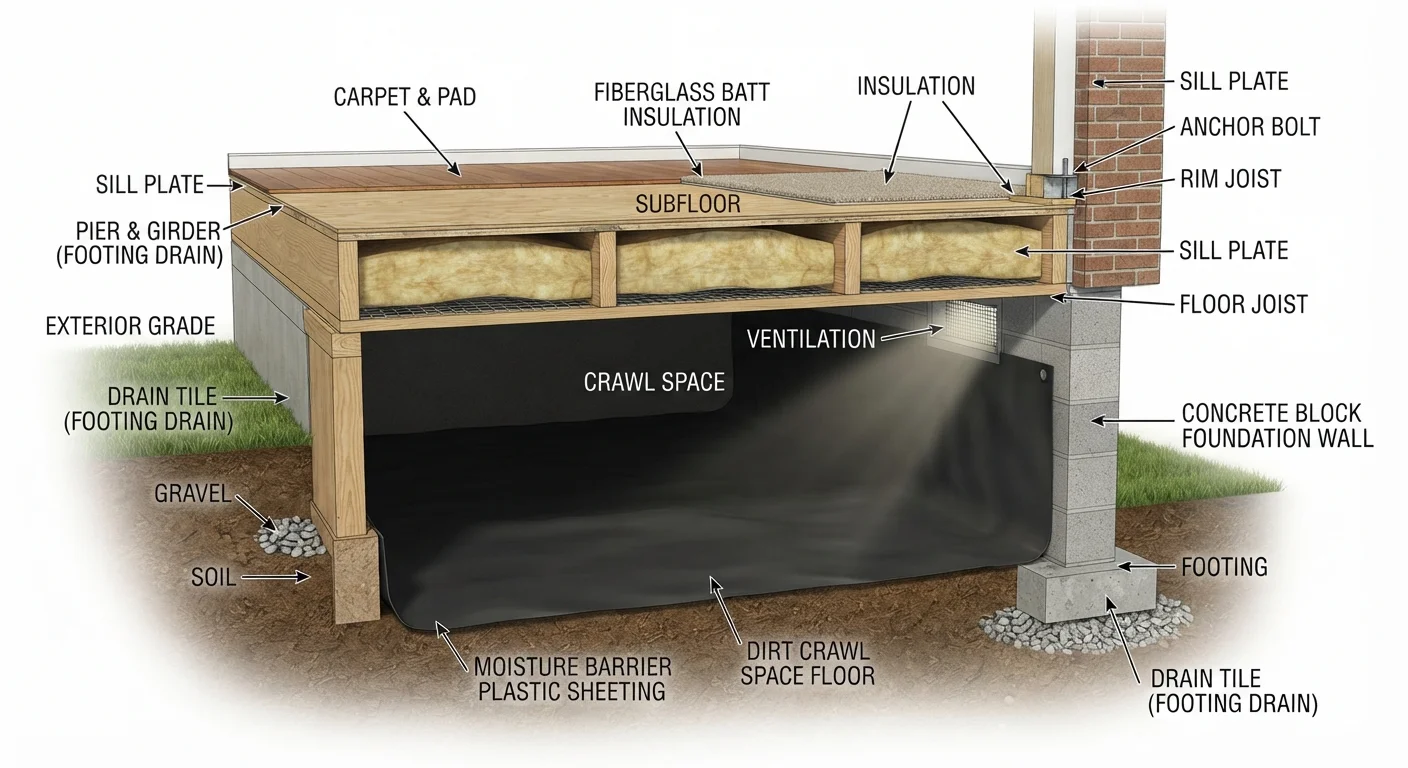
Photo credit: TrendingFaqs.com
In this article
Crawl spaces affect moisture, air quality, and structural health. Learn what to watch for and when to call a professional.
Key Takeaways
- Crawl spaces house plumbing, electrical wiring, and structural floor supports that keep your home functioning.
- Moisture is the most common crawl space problem and the starting point for mold, wood rot, and pest activity.
- A vapor barrier on the ground significantly reduces moisture migration into the space above.
- Signs of crawl space trouble often show up inside the home as musty odors, warped floors, or higher utility bills.
- Most crawl space remediation work requires a licensed professional, especially any structural or mold-related repairs.
What a crawl space actually contains
Open the access hatch on a typical crawl space and you will find the mechanical and structural guts of the home. Floor joists run across the width of the house, carrying the weight of everything above. Pipes for water supply and drain lines pass through this space, as does electrical conduit in many homes. HVAC ducts are often routed through crawl spaces as well, which means the temperature and air quality of this area can directly affect your heating and cooling efficiency.
The floor of the crawl space is usually bare soil or, in better-maintained homes, covered with a plastic vapor barrier. Foundation walls form the perimeter, and vents in those walls may or may not be open depending on the home's design and age.
Understanding basic plumbing layout helps when you look at a crawl space, because spotting a dripping joint or a corroded pipe fitting is easier when you know what you are looking at.
Why moisture is the main concern
Ground soil releases water vapor constantly. In a crawl space without a vapor barrier, that moisture rises into the framing. Wood absorbs it, and over time relative humidity levels in an unmanaged crawl space can stay high enough to support mold growth and attract wood-destroying insects such as termites and carpenter ants.
Water also enters from outside. Poor grading around the foundation, overflowing gutters, or cracked foundation walls can allow liquid water to pool beneath the home. Clogged gutters are a frequent upstream cause of crawl space water problems that homeowners overlook until the damage is visible.
The stack effect and your crawl space
Warm air inside a home rises and escapes through the upper levels, drawing replacement air in from below. This movement, called the stack effect, means air from your crawl space can travel upward into living areas through small gaps and cracks. Musty odors, mold spores, and radon gas can all move this way. Sealing penetrations between the crawl space and the floor above is an effective way to limit this transfer.
High crawl space humidity does not stay below the floor. Air moves upward through gaps in subfloor, wall plates, and plumbing penetrations. This means crawl space conditions influence indoor humidity levels throughout the house, affecting wood floors, walls, and the air you breathe every day.
Signs that something is wrong
Crawl space problems often announce themselves inside the living space before anyone looks beneath the house. A persistent musty smell is one of the clearest signals. Floors that feel springy, bounce slightly underfoot, or show visible warping suggest that the subfloor or joists below have absorbed excess moisture. Peeling paint near floor level, condensation on windows during moderate weather, and unexpectedly high heating and cooling bills can all trace back to a compromised crawl space.
Inside the crawl space itself, look for white powdery deposits on concrete (called efflorescence, which indicates water movement through the wall), standing water or mud, sagging insulation, and any discoloration or fuzzy growth on wood surfaces. If you see or smell what might be mold, do not disturb it. Mold in a crawl space is a health and structural matter that a qualified remediation professional should assess.
What proper crawl space management looks like
A well-maintained crawl space has a few consistent characteristics. A vapor barrier covers the entire soil floor, extending up the foundation walls and lapped at seams. Any standing water has been addressed at its source, whether that means improving exterior drainage, repairing gutters, or correcting the slope of the ground around the foundation. Insulation between the floor joists (or along the foundation walls in an encapsulated system) is intact and dry.
Vents, if present, are not blocked by debris or insulation stuffed in from the outside. Pest entry points such as gaps around pipes are sealed. A working dehumidifier in a conditioned crawl space keeps relative humidity below 60 percent, the threshold above which mold becomes likely.
Poor crawl space conditions connect directly to the air quality inside your living areas. Addressing the space below the floor is one of the more concrete ways to improve how the whole house feels and functions.
This article is for general informational purposes only. Crawl space work involving structural components, mold, or electrical and plumbing systems should be evaluated and performed by a licensed professional. Check with your local building department about permit requirements before undertaking any crawl space project.
Frequently Asked Questions

Author
Home Editorial Team
Home Editorial Team is the collective byline for our editorial team and contributor network. Articles published under this byline or an editorial pen name are researched, written, and reviewed according to our editorial standards for clarity, consistency, and independence before publication.
View all articles →