
Driving in Rain, Fog, and Snow: Adjusting Your Habits for Bad Weather
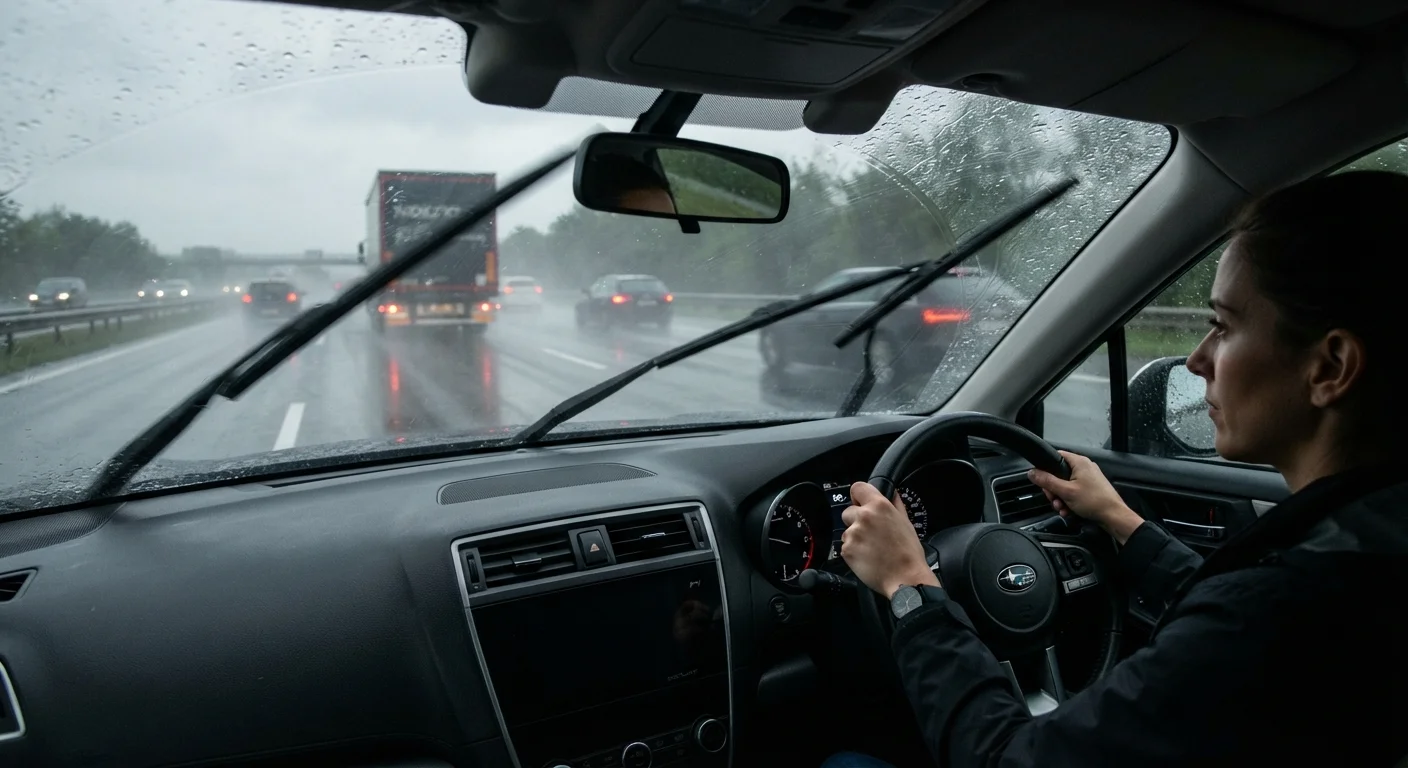
Photo credit: TrendingFaqs.com
In this article
Poor weather demands different skills. Learn how to adapt your speed, visibility, and braking for rain, fog, and icy roads.
Key Takeaways
- Slowing down is the single most effective adjustment in any bad weather condition.
- Increase your following distance significantly on wet, foggy, or icy roads.
- Use headlights in rain and fog, but avoid high beams in fog as they reduce visibility.
- On ice, steer and brake gently to avoid losing traction and control.
- Pull over safely if conditions exceed what you can manage.
Why bad weather demands a different approach
Rain, fog, and snow each change the driving environment in ways that go beyond what most drivers instinctively compensate for. Wet pavement reduces the friction your tires rely on for braking and cornering. Fog cuts how far ahead you can see, compressing the time you have to react to what is in front of you. Snow and ice remove most of the grip your car depends on for every movement it makes.
None of this means you cannot drive in these conditions. It means your normal habits, speed, following distance, use of lights, braking technique, need deliberate adjustment. Drivers who carry dry-road habits into a snowstorm are the ones who end up sideways in a ditch. The adjustments in this guide are practical and learnable.
For context on how speed management and lane discipline already shift between environments, see our article on highway versus city driving. Bad weather adds another layer on top of those differences.
Check conditions before you leave
Weather apps and local radio give you a general picture, but road condition reports from your state's department of transportation website are more specific. Knowing that a particular stretch of highway is icy or flooded before you commit to a route can save you from a dangerous situation. Planning an alternate route takes minutes; recovering from a slide or waiting for a tow takes much longer.
Before you drive: check your vehicle
Bad weather exposes weak points in your vehicle. Bald tires that provide acceptable grip on dry summer roads can hydroplane on a rainy interstate, meaning the tire rides on a thin film of water instead of the road surface itself. Worn wiper blades that you have tolerated for months become a real problem when you need them the most.
Walk around your car and verify that headlights, taillights, and brake lights are working. Check tire pressure, since cold air causes pressure to drop and underinflated tires handle worse in slippery conditions. If you are in a region with hard winters, consider whether your tires are appropriate for the season.
What you will need
For broader fundamentals that matter beyond just equipment, the habits new drivers often skip covers the preparation mindset that helps in any condition.
Step-by-step adjustments for rain, fog, and snow
The steps below walk through the specific behavior changes that make bad-weather driving safer. They apply whether you are dealing with a brief afternoon shower or a full winter storm, though the degree of adjustment scales with how severe conditions are.
Prepare your vehicle before you leave
Before you pull out of the driveway, clear every window, mirror, and light of snow, ice, and condensation. A peephole in the windshield is not enough. Allow your defroster time to fully clear the glass, and check that your headlights and taillights are visible through any accumulated snow or grime.
Check your wiper blades. If they streak or skip across dry glass in normal conditions, they will perform worse in heavy rain. In winter, some drivers switch to wiper blades designed for snow, which resist ice buildup on the blade itself.
Reduce your speed for conditions
Posted speed limits are set for ideal conditions. In rain, fog, or snow, those limits can be too fast for safe stopping. Slow down enough that you could stop comfortably if traffic ahead stopped suddenly.
On icy roads, stopping distances can increase dramatically compared to dry pavement. Even 25 mph can be too fast when the road surface is glassy. Use your judgment, not the speed limit, as your guide.
Increase your following distance
The standard advice for dry roads is a three-second gap between you and the car ahead. In rain, double that to six seconds. On ice or packed snow, extend it further, to eight seconds or more. Count the gap by picking a fixed point and timing how long it takes your front bumper to reach it after the car ahead passes it.
A longer gap gives you more room to brake gradually rather than hard, which matters enormously on low-traction surfaces.
Use your lights correctly
In rain, turn your headlights on even during the day. Many states require it by law when wipers are running, and it makes your car visible to others. Low beams are almost always the right choice in fog. High beams in fog scatter light off the water droplets in the air and reflect glare back at you, making visibility worse rather than better.
Use hazard lights if you must slow to a crawl or pull over, but check your state's rules. Some states prohibit hazard use while moving.
Brake and steer gently on slippery surfaces
Abrupt inputs, hard braking, sudden steering, fast acceleration, can break traction on wet or icy pavement. Apply the brakes steadily and earlier than you think you need to. If your vehicle has antilock brakes (ABS), you will feel a pulsing or vibration under your foot when the system activates. That is normal. Keep pressure on the pedal and steer where you want to go.
If you feel the car begin to skid, ease off the accelerator and steer gently in the direction you want the front of the car to go. Overcorrecting the steering wheel is a common source of spinouts.
Know when to pull over
Some conditions genuinely exceed what any driver should manage. Whiteout snow, dense fog with near-zero visibility, or rain falling so hard that wipers cannot keep up are all reasons to pull completely off the road onto a shoulder or into a parking lot. Turn your hazard lights on so others can see you are stopped.
Waiting out a brief intense storm is often safer than continuing. If you do pull onto a highway shoulder, move as far from travel lanes as possible and stay in the car with your seatbelt on.
Visibility at night compounds all of these challenges further. If you drive after dark in bad weather, the guidance in our article on night driving safety applies alongside everything here.
Common mistakes that make bad weather worse
Overconfidence in all-wheel drive or four-wheel drive is one of the most common errors. Those systems help you accelerate on slippery surfaces, but they do not help you stop or steer any better than a two-wheel-drive car. Drivers in AWD and 4WD vehicles are just as vulnerable to skidding and sliding as everyone else once braking is involved.
Following too closely is another. In dry conditions, a two-second gap feels natural and is generally adequate. Drivers often forget to adjust it in rain and then discover, too late, that wet pavement doubles or triples the stopping distance they needed.
Distractions compound weather risks more than most people recognize. Blind spot awareness already demands attention in normal conditions. In poor visibility, the margin for distraction-related errors shrinks further.

Author
Cars Editorial Team
Cars Editorial Team is the collective byline for our editorial team and contributor network. Articles published under this byline or an editorial pen name are researched, written, and reviewed according to our editorial standards for clarity, consistency, and independence before publication.
View all articles →