
Night Driving: Why Darkness Is Harder Than It Feels
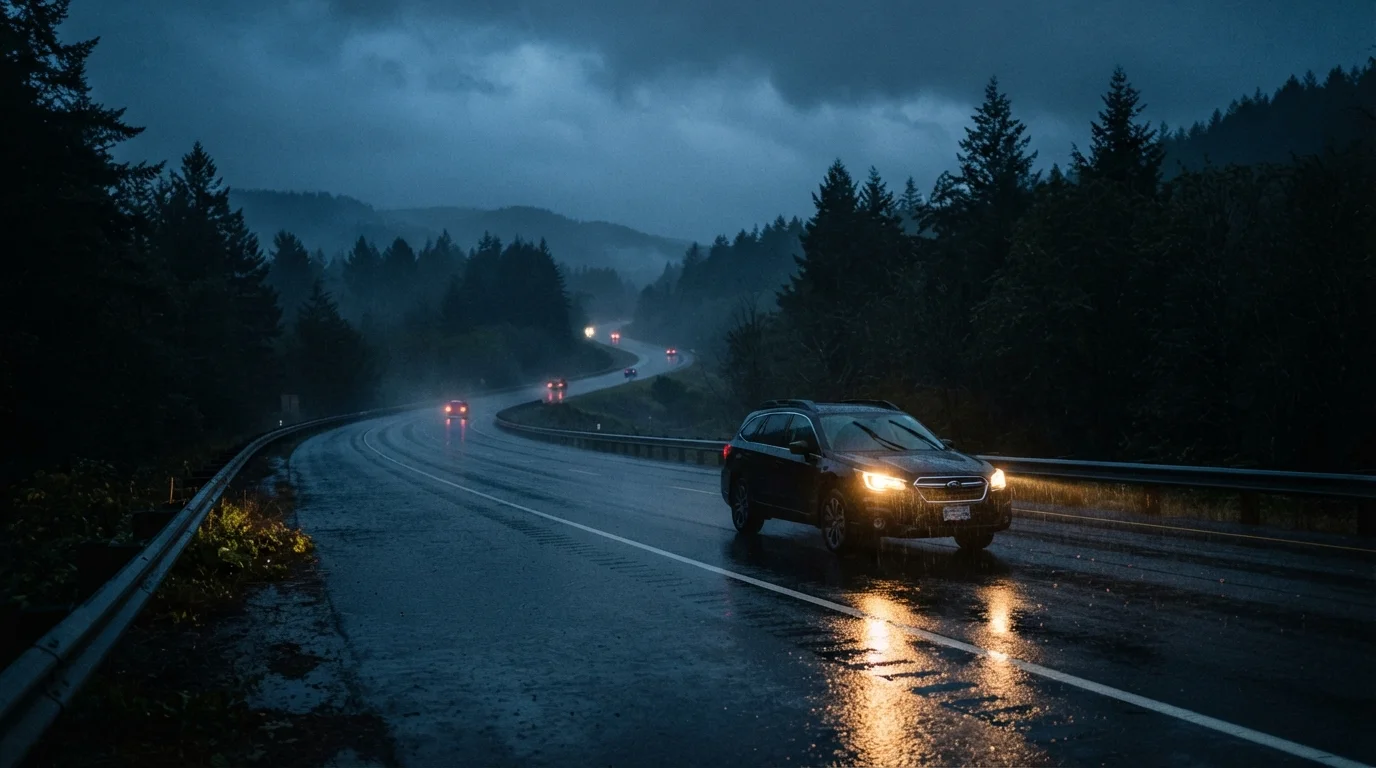
Photo credit: TrendingFaqs.com
In this article
Reduced visibility, glare, and fatigue make nighttime driving genuinely riskier. Practical habits that help you see and be seen.
Key Takeaways
- Human vision degrades significantly in low light, making night driving objectively more demanding than daytime driving.
- Proper headlight use, mirror adjustment, and following distance are the most effective habits to build.
- Fatigue compounds night driving risk; recognizing drowsiness early and stopping is a safety decision, not a convenience one.
- Glare from oncoming headlights is manageable with the right eye technique and mirror settings.
- Animals and pedestrians are harder to detect at night; scanning wider and slowing down in rural areas helps.
Why night driving is harder than most people assume
Roughly half of all traffic fatalities in the United States occur at night, even though most driving happens during daylight hours. The reasons go beyond simple darkness.
Human eyes rely on two types of cells: cones for color and detail in bright light, and rods for low-light vision. Rods are slower to process movement and offer less sharp detail than cones. When you drive at night, your visual system shifts toward rod-dominated vision, which means your ability to judge distance, detect the edges of objects, and read peripheral movement all become less reliable.
Depth perception and color recognition both degrade in low light. A pedestrian in dark clothing on an unlit road can be nearly invisible until you are uncomfortably close. The same is true for animals, bicycles, and debris in the road.
Glare from oncoming headlights adds another layer of difficulty. Modern LED and HID headlights are brighter than older halogen units, and when aimed too high or used at full intensity without cause, they can temporarily blind an approaching driver long enough to cause a serious problem.
Fatigue compounds everything. The body's circadian rhythm signals sleep when darkness falls, which means late-night driving involves fighting a biological pull toward drowsiness. See our full guide to drowsy driving for detail on how fatigue impairs driving ability. Night driving is not simply daytime driving with less light. It asks more of your attention, your vision, and your judgment at a time when your body is less prepared to give it.
What to do before you drive
A few minutes of preparation before leaving significantly affects what you can see and how visible you are to others.
What you will need
Clean microfiber cloth
Wipe headlight lenses and windshield interior clean before driving at night to reduce glare and haze.
Anti-glare rearview mirror
Flip the manual lever or use the auto-dimming setting to reduce blinding light from vehicles behind you.
Headlight restoration kit
Clears yellowed or cloudy plastic headlight covers that can reduce light output by a significant amount.
Check your lights and windshield before you leave
Walk around the car and confirm that headlights, taillights, and brake lights are working. A burned-out bulb is hard to notice from inside the car but dramatically reduces how well other drivers see you.
Clean the inside of your windshield with a microfiber cloth. Interior haze on glass scatters oncoming light into a blinding smear that makes night visibility worse than a dirty outside surface would.
Set your mirrors to reduce glare
Adjust your rearview mirror to the anti-glare position: most mirrors have a small lever at the bottom that tilts the glass. If your car has an auto-dimming mirror, confirm it is turned on.
For side mirrors, angle them so that the edge of your car's body is barely visible at the inner edge. This maximizes your view of the lane beside you. Proper mirror positioning also reduces the angle at which headlights from behind hit your eyes. For more on getting mirrors set correctly, see our mirror and blind spot guide.
Use your headlights correctly
Turn headlights on at dusk, not full dark. Your headlights at dusk do less for your own visibility than they do to make your car visible to others.
Use high beams on unlit rural roads when no vehicle is approaching or ahead of you. Switch back to low beams within roughly 500 feet of an oncoming car and when following another vehicle. Leaving high beams on blinds other drivers and can cause a crash.
Slow down and increase following distance
At night, your eyes need more time and distance to process what is ahead. The standard three-second following distance is a minimum in daylight; at night, four to five seconds gives you more time to respond to hazards that appear suddenly in your headlight range.
Speed directly affects stopping distance. On unlit rural roads, slowing by 10 mph can meaningfully close the gap between how far you can see and how far you need to stop. Rural roads carry unique risks at night, including animals and the absence of roadway lighting.
Handle oncoming glare without looking away entirely
When a bright vehicle approaches, resist the reflex to look directly at it. Instead, shift your gaze slightly right toward the white edge line or fog line on your side of the road. This keeps your lane reference while avoiding the worst of the glare.
Do not close one eye or squint sharply; both responses slow your ability to recover normal vision once the vehicle passes. After the car goes by, give your eyes a few seconds to readjust before resuming your normal scan distance.
Scan actively for pedestrians and animals
Pedestrians, cyclists, and animals are far harder to see at night than in daylight, particularly on roads without streetlights. On any road with a posted speed above 35 mph, scan the full width of your illuminated zone and watch for eye-shine (the reflective glow of animal eyes) at the edge of the road.
Night driving on unfamiliar rural routes carries additional hazards. For more context on those conditions, see driving on rural roads.
Manage fatigue before it manages you
Darkness itself makes the body want to sleep. Even drivers who feel alert at 8 p.m. can find concentration dropping significantly after midnight. Plan longer night trips with rest stops every two hours, or split driving with another licensed driver if possible.
The signs of drowsy driving include heavy eyelids, lane drifting, missing exits, and short gaps in memory of the road behind you. Any of these means it is time to stop.
Drowsy driving is a serious crash risk
Fatigue at night can impair your reaction time and judgment at levels comparable to alcohol impairment. If you notice yourself drifting, blinking heavily, or losing track of recent miles, pull over safely and rest. Continuing to drive while severely drowsy puts you and others in real danger. See our guide to drowsy driving for warning signs and what to do.
On the road: habits that make a real difference
The habits below address the most common sources of night driving risk: poor visibility, glare, and slow reaction time.
Dim your dashboard and interior lights
Bright instrument panels and interior lights reduce your eyes' ability to adapt to the dark outside the car. Turn dashboard brightness down to a comfortable reading level at night. Avoid using overhead interior lights while driving.
Do not overdrive your headlights
Overdriving your headlights means traveling fast enough that your stopping distance exceeds the distance your headlights illuminate. This is one of the most common and least-discussed night driving mistakes. If you cannot stop within the lit area ahead of you, slow down.
Night driving also overlaps with the challenges of bad weather. If you are driving in rain or fog after dark, the risks multiply. See our guide to driving in rain, fog, and snow for additional guidance.
For drivers newer to independent driving, our introduction to road safety covers the foundational habits that all of these skills build on.

Author
Cars Editorial Team
Cars Editorial Team is the collective byline for our editorial team and contributor network. Articles published under this byline or an editorial pen name are researched, written, and reviewed according to our editorial standards for clarity, consistency, and independence before publication.
View all articles →