
First-Time Car Owner Maintenance Basics
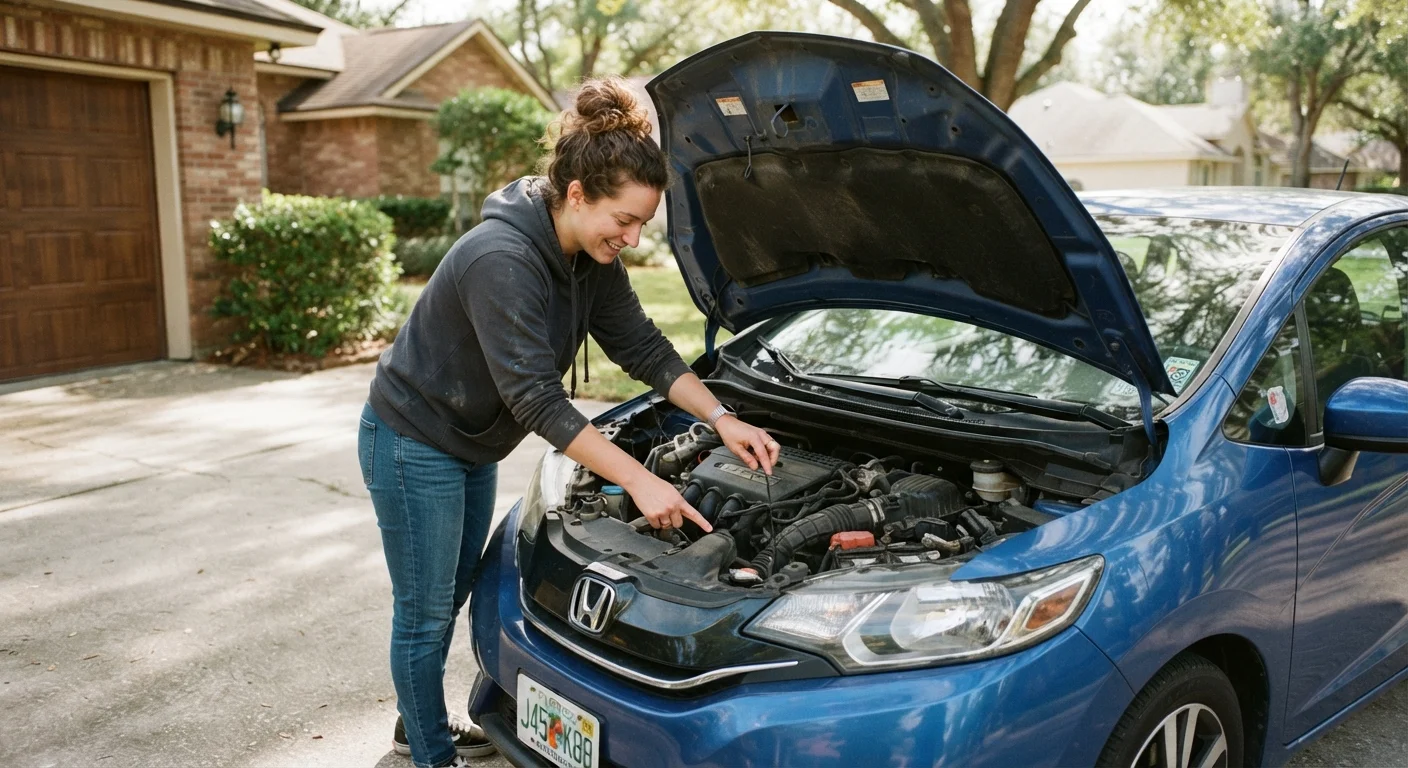
Photo credit: TrendingFaqs.com
In this article
Just got your first car? This introduction covers the essential upkeep tasks, when to schedule them, and how to build good habits from day one.
Key Takeaways
- Your owner's manual sets the maintenance schedule specific to your vehicle, not general internet advice.
- Several basic checks, such as oil level and tire pressure, take under five minutes and need no tools.
- Ignoring dashboard warning lights can turn a small fix into an expensive repair.
- Keeping a simple service log protects your car's resale value and helps mechanics work faster.
- Some tasks require a qualified mechanic; knowing which ones keeps you safe.
Why maintenance matters from day one
A car is a machine with parts that wear at predictable rates. Staying ahead of that wear is what maintenance is. Skip it long enough and a $30 oil change becomes a $4,000 engine problem.
The good news is that most of what keeps a car healthy is straightforward. You do not need mechanical training to check a fluid level or read a tire pressure gauge. What you do need is a basic understanding of what to check, how often, and when a task needs a professional instead.
Your owner's manual is the most reliable source for your specific vehicle's schedule. General advice online can vary wildly between car models. If you no longer have the physical manual, most manufacturers post them on their websites or make them available through the dealership.
For a broader picture of what the first year of ownership looks like beyond maintenance, see what to expect in year one as a first-time car owner.
Owner's manual
The booklet that came with your car from the manufacturer. It contains the exact maintenance schedule, fluid specifications, and warning light explanations for your specific vehicle.
Dipstick
A long metal rod that sits in the engine oil reservoir. You pull it out to check the oil level and get a rough sense of the oil's condition.
Tire pressure (PSI)
The amount of air inside a tire, measured in pounds per square inch. Running at the wrong pressure affects handling, fuel economy, and tire life.
Coolant
A liquid that circulates through the engine to keep it from overheating. It is usually stored in a semi-transparent plastic reservoir under the hood.
Check engine light
A dashboard indicator that signals the car's onboard computer has detected a problem. It covers a wide range of issues and requires a diagnostic scan to identify the specific cause.
Diagnostic scan
A process where a technician plugs a reader into your car's data port to retrieve stored error codes from the onboard computer. This helps identify what triggered a warning light.
The checks you can do yourself
Several routine inspections require no tools and take only a few minutes. Doing them monthly builds awareness of your car's normal state, which makes it easier to notice when something changes.
- Engine oil: Pull the dipstick, wipe it clean, reinsert it fully, then pull it again. The oil level should fall between the two marks. The color should be amber to dark brown; if it looks milky or gritty, have a mechanic look at it.
- Tire pressure: Use an inexpensive pressure gauge. The target pressure is on the sticker inside the driver's door jamb. Check tires before driving, when they are cold.
- Coolant reservoir: Look at the plastic reservoir near the radiator. The level should be between the min and max lines. Do not open the radiator cap on a hot engine.
- Windshield washer fluid: This one is easy to refill yourself and causes problems when empty in winter or bug season.
- Wiper blades: If blades streak or skip across the windshield, they need replacing. Most auto parts stores will install them for free at the counter.
If you want to go further at home, setting up a simple home maintenance routine covers which tasks are genuinely driveway-friendly.
Scheduled services and when to book them
Beyond what you can check yourself, certain services need to happen at regular intervals whether or not anything seems wrong.
| Service | Typical interval | Why it matters |
|---|---|---|
| Oil and filter change | Per manual (often 5,000-10,000 miles for synthetic) | Keeps the engine lubricated and clean |
| Tire rotation | Every 5,000-7,500 miles | Evens out tread wear so tires last longer |
| Air filter replacement | Every 15,000-30,000 miles | Keeps debris out of the engine |
| Brake inspection | Annually or every 12,000 miles | Catches worn pads before rotors are damaged |
| Spark plugs | Every 30,000-100,000 miles (varies by type) | Affects starting, fuel economy, and smooth running |
The intervals above are general ranges. Your manual may differ. A tune-up is often just a bundle of these services done together. what a tune-up actually includes breaks that down in plain terms.
If money is a constraint right now, prioritizing maintenance on a budget explains which tasks are safety-critical and which have a little flexibility.
Use your manual as the final word
When a shop or a friend gives you a maintenance interval that differs from your owner's manual, go with the manual. It is written for your specific engine, oil type, and driving conditions. Following generic advice instead can lead to services done too early (wasted money) or too late (unnecessary wear).
Warning signs you should never ignore
Some symptoms mean stop soon; others mean stop now. Knowing the difference matters.
The oil pressure warning light (usually shaped like an oil can) and the temperature gauge climbing into the red both call for pulling over safely as soon as possible and turning off the engine. Driving on with either of these active can cause serious engine damage within minutes.
The check engine light can mean anything from a loose gas cap to a failing catalytic converter. It does not always mean stop immediately, but it does mean get a diagnostic scan soon. Most auto parts stores will read the code for free.
Other signs worth acting on within a day or two: grinding or squealing during braking, pulling to one side while driving, a vibration in the steering wheel at highway speed, or a burning smell after parking.
Do not ignore brake or oil pressure warnings
A brake warning light or an oil pressure light is not something to monitor and act on later. Both indicate conditions that can make the vehicle unsafe to drive or cause serious engine damage quickly. Pull over safely, turn off the engine if the situation calls for it, and contact a mechanic before driving further.
Building habits that stick
The owners who rarely face expensive surprises are usually the ones who made maintenance a routine rather than a reaction. A few practical approaches help.
Set a monthly reminder to do your basic checks. Tie it to something you already do, like the first Sunday of the month, so it does not get skipped. Keep a small notebook or a simple phone note with the date and mileage of each service. This record is useful for your own planning and becomes part of your car's documented history if you sell it. what to track and why it pays off covers this in more depth.
When you take your car in for service, ask the shop to write down exactly what was done and the mileage at the time. A well-kept log costs nothing to maintain and can save real money later, both in avoided repairs and at resale.
Good driving habits also reduce wear. Smooth acceleration, early braking, and avoiding potholes where possible all extend the life of brakes, tires, and suspension components. See safe driving habits new drivers often skip for more on that side of the equation.
Frequently Asked Questions

Author
Cars Editorial Team
Cars Editorial Team is the collective byline for our editorial team and contributor network. Articles published under this byline or an editorial pen name are researched, written, and reviewed according to our editorial standards for clarity, consistency, and independence before publication.
View all articles →