
Garage Organization: Turning a Catch-All Space Into a Functional One
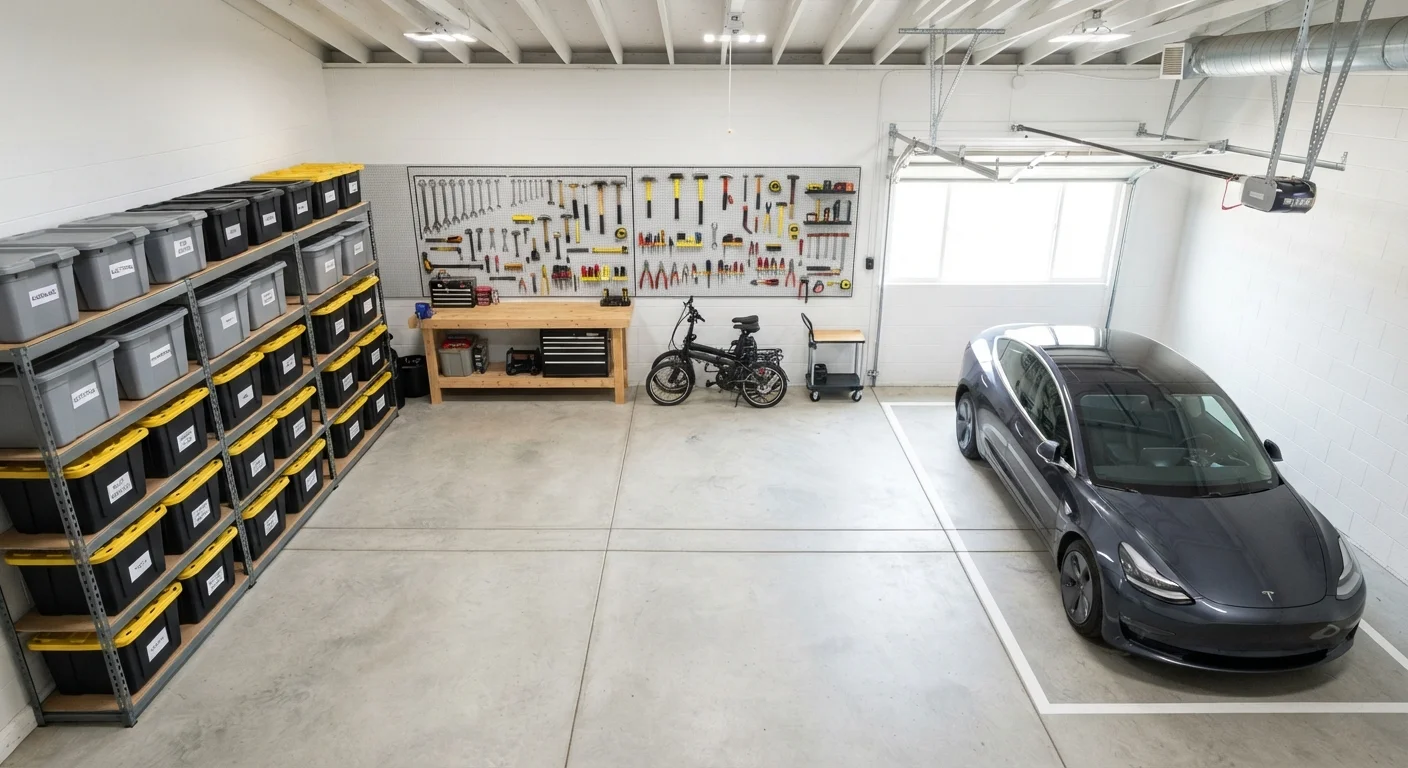
Photo credit: TrendingFaqs.com
In this article
Garages become dumping grounds quickly. Here are clear strategies for sorting, zoning, and maintaining an organized garage.
Key Takeaways
- Empty the garage completely before deciding on any storage layout.
- Dividing the space into activity zones prevents clutter from spreading.
- Vertical storage (shelves, pegboards, overhead racks) unlocks the most usable space.
- Labels and consistent return spots are what keep systems working long-term.
- A quarterly reset is faster than a full annual overhaul.
Why garages become catch-all spaces
The garage is usually the last room in the house to get a real organizational system, and the first one to absorb overflow from everywhere else. Holiday decorations, sports equipment, power tools, paint cans, and outgrown bikes all land there because there is space and no one has set rules for what belongs.
The absence of a plan is the problem. Without defined zones or a system for what goes where, every item that enters the garage gets placed by default rather than by decision. That default is almost always "somewhere on the floor" or "against that wall." Over time, the path narrows, the car gets moved to the driveway, and the garage stops functioning as a garage.
This mirrors a pattern common throughout the home. The same principle that organizes a pantry or a kitchen cabinet applies here: before the space can work, you need to decide what it is for. The foundational principles of home organization apply just as much to a 400-square-foot garage as to a single kitchen drawer.
Start with a full purge
The most effective garage organization starts with taking everything out. All of it. Park on the street for a day and treat the empty garage as a blank canvas.
Sort every item into four groups: keep, donate or sell, trash, and belongs elsewhere. Be direct about the "belongs elsewhere" pile. A box of old tax documents that got moved to the garage three apartments ago does not belong there now. Expired chemicals, broken tools with no repair plan, and equipment for hobbies you no longer pursue are candidates for removal.
Once you have your keep pile, sort it by activity category: lawn and garden, automotive, sports and recreation, seasonal decorations, workshop and tools, household overflow. These categories will become your zones. Avoid the common misstep of buying shelves or bins before this step is complete. Storage purchased for a chaotic space tends to organize clutter rather than eliminate it. For a broader look at why pre-planned organizing often fails, see common organization mistakes that backfire.
Sort before you shop
It is easy to fill a cart with bins and shelving before you know what you actually have. Completing the purge and sort first means you buy storage sized to your real keep pile, not an estimate. This usually results in fewer purchases and less waste.
Create zones before buying storage
A zone is a dedicated area of the garage for one category of items. The car zone (or zones, for two-car garages) is fixed. Everything else gets arranged around it.
Draw a rough floor plan and assign each category a location based on frequency of use. Items you reach for weekly, like gardening tools, should be near the door or at eye level. Seasonal items, like holiday decorations, can go in harder-to-reach spots near the ceiling or at the back wall.
Keep activity-related items together. If you do basic car maintenance in the driveway, your automotive supplies should sit close to the garage door. That connection between storage location and use location is what makes a zone actually function. The home car maintenance routine guide explains which tasks realistically happen in a home setting and what supplies are worth keeping accessible.
Zones work best when they have visible boundaries. A strip of painter's tape on the floor, a dedicated shelf section, or a pegboard area for a specific category all signal where things live. This matters especially in shared households: a zone everyone can see is a zone everyone can maintain.
Maximize vertical and overhead space
Floor space in a garage is where the car lives. The real storage potential is on the walls and ceiling.
Wall-mounted shelving units give you depth and height without consuming floor area. Pegboards mounted between studs hold hand tools, cords, and small bins at eye level, and they let you reconfigure as needs change. Heavy-duty hooks on the wall can hold bikes, ladders, and long-handled tools vertically, which takes up a fraction of the floor space those items would otherwise occupy.
Overhead ceiling racks, typically mounted to joists, work well for lightweight but bulky items: camping gear, seasonal sports equipment, holiday boxes. If your garage has unfinished ceiling joists, they can support platforms or pulley systems for items like kayaks or bicycles. If you go this route, confirm the weight limits of your specific joists and hardware before loading the rack.
The same logic that drives organizing a kitchen with limited cabinet space applies here: go up when you run out of horizontal room. Seasonal clothing storage follows a similar pattern, where off-season items move to less accessible spots. That approach is covered in the seasonal clothing rotation guide.
When mounting pegboard, leave at least half an inch of space between the board and the wall so hooks seat properly and weight distributes across the fasteners rather than stressing a single point.
Pegboard mounted flush to the wall cannot accept standard hooks, and gaps behind the board are where moisture collects and mold can develop over time.
Store hazardous materials like solvents, pesticides, and motor fluids in a dedicated, lockable cabinet away from heat sources and off the floor.
Garages experience wide temperature swings, and chemicals stored on concrete floors are more susceptible to container degradation; a locked cabinet also keeps these items away from children and pets.
Maintaining the system over time
A garage organization system fails not when it is built, but when it is not maintained. The most common breakdown point is the "I'll deal with it later" habit: one item placed outside its zone becomes ten within a month.
A few simple habits prevent that drift. First, every item that enters the garage gets a designated spot before it gets used. New tools go to the workshop zone. New sports gear goes to the recreation zone. If a zone is full, that is information: something in the zone needs to leave before something new arrives.
Second, plan a quarterly reset. Walk through the garage, return anything that has drifted back to its spot, and remove anything that has accumulated without a home. A quarterly reset takes 30 to 60 minutes. A full overhaul after two years of neglect takes a weekend. The math is clear.
If you have children, build the system around their participation. Low, labeled bins for their gear mean they can return items without adult help. The organization systems for kids article covers flexible approaches that hold up as children grow and their equipment changes.
Labels matter more than they seem. A label turns a shelf section from "approximately where this goes" into a clear instruction. Use weatherproof labels for the garage environment, since temperature swings and humidity cause paper labels to peel.

Author
Home Editorial Team
Home Editorial Team is the collective byline for our editorial team and contributor network. Articles published under this byline or an editorial pen name are researched, written, and reviewed according to our editorial standards for clarity, consistency, and independence before publication.
View all articles →