
Zones, Labels, and Designated Spots: Core Principles of Home Organization
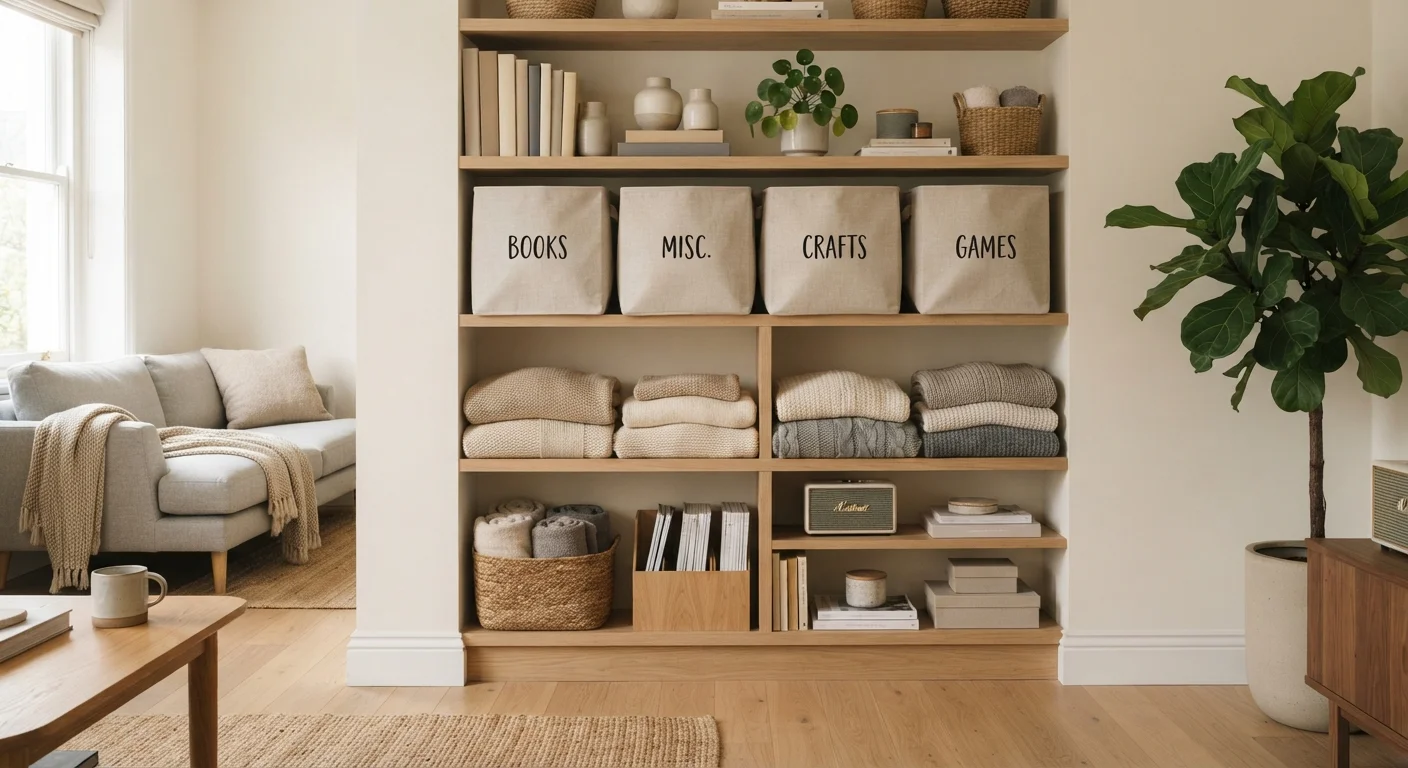
Photo credit: TrendingFaqs.com
In this article
Before buying a single bin, understand the foundational ideas that make any organization system actually function long-term.
Why systems matter more than supplies
Most organization projects start at the hardware store. That instinct is understandable, but it usually leads to bins and baskets that sit unused or make clutter harder to find rather than easier to manage. The organizing materials are not the system; they are just containers for one.
A functioning organization system is built on a few repeatable ideas: every category of item has a fixed home, that home is logical for the way the space gets used, and returning things to the right place takes less effort than putting them somewhere random. When those conditions are met, a space tends to stay organized without requiring constant re-sorting.
Understanding these principles before purchasing anything prevents the most common mistake: buying storage that fits no real behavior pattern. For a closer look at what goes wrong when supplies come before systems, see common organizing missteps.
Zone
An area within a space designated for a specific activity or category of items. Zones help make the purpose of a space visible and reduce the effort of deciding where things belong.
Designated spot
A single, fixed location assigned to one item or category. When every item has a designated spot, putting things away becomes a straightforward decision rather than a judgment call.
Friction (in organization)
Any physical or logistical obstacle that makes it harder to return an item to its correct place. High friction causes systems to break down because people default to leaving things wherever is most convenient.
Point of use
The location where an item is actually used. Storing items at their point of use minimizes retrieval steps and makes it more natural to return them after each use.
Category grouping
The practice of storing items that share a common function or type together. Category grouping is the foundation of zoning and makes both finding and restocking items faster.
The four core principles
Zoning
Zoning means dividing a space into areas based on activity or category. A kitchen might have a baking zone near the oven, a coffee zone near the counter outlet, and a snack zone at a reachable cabinet height. Zones work because they reduce the mental load of deciding where something belongs: if it is used for baking, it goes in the baking zone.
Zones do not have to be physically separate rooms. They can be as small as a single drawer or shelf. The defining quality is that everything inside a zone shares a clear, consistent purpose.
Designated spots
A designated spot is the single, fixed location for one item or category. The scissors live in the desk drawer, not sometimes in the kitchen and sometimes on the coffee table. When every frequently used item has a spot, the question "where does this go?" has a definitive answer.
Designated spots reduce the decision fatigue that leads to surfaces becoming dumping grounds. They also make it obvious when something is missing, which helps with restocking and loss prevention.
Labeling
Labels communicate the system to everyone who uses the space, including yourself two weeks from now. A bin labeled "batteries" will be refilled correctly. An unlabeled bin will collect whatever is nearest at cleanup time.
Labels do not have to be printed or decorative. A strip of masking tape and a marker works. The goal is clarity, not aesthetics. In spaces shared with children, picture labels alongside words extend the system to readers of all levels. For more on that, see organization systems for kids.
Friction reduction
Friction is anything that makes returning an item to its place harder than leaving it out. A lid that requires two hands, a bin stored behind three other things, a shelf too high to reach comfortably: all of these add friction. High-friction systems break down quickly because the path of least resistance becomes leaving things where they land.
Reducing friction often means simplifying storage (open bins instead of lidded ones for frequently used items) and placing things at the point of use rather than in a central storage area.
Applying the principles across different spaces
These four principles apply whether you are organizing a studio apartment or a large family home, though how they look in practice varies by space and household.
In a pantry, zoning by meal type (breakfast items together, baking supplies together) and labeling shelf sections makes grocery restocking faster and reduces duplicate purchases. Pantry organization principles goes deeper on how to build that kind of lasting system.
In shared living areas, designated spots for items that migrate (remotes, chargers, mail) prevent the accumulation that makes a room feel chaotic. A small tray or basket at a consistent location gives those items a home without requiring a full reorganization.
For a broader look at how these ideas connect to making your home genuinely comfortable day to day, the comfortable living hub offers related guidance across multiple areas of the home.
| First step before buying storage | Define your zones and categories |
| Most common cause of system failure | High friction (hard to return items to their spot) |
| Best label type for shared spaces | Simple text or picture labels that all users can read |
| Ideal storage for frequently used items | Open bins or trays at point of use |
| Core question a designated spot answers | Where exactly does this item live? |
| Applies to spaces of all sizes | Yes, from a single drawer to an entire garage |

Author
Home Editorial Team
Home Editorial Team is the collective byline for our editorial team and contributor network. Articles published under this byline or an editorial pen name are researched, written, and reviewed according to our editorial standards for clarity, consistency, and independence before publication.
View all articles →