
When Organizing Attempts Backfire
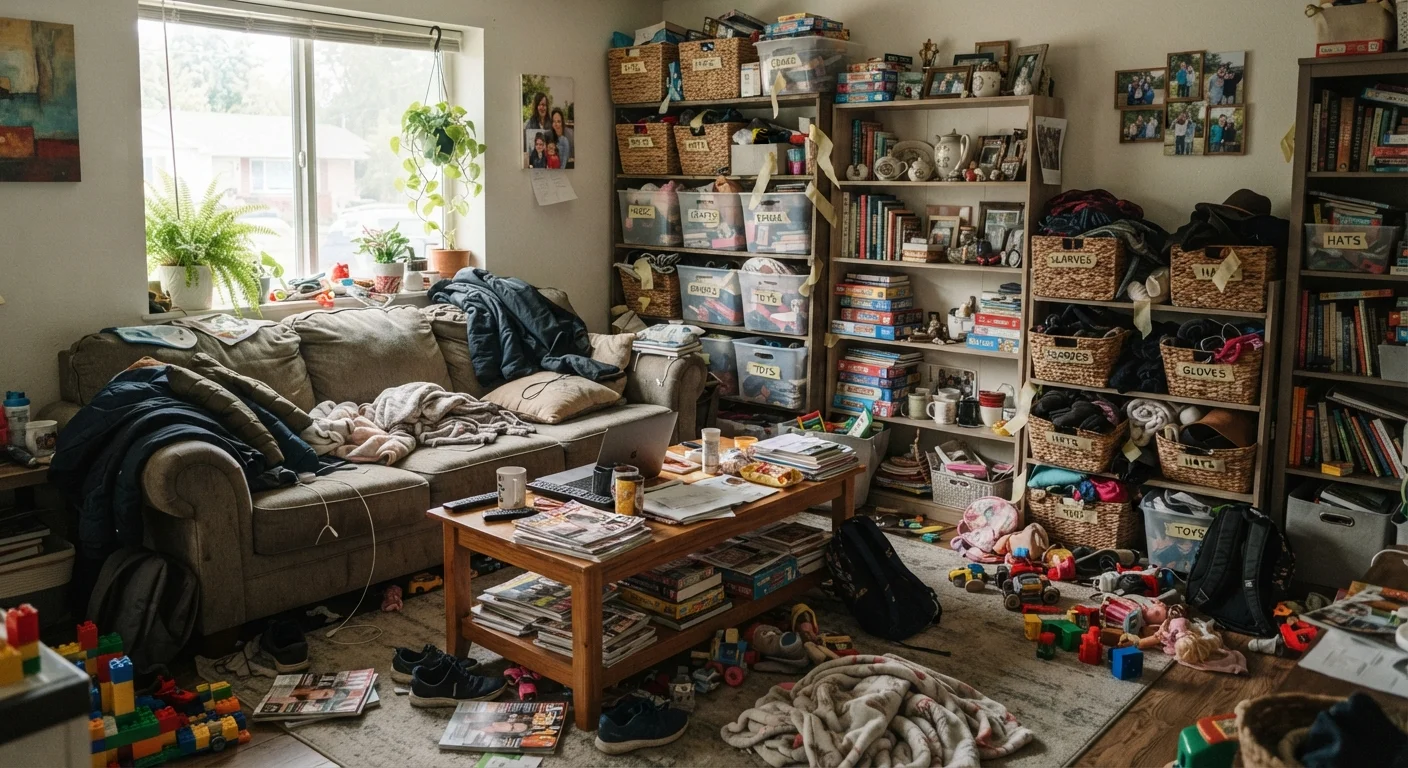
Photo credit: TrendingFaqs.com
In this article
Some tidying habits create more chaos than they solve. Here are the missteps that undermine your organization efforts and why they happen.
Key Takeaways
- Buying storage containers before decluttering often locks clutter in place rather than reducing it.
- Over-categorizing creates so many rules that the system collapses under daily use.
- Organizing in one burst without a maintenance plan leads to rapid backsliding.
- Systems that look tidy but feel unnatural to use will be abandoned quickly.
- Assigning storage locations that don't match where items are actually used adds friction.
Why organizing efforts often make things harder
Most people approach home organization with genuine motivation and real effort. They spend a weekend sorting, labeling, and arranging. Two months later, the same clutter has returned, sometimes worse than before. The problem is rarely laziness. It's that several widely repeated organizing habits create systems that are harder to maintain than the disorganization they replaced.
Understanding where these efforts go wrong helps you build systems that hold up under real daily use, not just look good in photos. The mistakes below come up repeatedly, and each one has a clear fix.
The most common organizing mistakes and how to correct them
Buying storage products before decluttering.
Why it happens: Containers feel like a solution. Shopping for bins and baskets is satisfying and concrete, and it's easy to assume that once everything has a home, the problem is solved.
Creating a category system too detailed to maintain.
Why it happens: In the focused energy of an organizing session, elaborate sorting feels logical. People create subcategories that make perfect sense in the moment but demand too much cognitive effort on a busy Tuesday evening.
Storing items where they look tidy rather than where they get used.
Why it happens: Aesthetics drive many organizing decisions. Items get moved to visually cleaner spots, but those spots don't align with how the household actually moves through the day.
Organizing once and assuming the system will hold.
Why it happens: A successful organizing session feels like a problem solved. Without a plan for regular maintenance, new items accumulate and old habits creep back within weeks.
Designing a system for an idealized version of your household rather than the real one.
Why it happens: People imagine a more disciplined, consistent version of their family when setting up organization. The system works for that imagined household but not for the actual one with variable schedules and mixed habits.
One pattern worth noting separately: many people organize in isolation, meaning they sort one closet or one drawer without considering how that space connects to the rest of the home. A hallway closet reorganized perfectly still fails if the family's coats, bags, and shoes don't have logical landing spots near the door. Think about flow through the whole space, not just the container in front of you.
If your home office is one of the spots that keeps reverting to chaos, see how desk clutter affects focus and what to do about it. And if you're wondering whether common storage advice is actually helping, this look at storage myths separates what works from what doesn't.
Building systems that actually last
The goal of organization is not a tidy-looking space on one particular day. It's a home where things can be found quickly and put away without friction. That requires systems matched to the people using them, not systems modeled after magazine spreads or social media tours.
Start with less stuff, not more containers. Deciding what to keep is harder than buying a bin, but it's the step that makes every other organizing effort easier. Once volume is manageable, build in a short weekly reset rather than relying on periodic overhauls. A room-by-room weekly checklist can hold a system in place without consuming your whole weekend.
If you have children, factor in that their needs change fast. Organization systems for kids need flexibility built in from the start, or they become obsolete within a school year. The one in, one out rule is worth understanding too: it's useful in certain contexts but has real limits that are worth knowing before you rely on it.
Avoid reorganizing as a way to avoid decluttering
Rearranging the same volume of stuff feels productive but rarely solves the underlying problem. If a space fills back up within weeks, the issue is almost certainly too many items, not the wrong containers or layout. No organizing system works well when it's overloaded. Before reorganizing a space a second time, remove a meaningful portion of what's in it first.

Author
Home Editorial Team
Home Editorial Team is the collective byline for our editorial team and contributor network. Articles published under this byline or an editorial pen name are researched, written, and reviewed according to our editorial standards for clarity, consistency, and independence before publication.
View all articles →