
River Cruise vs. Ocean Cruise: Choosing the Right Style for Your Trip
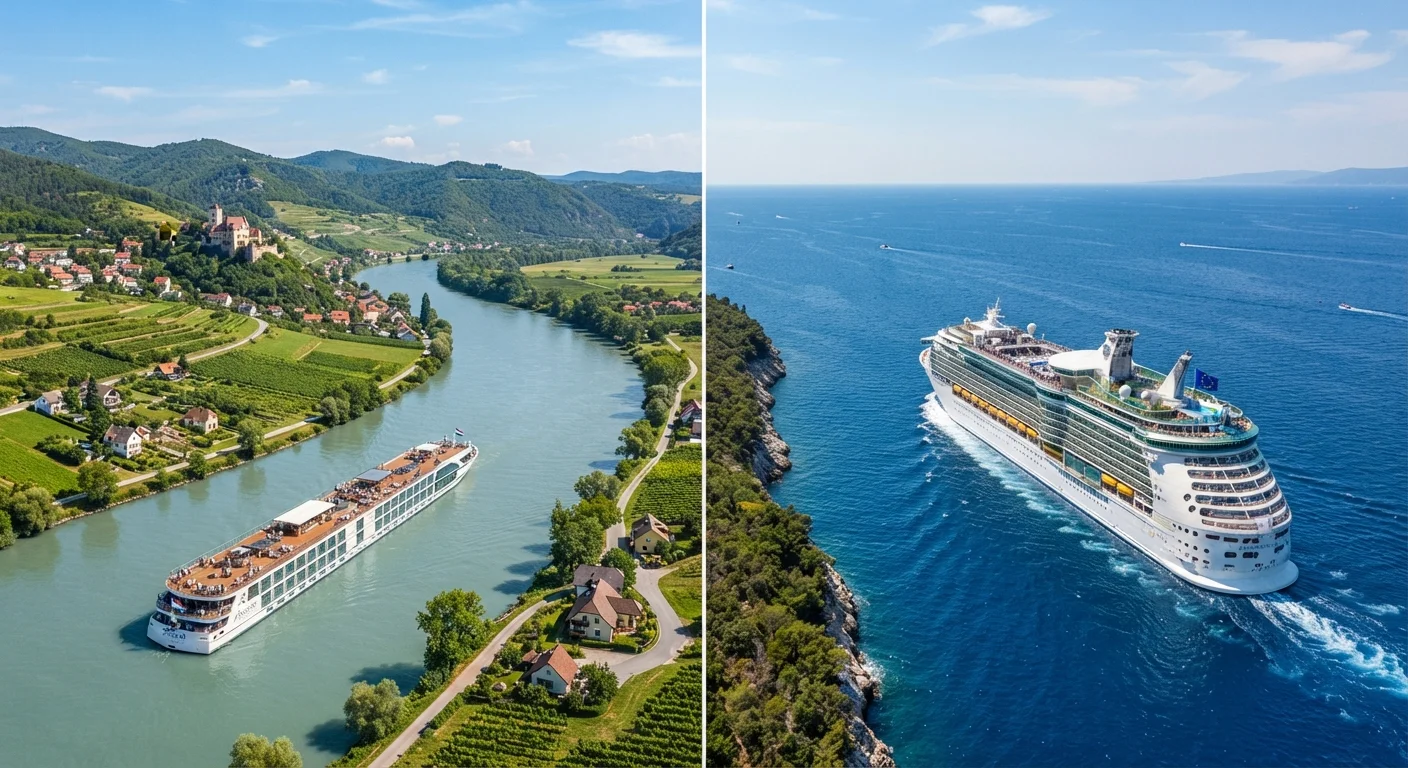
Photo credit: TrendingFaqs.com
In this article
River and ocean cruises offer very different experiences. Compare itinerary style, ship size, cost, and pace to find the right fit.
Key Takeaways
- River ships carry 100 to 200 passengers; ocean ships often carry 2,000 or more.
- River itineraries dock in town centers, while ocean ships typically anchor at port terminals outside the city.
- Ocean cruises generally cost less per night, but river cruises usually bundle more inclusions.
- Motion sickness is far less common on rivers than on open-ocean sailings.
- Shore time differs significantly: river passengers often get 8 or more hours in each port.
How the ships themselves differ
The most immediate difference between these two cruise styles is the vessel. River ships are long, flat, and narrow, built to pass under low bridges and fit through locks on waterways like the Rhine, Danube, or Mekong. Most carry between 100 and 200 passengers and rise only a few decks above the waterline. Cabins are compact, and the communal spaces, though well designed, are limited compared with ocean ships.
Ocean ships range from small expedition vessels carrying a few hundred passengers to mega-ships that hold 5,000 or more. They have multiple restaurant options, theaters, pools, spas, and sometimes go-kart tracks or surfing simulators. If you are traveling with children or want constant onboard activity as part of the experience, that range of facilities matters. Dining choices alone can vary enormously depending on ship size and line.
| Criterion | River cruise | Ocean cruise |
|---|---|---|
| Typical passenger count | 100 to 200 | 500 to 5,000+ |
| Port location | Town center or near it | Dedicated cruise terminal |
| Average daily hours ashore | 8 or more hours | 6 to 10 hours |
| Inclusions in base fare | Excursions, meals, often drinks | Meals included; extras cost more |
| Motion sickness risk | Very low | Moderate; varies by route and weather |
| Onboard entertainment | Lectures, small lounge acts | Theaters, pools, multiple venues |
| Family suitability | Limited; mainly adults | Wide range including family lines |
| Geographic reach | Single region or waterway | Global; multiple continents |
Itinerary pace and port access
River itineraries typically follow a linear route, traveling from one city to the next over 7 to 14 days. The ship docks right in or very near the town center, sometimes within walking distance of a cathedral, market, or historic square. Passengers regularly get 8 or more hours ashore, and some ships allow overnight stays in major cities. That kind of schedule suits travelers who want to linger, shop local markets, or take a long lunch without watching the clock.
Ocean itineraries are more varied in structure. Some loop back to the same homeport; others reposition across oceans. Port stops tend to run 6 to 10 hours, though exact durations vary, and the ship docks at a dedicated cruise terminal that can be several miles from the city center. Getting there requires a shuttle, taxi, or organized excursion. For a fuller look at how excursion logistics work, the ship-booked vs. independent excursion comparison covers the tradeoffs in detail.
For travelers who are new to cruising entirely, what to expect on your first cruise is worth reading before committing to either style.
Cost structure and what is included
River cruise fares look high on paper. A typical week on a European river ship runs from roughly $2,000 to $4,000 or more per person, depending on cabin category and season. However, that fare usually includes most shore excursions, all meals, wine or beer with dinner, and sometimes gratuities. The final out-of-pocket total is often closer to the advertised price than with many ocean sailings.
Ocean cruise base fares can start much lower, sometimes under $100 per night for an inside cabin on a large mainstream ship. Specialty dining, drink packages, Wi-Fi, shore excursions, and gratuities are typically sold separately, though many lines now offer bundled packages. Whether that all-in cost competes with a river cruise depends entirely on how you travel and what you add on.
100-200
Typical river ship passenger capacity
River ships are physically constrained by lock and bridge dimensions, keeping passenger counts small compared with ocean vessels.
~$3,000
Average per-person cost for a 7-day European river cruise
Industry pricing data suggests mid-range European river cruise fares typically fall between $2,000 and $4,000 per person before flight costs.
8+ hrs
Average daily shore time on river itineraries
Because river ships dock overnight in many ports, passengers often have significantly more time ashore than on a typical ocean port day.
Seasonality also shapes cost. European river cruises peak in summer and the Christmas market season; ocean cruises have high seasons that vary by region. Traveling in shoulder season on either style can reduce fares noticeably.
Atmosphere, demographics, and health considerations
River ships draw a largely adult crowd. The absence of dedicated kids' clubs, water parks, or nightclubs means families with young children rarely book them, which shapes the onboard mood considerably. Meals are often communal, conversations start easily, and evenings tend to be quiet. That is a positive if you prefer relaxed travel; it may feel slow if you want constant activity.
Ocean ships cover a much wider demographic range. Family-oriented lines engineer their ships specifically for multigenerational travel. Other lines cater to adults, expedition travelers, or luxury seekers. The category is broad enough that the onboard atmosphere differs significantly from line to line.
On health, the motion difference is real. Open water can produce significant swells, and seasickness affects some passengers even with medication. Rivers have negligible wave action. Passengers with certain health conditions should also check medical facility availability before booking; what passengers with health conditions should know outlines what onboard care typically looks like on both ship types.
For anyone still deciding which route structure fits their interests, matching a cruise itinerary to your travel style covers the geographic and thematic options in depth.

Author
Travel Editorial Team
Travel Editorial Team is the collective byline for our editorial team and contributor network. Articles published under this byline or an editorial pen name are researched, written, and reviewed according to our editorial standards for clarity, consistency, and independence before publication.
View all articles →