
Cruise Dining Options: From the Main Dining Room to Specialty Restaurants
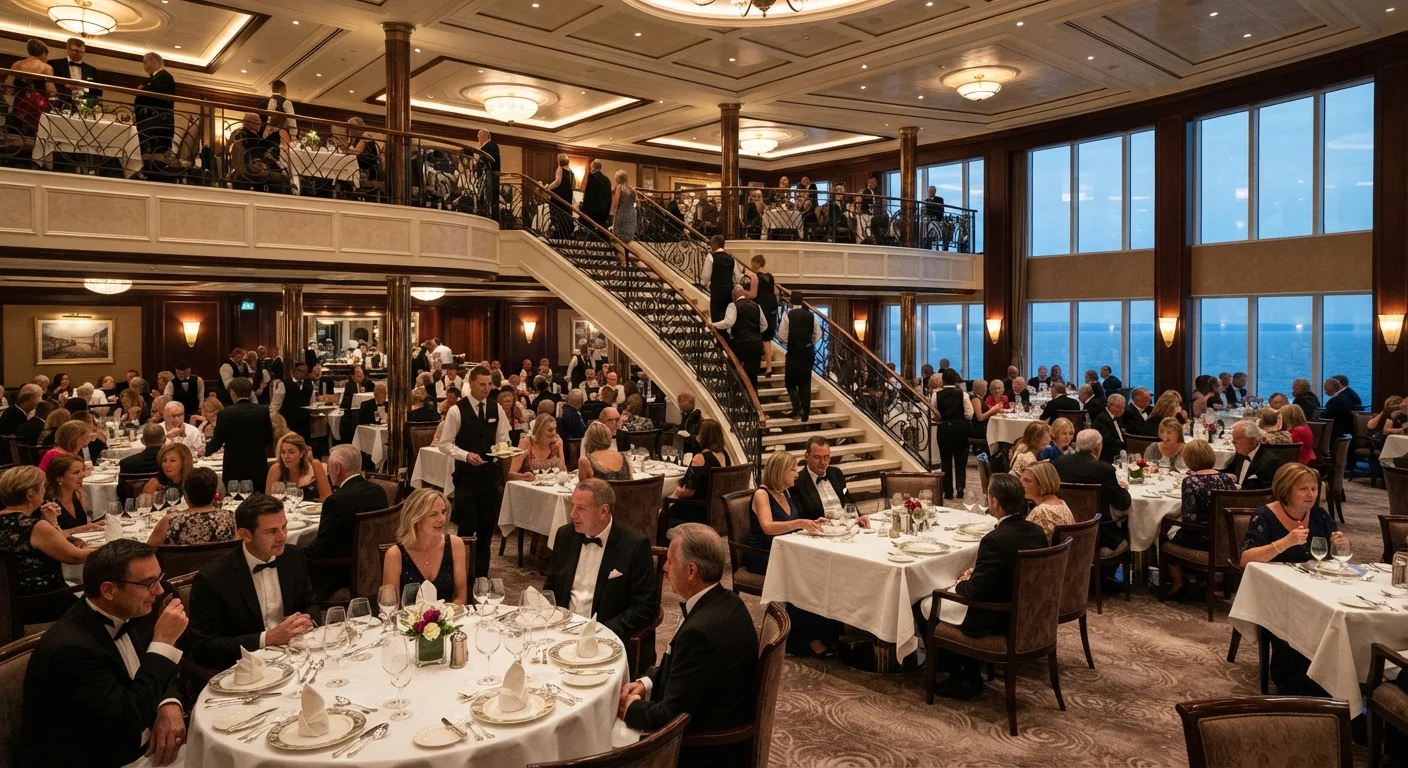
Photo credit: TrendingFaqs.com
In this article
Understand the full range of dining available on a modern cruise ship, including what is included in your fare and what costs extra.
What is included versus what costs extra
Every cruise fare covers a baseline of food and non-alcoholic beverages, but the boundaries of that coverage vary by cruise line and ship. Understanding what falls inside your fare versus what triggers a separate charge helps you budget before you board.
| Included in standard fare | Main dining room, buffet, casual poolside venues |
| Typically costs extra | Specialty restaurants, premium coffee, most alcohol, late-night room service on some lines |
| Specialty restaurant cover fee range | Roughly $25 to $60+ per person, depending on venue and line |
| Dietary requests | Submit at booking for best results; confirm with head waiter on embarkation evening |
| Seating options | Traditional assigned seating or open/flexible seating (varies by line) |
The main dining room, the buffet (often called the Lido deck restaurant), and most casual eateries are included in the standard fare. Specialty restaurants, premium coffee bars, and most alcoholic beverages are not. Some cruise lines also charge for room service after a certain hour or for specific menu items, even when basic room service is otherwise free. For a full picture of what tends to catch passengers off guard, see our breakdown of hidden cruise costs.
Gratuities are a related cost that affects dining staff directly. Most lines add a daily service charge to your onboard account. Our guide to cruise gratuities explains exactly how that money is distributed and what options you have.
The main dining room
The main dining room (MDR) is the traditional centerpiece of cruise dining. It is included in your fare, operates on scheduled seatings or open-seating windows depending on the line, and serves multi-course meals with a rotating menu across the voyage.
Traditional assigned seating means you are assigned a fixed time (early or late) and a set table with the same dining companions each evening. Open or flexible seating lets you arrive within a window and sit where space is available, which suits travelers who prefer a variable schedule. Many ships now offer both systems, sometimes called Anytime Dining or My Time Dining depending on the line.
Dress codes in the MDR can range from smart casual every night to one or two formal nights per sailing. Check the specific line's policy before you pack. The menu changes daily and typically includes vegetarian, vegan, and lighter options alongside traditional entrees.
Buffet and casual dining
The buffet restaurant stays open longest and is the default for breakfast and lunch on most ships. It is included in the fare. Food runs the gamut from eggs and carved meats at breakfast to international stations at lunch and dinner, though the selection narrows in the evenings when the MDR is the primary option.
Most ships also have poolside grills, pizza stations, and taco or burger counters that are free during operating hours. These are informal, walk-up venues ideal for a quick bite between ports or during sea days. Hours vary and some close by mid-evening, so check the daily program.
Specialty coffee shops, juice bars, and premium dessert counters are usually not included even when they sit inside a buffet space. A small surcharge applies per item or purchase. These areas are easy to overlook when you are figuring out your onboard spending plan.
Specialty restaurants
Specialty restaurants are extra-charge venues with a focused concept, such as a steakhouse, sushi bar, Italian trattoria, or teppanyaki grill. They charge either a flat cover fee (typically per person, ranging from roughly $25 to $60 or more depending on the venue and line) or an a la carte menu where you pay per dish.
Reservations are usually required and can fill quickly on popular sailings, so booking them as soon as the reservation window opens is practical. Many cruise lines allow you to pre-book specialty restaurants before departure through their app or website, which is worth doing if a particular venue matters to you.
Dining packages bundle multiple specialty restaurant visits at a discounted per-meal rate compared to paying individually. Whether a package saves you money depends on how many specialty meals you actually want. If you plan two or more specialty dinners, a package often costs less overall, but compare the per-visit price carefully before committing. Your loyalty program status may also include complimentary specialty dining credits at higher tiers.
Dietary needs and special requests
Cruise lines generally accommodate common dietary needs, including gluten-free, vegetarian, vegan, kosher, and low-sodium meals, when notified in advance. The earlier you submit your requirements (at booking rather than at embarkation), the more reliably the kitchen can prepare. Notify the line through your booking profile or by contacting them directly before the voyage.
Once onboard, speak with the head waiter in the main dining room on the first evening. They can walk you through the next day's menu and flag what is appropriate for your needs, allowing the galley to prepare alternatives ahead of time rather than improvising. Allergy management onboard is a practical safety matter. If you have a serious allergy, be specific and persistent when communicating it to dining staff.
Passengers with complex medical dietary needs should also read our guidance on cruising with health conditions, which covers how ships handle medical situations and what preparation helps most.
Main dining room (MDR)
The primary sit-down restaurant on a cruise ship, included in the standard fare. It operates on a schedule and serves multi-course menus that change daily.
Specialty restaurant
An extra-charge dining venue with a focused concept (such as a steakhouse or sushi bar). Guests pay a cover fee or a la carte prices beyond the base fare.
Open/flexible seating
A dining arrangement where passengers choose when to arrive for dinner within a set window rather than holding an assigned time and table each night.
Dining package
A pre-purchased bundle of specialty restaurant meals, sold at a fixed per-meal rate. It is designed to cost less per visit than paying individually each time.
Cover charge
A flat per-person fee charged to dine at a specialty restaurant, separate from any drinks ordered. Some venues charge a la carte instead.
Lido deck restaurant
Common name for the casual buffet restaurant, usually located on an upper deck near the pool area, included in the fare and open for most of the day.

Author
Travel Editorial Team
Travel Editorial Team is the collective byline for our editorial team and contributor network. Articles published under this byline or an editorial pen name are researched, written, and reviewed according to our editorial standards for clarity, consistency, and independence before publication.
View all articles →