
Shore Excursions: Booking Through the Ship vs. On Your Own
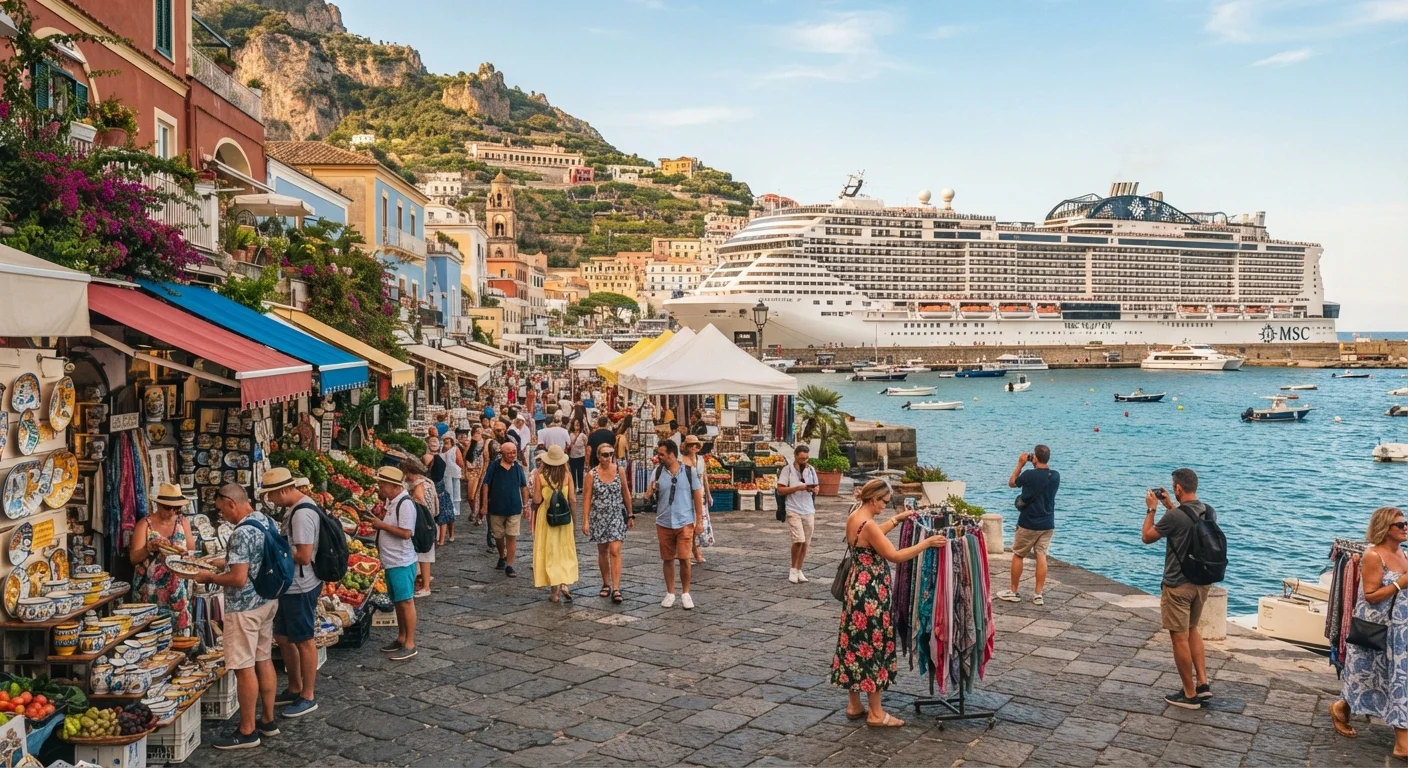
Photo credit: TrendingFaqs.com
In this article
Weigh the convenience and security of ship-booked excursions against the flexibility and cost of independent port exploration.
Key Takeaways
- Ship-booked excursions guarantee the ship waits for you if a tour runs late.
- Independent tours typically cost less and allow more flexible, personalized itineraries.
- Researching a port in advance is essential before deciding which approach to use.
- Some ports are easier to explore independently than others, depending on infrastructure and safety.
- Last-minute cancellation policies differ significantly between ship and independent operators.
Ship waits if the tour runs late
Any excursion sold by the cruise line comes with a guarantee that the ship will not leave without you if the tour returns late. This protection disappears the moment you book or arrange something independently.
Minimal planning required
The cruise line handles logistics, transportation, and guide arrangements. Travelers can browse options onboard and book without researching local operators or transportation in advance.
Clear accountability if something goes wrong
If an excursion has problems, you have the cruise line as a point of contact. They have an ongoing relationship with the local operator and an incentive to resolve disputes.
Works well at unfamiliar or complex ports
At ports with language barriers, limited English-speaking taxis, or complicated local transportation, having a pre-arranged tour removes a significant amount of uncertainty from the day.
Costs noticeably more than booking direct
Cruise lines mark up excursion prices to cover their administrative and contracting costs. The same tour with the same local operator often costs significantly less when booked directly.
Large group sizes limit flexibility
Ship-organized tours frequently involve groups of 20 to 40 or more people, which means slower movement, less personal attention from guides, and a fixed schedule that leaves little room to linger.
Generic itineraries dominate the catalog
Cruise line tours tend to hit the most popular landmarks on a condensed timeline. Travelers interested in niche cultural sites, local food markets, or off-the-beaten-path experiences rarely find those options in the ship's catalog.
Cancellation flexibility varies by line
Some cruise lines allow cancellations up to 48 hours before port arrival; others have stricter cutoffs. Policies are not uniform across the industry.
How the two approaches actually work
When your ship docks or tenders into port, you have a window of time ashore, typically four to ten hours depending on the itinerary. Shore excursions booked through the cruise line are pre-organized tours sold onboard or in advance through the line's website. You pay for them, join a group at the gangway, and follow a tour guide or board a bus. The cruise line contracts with local operators to run these tours.
Going independent means you disembark and arrange your own time ashore. That might involve pre-booking a local tour company online before departure, hiring a taxi at the pier, renting a car, or simply walking into town. The logistics are yours to manage.
For a broader look at how excursion costs factor into total trip spending, see our breakdown of hidden cruise costs.
Advantages of booking through the ship
Ship waits if the tour runs late
Any excursion sold by the cruise line comes with a guarantee that the ship will not leave without you if the tour returns late. This protection disappears the moment you book or arrange something independently.
Minimal planning required
The cruise line handles logistics, transportation, and guide arrangements. Travelers can browse options onboard and book without researching local operators or transportation in advance.
Clear accountability if something goes wrong
If an excursion has problems, you have the cruise line as a point of contact. They have an ongoing relationship with the local operator and an incentive to resolve disputes.
Works well at unfamiliar or complex ports
At ports with language barriers, limited English-speaking taxis, or complicated local transportation, having a pre-arranged tour removes a significant amount of uncertainty from the day.
The most significant protection ship excursions offer is the "late return" guarantee. If a ship-sold tour runs behind schedule, the vessel will not depart without you. That guarantee does not apply when you go independently. Missing the ship means covering your own transportation to the next port, which can be expensive and stressful.
Ship excursions also require little advance planning. For travelers who prefer to figure things out once they are onboard, or who are visiting a port for the first time with no local knowledge, the cruise line's tour catalog is a ready-made solution. Quality can vary, but the logistics are handled.
Disadvantages of ship-sold tours
Costs noticeably more than booking direct
Cruise lines mark up excursion prices to cover their administrative and contracting costs. The same tour with the same local operator often costs significantly less when booked directly.
Large group sizes limit flexibility
Ship-organized tours frequently involve groups of 20 to 40 or more people, which means slower movement, less personal attention from guides, and a fixed schedule that leaves little room to linger.
Generic itineraries dominate the catalog
Cruise line tours tend to hit the most popular landmarks on a condensed timeline. Travelers interested in niche cultural sites, local food markets, or off-the-beaten-path experiences rarely find those options in the ship's catalog.
Cancellation flexibility varies by line
Some cruise lines allow cancellations up to 48 hours before port arrival; others have stricter cutoffs. Policies are not uniform across the industry.
The price difference is real. Ship excursions carry a markup compared to booking the same or similar experience directly with a local operator. A half-day city tour that costs $60 through a local agency might be listed at $120 or more through the cruise line. Multiply that across several ports and several passengers, and the gap becomes meaningful. See how excursion markups fit into the broader picture of cruise spending.
Group sizes on ship tours can be large, sometimes 40 or more people, which slows movement and reduces time at each stop. You follow the guide's schedule, not your own interests.
What independent port days offer
Going it alone, or booking directly with a local operator, gives you control over timing, pace, and cost. Local tour companies often run smaller groups with guides who specialize in one area rather than delivering a script to a crowd. If you want to spend two hours at one museum instead of 20 minutes, you can.
The trade-offs between solo travel and guided tours apply here too. Booking a locally run private tour combines some flexibility of independent travel with the structure of having a guide. Websites that aggregate local operators let you compare itineraries and read reviews before you ever board the ship.
30%-50%
Typical markup on ship excursions vs. local booking
Travel industry observers generally estimate that cruise line excursions carry a 30 to 50 percent premium over comparable tours booked directly with local operators, though the gap varies by destination and tour type.
4-10 hrs
Typical time in port per stop
Most cruise itineraries allow between four and ten hours in each port, depending on the schedule, which shapes how ambitious an independent itinerary can realistically be.
Practical preparation matters more when you go independent. You need to know how far the port is from the town center, whether taxis are metered, what the re-boarding time is, and what to do if something goes wrong. Ports in major tourist hubs tend to be well-suited to independent exploration. Remote or less-developed ports can be harder to navigate without local knowledge.
Port conditions that should influence your decision
Not every port presents the same environment. At a busy Caribbean island with clear signage, English widely spoken, and taxis lined up at the pier, independent travel is straightforward. At a port that requires a ferry transfer to reach the town, or where roads and transportation are less organized, ship excursions can save genuine hassle.
Tender ports, where passengers take a small boat from the ship to shore, can add time pressure. If weather forces a short tender window, ship-organized groups typically get priority boarding back. Independent travelers may wait longer.
Check official sources before every port day
Travel conditions, entry requirements, and safety situations can change between your booking date and your sailing date. The U.S. Department of State publishes destination-specific travel advisories at travel.state.gov. Verify health and documentation requirements directly with the cruise line and the destination country's official government sources before you disembark. Do not rely solely on cruise line communications for safety-critical information.
Before any port day, check the official travel advisories from the U.S. Department of State and verify any entry or health requirements with your cruise line and the destination country's official sources. Conditions change, and what was accurate when you booked may have shifted by departure.
Cancellation policies and last-minute changes
Ship excursions can usually be cancelled for a full refund up to 24 to 48 hours before the port call, though policies vary by cruise line. If the ship skips a port due to weather or itinerary changes, excursion charges are typically refunded automatically.
Independent bookings through third-party operators have their own cancellation terms, which range from fully refundable to non-refundable. If the ship changes course and skips your port, you may lose what you paid to a local operator unless they offer flexibility. Read cancellation terms carefully before booking anything independently, and consider whether travel insurance covers prepaid non-refundable excursion costs. For help thinking through what to carry and what paperwork to organize before you sail, our cruise packing guide covers practical pre-departure preparation.

Author
Travel Editorial Team
Travel Editorial Team is the collective byline for our editorial team and contributor network. Articles published under this byline or an editorial pen name are researched, written, and reviewed according to our editorial standards for clarity, consistency, and independence before publication.
View all articles →