
Home Office Clutter: The Hidden Drag on Focus and Productivity
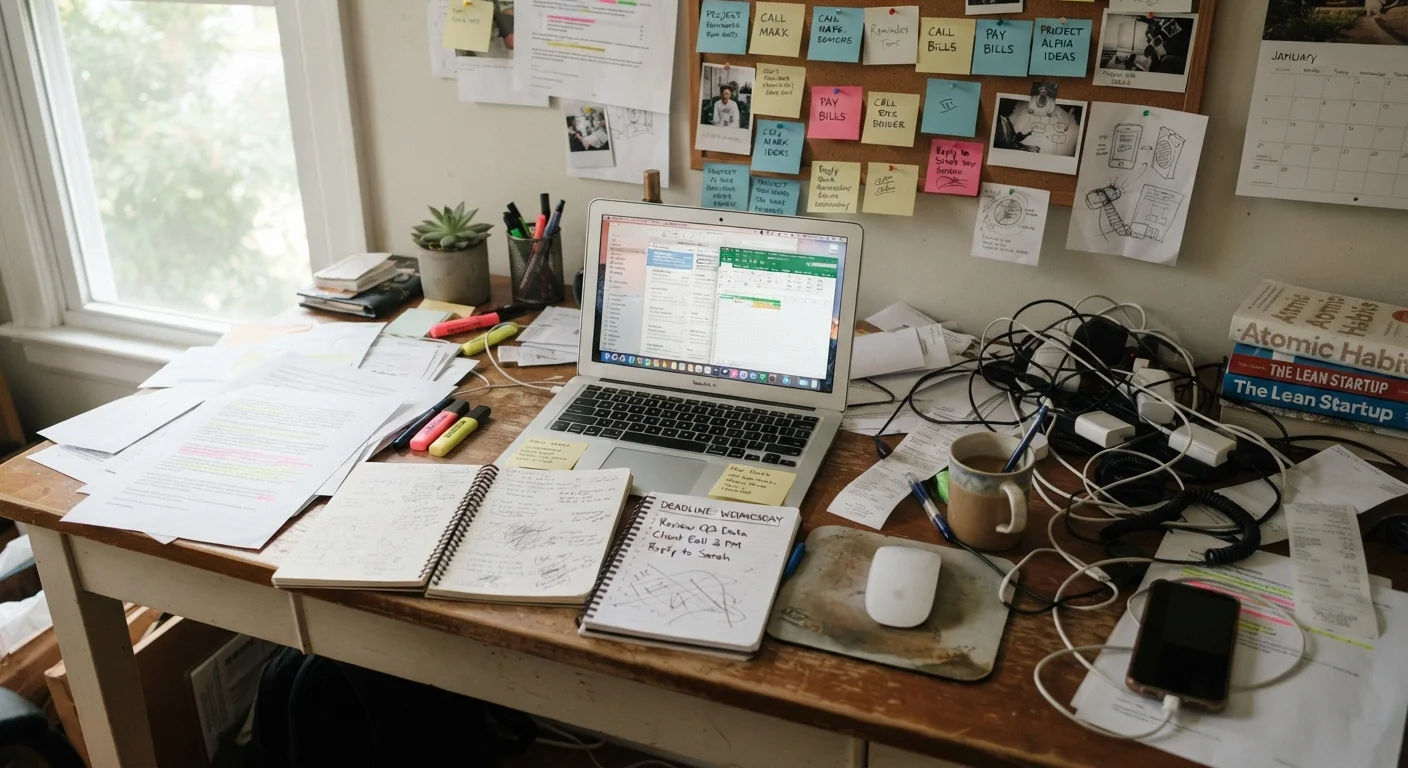
Photo credit: TrendingFaqs.com
In this article
A disorganized workspace affects more than aesthetics. Explore how desk and digital clutter impact concentration and what to do about it.
Key Takeaways
- Visual clutter in your workspace competes for mental attention, making concentration harder.
- Digital clutter, such as open tabs and cluttered desktops, has the same draining effect as physical mess.
- Small, consistent tidying habits are more sustainable than occasional deep-clean overhauls.
- A workspace that matches your actual work style reduces friction and keeps you focused.
- Addressing clutter is a practical step toward reducing work-from-home stress.
Why clutter affects your brain, not just your desk
A cluttered workspace is more than a visual annoyance. The human brain continuously scans its environment for information, and every object in your field of view is processed, even briefly. When your desk is covered with unrelated papers, objects, and visual noise, your brain spends attention on filtering it out, attention that would otherwise go toward the task in front of you.
This is not about perfectionism or having a minimalist aesthetic. A moderate amount of personalization in a workspace is normal and can feel grounding. The problem is disorder that demands mental processing without contributing anything useful. A pile of papers you still need to sort, a notebook open to a different project, a half-finished cup of coffee next to a tangle of cables: each item registers faintly as unfinished business.
For people working from home, this friction is compounded. There is no physical commute to create a mental boundary between home life and work mode. The workspace and living space overlap, and clutter from both tends to migrate. Understanding why clutter costs you focus is the first step toward deciding what to do about it. For a broader look at how your home environment affects your stress levels, the Comfortable Living hub has practical ideas for making any space work better.
Clutter and stress are connected
A persistently disorganized workspace can contribute to low-grade daily stress, which accumulates over time. This is not a reason for alarm, but it is worth factoring in when you notice your focus or mood dipping during the workday. See When Feeling Busy Becomes a Mental Health Problem for more on how environmental overload connects to emotional well-being.
Digital clutter is just as real
Most conversations about workspace clutter focus on physical objects, but the same principles apply to your screen. A desktop covered in unsorted files, forty-three open browser tabs, and a notification badge showing 1,200 unread emails all create the same kind of low-level cognitive drain as a messy desk.
Open tabs are a common source of invisible pressure. Each tab represents an unresolved decision: something you meant to read, a task you have not started, or a reference you might need. The brain registers these as open loops. Over time, the sheer number of them makes it harder to decide where to direct your attention.
Practical digital tidying does not require a complete system overhaul. Closing tabs you have not opened in two days, archiving emails older than a week, and giving your computer desktop a monthly clear-out are small actions with a meaningful cumulative effect. For low-effort strategies that actually stick, see Digital Organization for People Who Hate Organizing.
77%
Workers distracted by workplace disorder
A survey by Brother International found that 77% of workers reported being distracted by clutter in their workspace.
2x
Longer file retrieval with disorganized systems
Disorganized digital and physical filing systems have been shown in workplace studies to roughly double the time workers spend locating documents.
Habits that prevent buildup
Clutter rarely appears all at once. It accumulates gradually through small daily decisions: setting something down on the desk because there is no obvious home for it, leaving a browser tab open because closing it feels like a commitment, postponing the filing because the folder is not within reach. Preventing buildup means addressing these micro-decisions before they stack up.
A two-minute end-of-day reset is one of the most effective habits. Before closing your laptop, clear the desk surface to its baseline state, close browser tabs that no longer serve the current day's work, and write tomorrow's top priorities on a notepad or app. This takes less time than it sounds and means you start the next session with less friction.
Flat surfaces are the main culprit in any workspace. Desks, shelves, and the area next to your monitor naturally attract objects that have nowhere else to go. Creating designated spots for recurring items, a tray for incoming mail, a hook for headphones, a charging pad for your phone, removes the ambiguity that feeds accumulation. The article Flat Surfaces Are Not Storage covers this in detail.
It is worth noting that some organizing attempts make the problem worse by creating elaborate systems that are too complicated to maintain. If a habit requires significant effort to sustain, it will not last. When Organizing Attempts Backfire walks through the missteps that are worth avoiding.
Start with one surface, not the whole room
If clearing your entire office feels overwhelming, start with just the main desk surface. Remove everything, wipe it down, and only return the items you use daily. A single cleared surface has a disproportionate effect on how calm and usable the whole space feels, and it takes less than fifteen minutes.
Designing a workspace that stays clear
The physical setup of your home office determines how much passive clutter you accumulate. A workspace without enough storage, or with too many surfaces, will fill up regardless of how organized you are by nature. Designing the space to match your actual work habits is more effective than relying on willpower alone.
Consider what you genuinely use every day and keep only that within arm's reach. A laptop, a notepad, a single pen, and whatever reference materials are active for the current project are usually sufficient. Items used weekly can go in a drawer. Items used monthly belong in storage outside the immediate workspace.
If your home office is in a corner of another room or a shared space, creating visual separation helps. A small shelf, a room divider, or even the direction your chair faces can signal to your brain that this area is for focused work. This matters more than the size or formality of the setup. For practical guidance on setting up a functional workspace in a non-dedicated room, see Creating a Comfortable Home Office in a Space That Was Not Built for One.
Clutter also connects to stress in ways that extend beyond productivity. When a workspace feels persistently chaotic, it can contribute to chronic low-grade tension. The relationship between your environment and your mental state is worth taking seriously. The Mental Wellness hub has resources on managing everyday stress, including the kind that comes from feeling perpetually behind or overwhelmed.
Frequently Asked Questions

Author
Home Editorial Team
Home Editorial Team is the collective byline for our editorial team and contributor network. Articles published under this byline or an editorial pen name are researched, written, and reviewed according to our editorial standards for clarity, consistency, and independence before publication.
View all articles →