
Flat Surfaces Are Not Storage: Habits That Keep Counters Clear
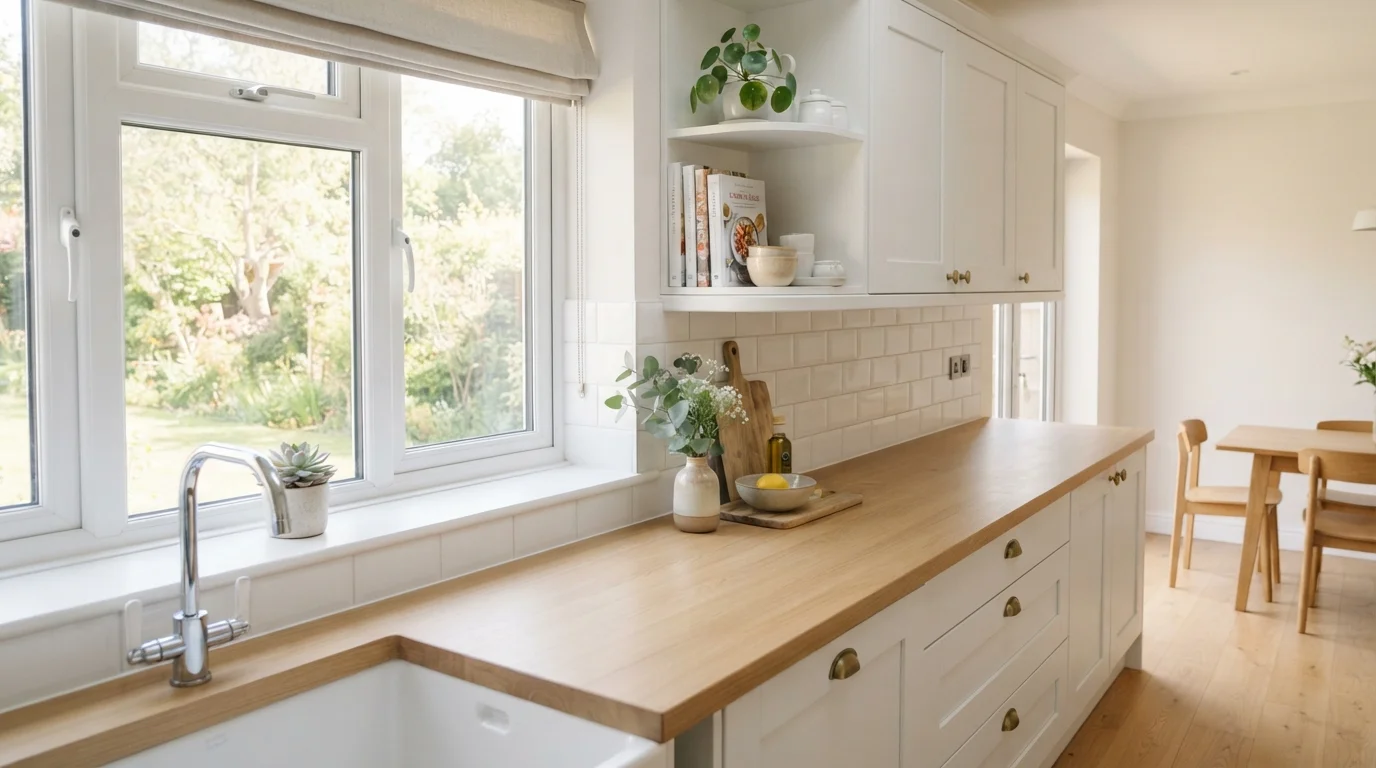
Photo credit: TrendingFaqs.com
In this article
Countertops and tables quietly collect clutter. Here are the habits and systems that help you stop the pile-up for good.
Key Takeaways
- Flat surfaces collect clutter by default because they offer no natural resistance to items being placed there.
- Assigning a permanent home to every object is the single most effective counter-clearing habit.
- A daily one-minute reset prevents small piles from becoming entrenched clutter.
- Reducing what enters your home matters as much as organizing what is already there.
- Paper and mail are among the most common counter offenders and need their own dedicated system.
Why flat surfaces attract clutter so reliably
Counters, tables, and shelves share one characteristic: they offer no friction. When you walk through the door carrying something, the nearest flat surface is a natural landing spot. There is nothing wrong with that impulse. The problem is that objects placed there rarely move themselves, and within a day or two, one item becomes a small pile.
Researchers who study household behavior describe this as a "horizontal surface effect": items accumulate on flat surfaces because placing something there requires no decision about where it actually belongs. The pile is not a sign of laziness. It is a sign that the object has no designated home elsewhere. That distinction matters because it tells you exactly where to focus your energy.
If your counters are consistently covered, more storage bins will not solve the problem. What changes things is questioning common storage assumptions and building habits that stop the drift before it starts.
Habits that keep counters clear
The practices below work because they address the root causes of surface clutter rather than just tidying the symptoms.
Give every object a permanent home before it reaches the counter.
Objects pile up on surfaces because they have nowhere else to go. When every item in your home has a designated storage spot, placing it on a counter becomes a temporary deviation rather than the default. This removes the mental friction of deciding where something goes each time.
Apply a one-in, one-out rule to surface objects.
Counters fill up partly because new items keep arriving without old ones leaving. Committing to removing one item from a surface whenever a new one is added keeps the overall count stable and prompts regular reassessment of what is actually useful to have out.
Do a one-minute reset each evening.
Small piles become large ones because they are left alone long enough to attract more items. A nightly sweep of one minute or less returns stray objects to their homes before the pile becomes invisible background noise. Short resets are sustainable in a way that hour-long organization sessions are not.
Reduce what enters the home in the first place.
Every object that comes through the door is a potential counter item. Being selective about what you bring in, whether that is freebies, impulse purchases, or duplicates, directly reduces the volume that needs managing. Less incoming means fewer decisions to make about where things live.
Keep only genuinely useful items on counters.
Most counters hold items that could easily be stored out of sight and retrieved when needed. Limiting counter display to things used daily or multiple times per week frees up surface space and makes the items that are out easier to access and clean around.
The mail and paper problem
Paper is among the most stubborn counter offenders. Mail arrives daily, and without a clear system, it settles on whatever surface is closest to the door. Within a week, a stack of unopened envelopes, expired coupons, and unread catalogs can overtake a kitchen counter entirely.
The fix is to intercept paper before it lands. Place a small tray or folder near the entry point where mail is first brought in. Sort immediately: recycle junk mail the same day it arrives, move bills and statements to a designated file or inbox, and discard anything that requires no action. For a fuller approach to what to keep and for how long, see managing paper clutter at home.
Counters used as workspaces are a separate issue. If you pay bills or handle paperwork at the kitchen counter, that surface will absorb the overflow. A dedicated workspace, even a small one, keeps that work-in-progress paper away from surfaces that need to stay clear.
Sort mail before it hits the counter
Keep a recycling bin near the front door or wherever you first bring in mail. Sort over the bin so junk mail never makes it to a surface. Anything that needs action goes directly into a designated folder or tray, not onto the counter. This single habit removes one of the most persistent sources of flat-surface clutter.
Building the habit into your routine
One-time organizing sessions feel satisfying but rarely hold. Counters return to their cluttered state within weeks unless daily habits replace the old pattern. The reset habit is simple: spend about one minute at the end of each day returning everything on a flat surface to its assigned place. That is not a cleaning session. It is a reset, and it works because it catches drift before it compounds.
Connecting the reset to something you already do consistently helps it stick. Many people tie it to making coffee in the morning or finishing dinner cleanup at night. The specific anchor matters less than the consistency. For more habits that keep a home feeling orderly without large time investments, daily habits for a fresh home offers a broader routine framework.
If a particular surface keeps filling up despite your reset habit, that is information. Either the objects landing there lack a home elsewhere, or the surface itself is positioned too conveniently for drop-off. In some cases, the solution is to move a piece of furniture or add a hook near the entry so the counter is no longer the default landing spot. A room-by-room decluttering approach can help identify whether the issue is layout or volume of possessions.

Author
Home Editorial Team
Home Editorial Team is the collective byline for our editorial team and contributor network. Articles published under this byline or an editorial pen name are researched, written, and reviewed according to our editorial standards for clarity, consistency, and independence before publication.
View all articles →