
School Zones, Work Zones, and Other Areas That Demand Extra Attention
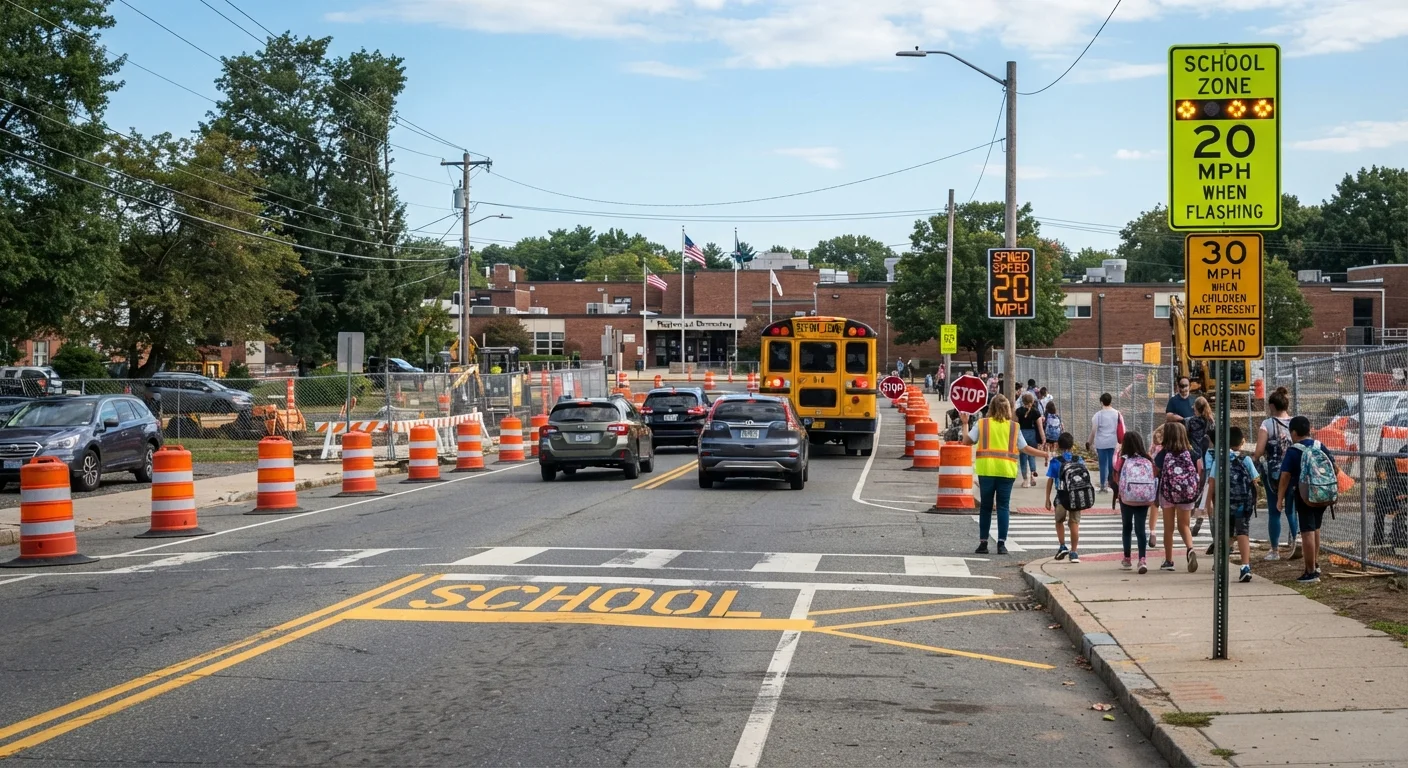
Photo credit: TrendingFaqs.com
In this article
Speed reductions in special zones exist for serious reasons. Learn the rules and the habits that protect the people most at risk.
Why special zones exist
Most stretches of road are designed around a predictable mix of vehicles moving in predictable ways. Special zones break that assumption. They introduce pedestrians with limited traffic experience, workers standing feet from live lanes, or sight lines blocked by equipment. Speed limits drop in these areas because the margin for error shrinks, not because of arbitrary rules.
Fines in school and work zones are typically doubled compared to standard violations, and some states suspend licenses after repeat offenses in these areas. Beyond the legal consequences, the physics are straightforward: a pedestrian struck at 40 mph has a much lower chance of survival than one struck at 25 mph.
For more on how speed affects stopping distance in dense traffic, see our guide to the two-second rule.
School zones
School zones are active during specific hours, usually before and after the school day, though many jurisdictions now post flashing beacons that signal exactly when the reduced limit applies. The posted speed is commonly 15 to 25 mph, depending on the state.
The most common mistake drivers make in school zones is watching for children at the crosswalk while missing hazards elsewhere. Kids move unpredictably: they cut between parked cars, cross mid-block, and sometimes reverse direction without warning. Scanning the full road width, not just the marked crossing, is worth developing as a habit.
- Stop completely for school buses with flashing red lights and extended stop arms. In most states this applies on both sides of an undivided road.
- Yield to crossing guards regardless of the signal phase.
- Do not re-enter traffic flow until children are fully clear of the roadway, not just the lane you are using.
Distracted driving is especially dangerous here. A text message that takes your eyes off the road for two seconds at 25 mph means you travel about 73 feet without looking.
Work zones
Work zones on highways and urban streets are among the deadliest environments on American roads. According to the Federal Highway Administration, thousands of crashes occur in work zones every year, and a substantial portion of fatalities are drivers and passengers, not workers.
Reduced speed limits in work zones are enforceable even when no workers are present. Contractors set the zone up before crews arrive and take it down after they leave, so the signs reflect conditions, not shift schedules. Barrels, concrete barriers, and lane shifts narrow the space available to correct a mistake.
Practical habits in work zones:
- Merge early. Waiting until the last moment to move from a closing lane creates the accordion effect that causes rear-end crashes.
- Increase following distance beyond your usual gap. Drivers ahead may brake suddenly when they spot workers or equipment.
- Watch for uneven pavement transitions between old and new surfaces. They can affect steering briefly.
- Turn off cruise control. Conditions change faster than automation reacts in confined work zones.
Work zones on highways require a different awareness than typical city driving. Our comparison of highway and city driving demands covers the speed management mindset that applies here.
Hospital zones, playgrounds, and other designated areas
Many states designate reduced-speed zones around hospitals, senior centers, and public parks with playgrounds. The logic is the same: people in or near these locations may be physically impaired, elderly, or young, and less able to judge vehicle speeds accurately.
Hospital zones often apply around the clock rather than during specific hours. Ambulance and emergency vehicle activity adds an additional unpredictability: vehicles entering and exiting driveways at speed, and the possibility that pedestrians are distracted or unwell.
Intersections near any of these zones carry compounded risk. Our article on why intersections are where most crashes happen explains the habits that reduce exposure at those conflict points.
Blind spots around larger vehicles, buses, and delivery trucks are also worth monitoring near schools and hospitals, where those vehicles stop frequently. The guide to blind spots and mirrors covers how to adjust mirror positions to reduce those gaps.
This article provides general driving information and is not legal advice. Traffic laws and zone regulations vary by state and municipality. Verify current rules with your state's department of motor vehicles or transportation authority.

Author
Cars Editorial Team
Cars Editorial Team is the collective byline for our editorial team and contributor network. Articles published under this byline or an editorial pen name are researched, written, and reviewed according to our editorial standards for clarity, consistency, and independence before publication.
View all articles →