
Driving on Rural Roads: The Risks Urban Drivers Do Not Expect
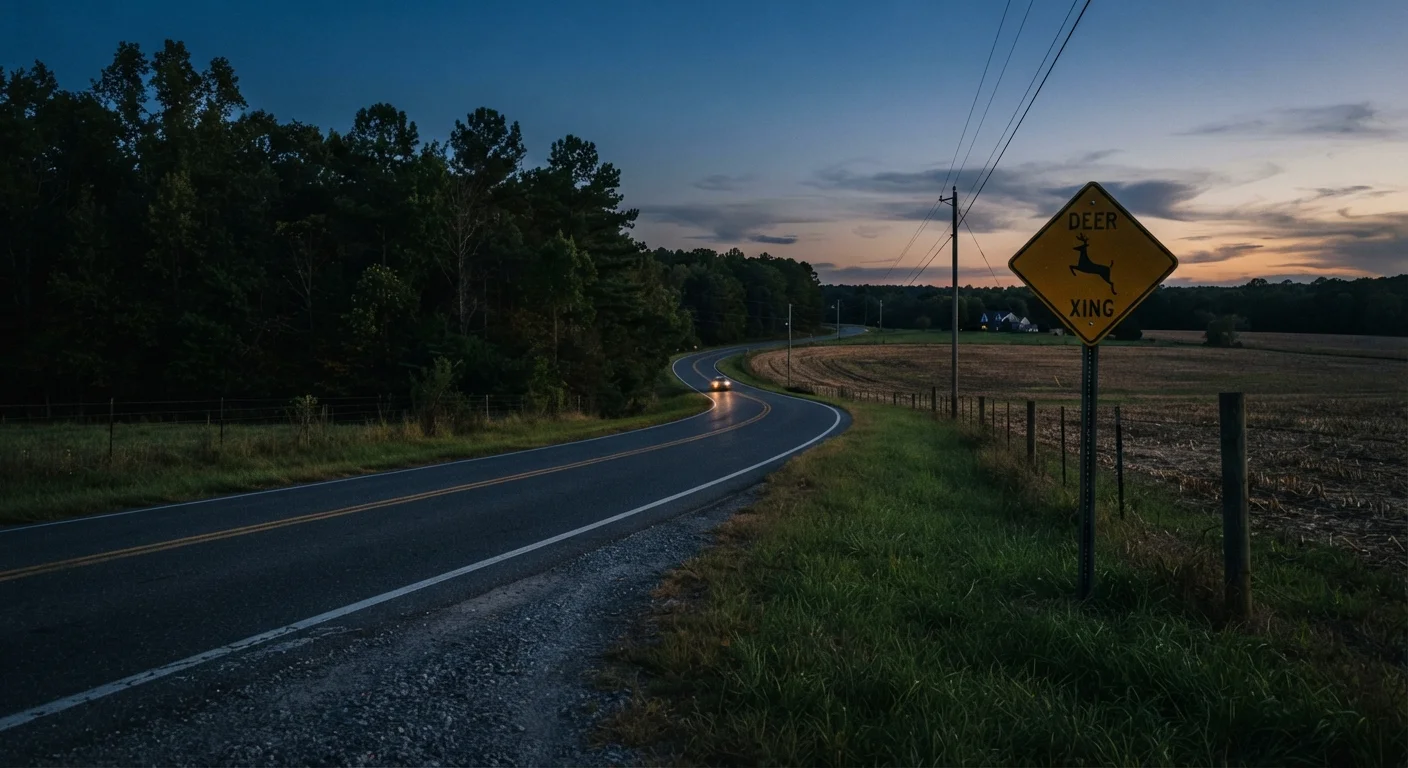
Photo credit: TrendingFaqs.com
In this article
Rural roads have fewer cars but higher fatality rates. Understand the unique hazards of two-lane highways, wildlife, and limited lighting.
Key Takeaways
- Rural roads account for a disproportionate share of U.S. traffic fatalities despite lower traffic volumes.
- Higher speeds and no streetlights mean less time to react to unexpected hazards.
- Wildlife, gravel shoulders, and blind curves are common on rural routes but rare in city driving.
- Limited emergency response times make crashes on rural roads more likely to be fatal.
- Adjusting speed below the posted limit is often appropriate when visibility or road conditions are poor.
The numbers behind rural road danger
Many drivers assume that less traffic means less danger. Rural roads are quieter, but they are not safer. The National Highway Traffic Safety Administration has consistently reported that rural roads account for a much larger share of fatal crashes than their traffic volume would suggest. Speed is central to this: rural routes often have posted limits of 55 mph or higher, and actual travel speeds can go even higher with no congestion to slow things down.
At those speeds, a driver has only a fraction of a second to respond to a deer in the road, a tractor pulling out from a farm lane, or gravel that has spread across the pavement after a rain. Highway driving demands a different mindset than city streets, and rural driving demands even more because the road itself is far less forgiving.
~50%
Share of U.S. traffic fatalities on rural roads
The NHTSA has reported that rural roads account for approximately half of all U.S. traffic fatalities, despite carrying a much smaller share of total vehicle miles traveled.
20+ min
Typical rural EMS response time
Rural emergency medical response times can exceed 20 minutes in many areas, compared to under 10 minutes in urban settings, according to federal rural health research.
1.5 million
Annual deer-vehicle collisions in the U.S.
State Farm's annual deer-collision report has estimated approximately 1.5 million deer-vehicle collisions occur each year in the United States.
Hazards city drivers rarely encounter
Urban drivers are conditioned to watch for pedestrians, cyclists, and heavy intersection traffic. Rural roads swap those hazards for a different set.
Wildlife crossings
Deer cause thousands of crashes every year in the United States, with peak activity at dawn, dusk, and overnight. A deer warning sign is not decoration: it marks areas where animals regularly cross. Slow down and scan the road edges when you see one. If one deer crosses, assume others may follow.
Narrow lanes and soft shoulders
Rural two-lane roads are often built to older standards with lanes as narrow as 10 feet. The shoulder may be gravel or packed dirt that drops off sharply. Drifting onto a soft shoulder at highway speed and then overcorrecting back onto the pavement is a known cause of rollovers. If your tires drop off the edge, ease off the gas, grip the wheel firmly, and steer back gradually rather than jerking hard.
Blind curves and crests
A hill crest or sharp curve can hide an oncoming vehicle, a stopped tractor, or debris until you are only a car-length or two away. Slow to a speed at which you can stop within the distance you can see. That rule sounds simple, but most drivers do not apply it on unfamiliar rural roads.
No lighting
Many rural highways have zero streetlights. Your headlights alone define the visible world ahead of you. Night driving is genuinely riskier than it feels, and the darkness on a rural road is far more complete than anything most city drivers experience. Use high beams whenever no oncoming traffic is present.
Limited help when something goes wrong
In a city, an ambulance can often reach a crash scene within minutes. In rural areas, response times can stretch to 20 minutes or longer, and some remote locations require volunteer fire or EMS units that may have longer callout times. That gap matters: injuries that are survivable with fast trauma care become fatal when response is delayed.
Cell coverage is also unreliable in many rural corridors. Before a long rural drive, download offline maps, note the route number or highway name you will be on, and let someone know your expected arrival time. If you carry road flares or a reflective emergency triangle, keep them accessible rather than buried in the trunk.
Many safe driving habits that matter most are ones drivers skip early on, and rural preparedness is one of them.
Adjusting your driving for rural conditions
The posted speed limit is a legal maximum under ideal conditions, not a target. On a winding two-lane road at night, or on a gravel road after rain, a speed well below the posted limit is appropriate. Scan farther ahead than you would in a city, watch the tree line and field edges for movement, and position your vehicle toward the center of your lane to maximize your view around curves.
Fatigue is a serious factor on long rural drives. Straight, flat roads with no visual stimulation cause attention to drop faster than most drivers realize. If you feel drowsy, pull completely off the road, not just onto a narrow shoulder. A solid foundation in road safety basics includes recognizing that tiredness impairs reaction time in ways that feel easy to ignore until they are not.
Passing on rural two-lane roads is one of the highest-risk maneuvers in everyday driving. Dotted center lines permit passing when clear, but sight distances can disappear quickly around a curve. If there is any doubt about the distance available, do not pass.
This article is for general informational purposes. Always follow posted traffic laws and consult your state's driver handbook for regulations specific to your area.
Frequently Asked Questions

Author
Cars Editorial Team
Cars Editorial Team is the collective byline for our editorial team and contributor network. Articles published under this byline or an editorial pen name are researched, written, and reviewed according to our editorial standards for clarity, consistency, and independence before publication.
View all articles →