
Solo Travel vs. Guided Tours: Weighing the Trade-offs
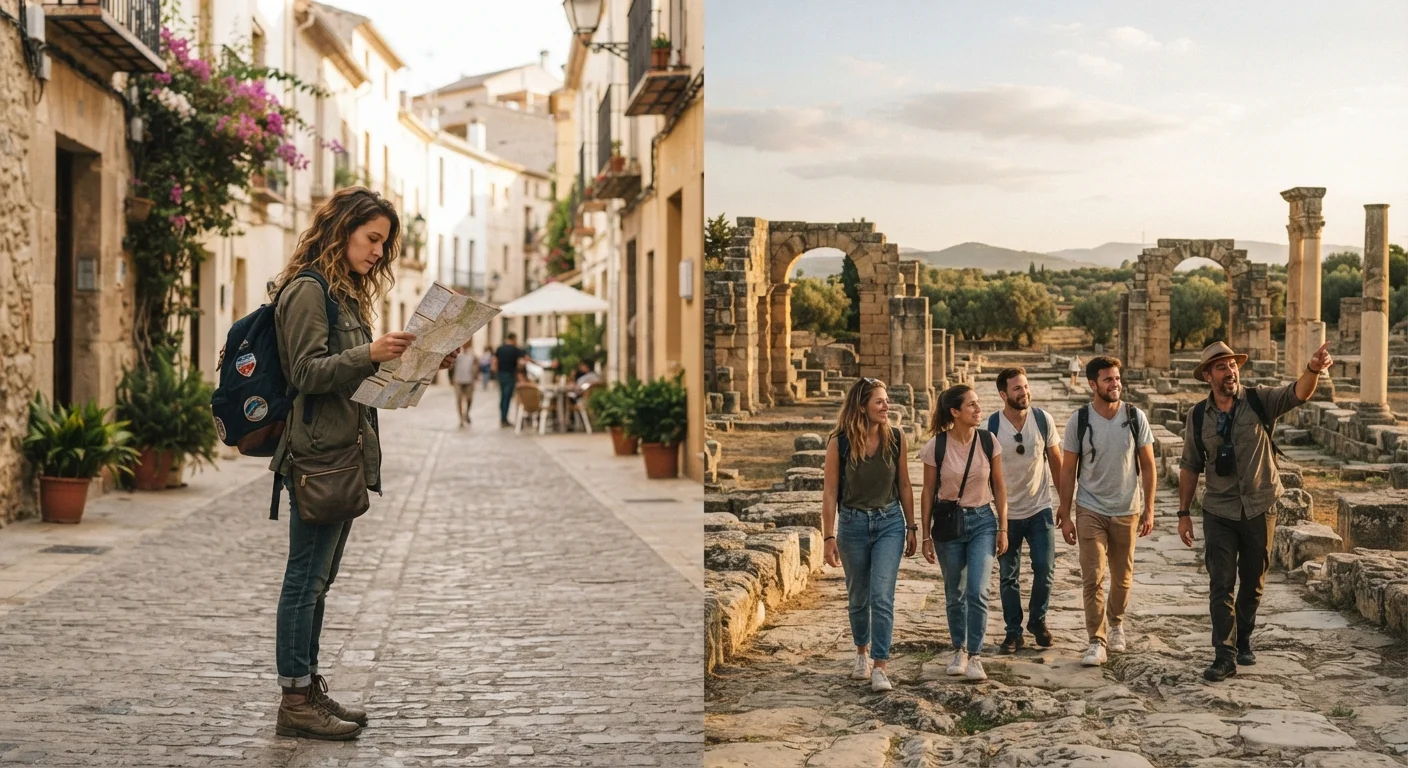
Photo credit: TrendingFaqs.com
In this article
Independent travel offers freedom; guided tours offer structure and local knowledge. Here's a balanced look at both approaches to help you decide.
Key Takeaways
- Solo travel gives you full control over your schedule, pace, and spending.
- Guided tours remove logistical friction and provide access to local expertise.
- Your destination type often determines which approach works better.
- Cost comparisons between the two depend heavily on trip length and location.
- Many travelers combine both styles within a single trip.
Full control over your daily schedule and pace
You can linger, detour, or change plans without consulting anyone. This freedom is especially valuable if your travel interests are niche or if you recharge by spending time alone.
Potential for lower costs on flexible bookings
Independent travelers can comparison-shop accommodation, transit, and meals in real time, often finding options below what a packaged tour includes. Savings depend heavily on destination and travel style.
Spontaneous decisions are easy to act on
Staying an extra day somewhere, skipping a site, or joining a local event last-minute are straightforward when you control your own itinerary.
Travel at your own comfort level
Introverted travelers or those with specific dietary, mobility, or scheduling needs can structure each day around personal requirements without compromise.
Fixed itinerary limits spontaneity
Guided tours run on a schedule that the whole group follows. If you want to spend more time at a specific site or skip one entirely, that option generally isn't available.
Group dynamics can affect the experience
Tour groups range from a few people to dozens. The pace, noise level, and interests of fellow travelers directly affect what the trip feels like day to day.
Higher upfront cost in some cases
Packaged tours often cost more than equivalent solo arrangements, particularly in destinations where independent travel is logistically straightforward. The convenience premium is real.
Less flexibility for personal interests
Tour itineraries are designed to appeal broadly, which means time is allocated to popular sites rather than tailored to individual preferences. Specialized interests may not be well served.
What you're actually choosing between
Solo travel and guided tours are not just two booking styles. They represent different relationships with uncertainty, time, and cost. A solo trip means you plan every segment: flights, accommodation, ground transport, meals, and entry tickets. A guided tour hands much of that over to an operator, in exchange for a fixed itinerary and a group dynamic.
Neither approach is inherently more "authentic" or more enjoyable. The right fit depends on where you're going, how much planning energy you have, and what you want the trip to feel like once you're there. For destinations like Southeast Asia, where country-to-country logistics can get complicated fast, that distinction matters a lot.
The case for solo travel
Full control over your daily schedule and pace
You can linger, detour, or change plans without consulting anyone. This freedom is especially valuable if your travel interests are niche or if you recharge by spending time alone.
Potential for lower costs on flexible bookings
Independent travelers can comparison-shop accommodation, transit, and meals in real time, often finding options below what a packaged tour includes. Savings depend heavily on destination and travel style.
Spontaneous decisions are easy to act on
Staying an extra day somewhere, skipping a site, or joining a local event last-minute are straightforward when you control your own itinerary.
Travel at your own comfort level
Introverted travelers or those with specific dietary, mobility, or scheduling needs can structure each day around personal requirements without compromise.
The clearest advantage of going solo is schedule control. You can spend three hours in one museum room, skip a site entirely, or change cities on a whim without coordinating with anyone. That kind of flexibility is hard to overstate for travelers who want to slow down or explore at their own pace.
Cost is more variable than people expect. Solo travel can be cheaper or more expensive than a guided tour depending on the destination and how you travel. Budget-conscious travelers who book accommodation and transport independently can often undercut group tour prices, especially on longer trips. However, solo travelers miss out on group rates for entry fees and accommodations, and single-room supplements can add up quickly in Europe.
For decisions like how you pay once you're abroad, see our breakdown of carrying cash versus using cards internationally, since that choice interacts directly with how independently you plan to move around.
The case for guided tours
Fixed itinerary limits spontaneity
Guided tours run on a schedule that the whole group follows. If you want to spend more time at a specific site or skip one entirely, that option generally isn't available.
Group dynamics can affect the experience
Tour groups range from a few people to dozens. The pace, noise level, and interests of fellow travelers directly affect what the trip feels like day to day.
Higher upfront cost in some cases
Packaged tours often cost more than equivalent solo arrangements, particularly in destinations where independent travel is logistically straightforward. The convenience premium is real.
Less flexibility for personal interests
Tour itineraries are designed to appeal broadly, which means time is allocated to popular sites rather than tailored to individual preferences. Specialized interests may not be well served.
A guided tour compresses the planning burden significantly. For a first visit to a place with unfamiliar language, transport infrastructure, or safety considerations, having a knowledgeable guide is a genuine practical benefit, not just a comfort preference.
Local guides can access sites, stories, and perspectives that a solo traveler with a guidebook simply cannot. That matters in places where historical or cultural context shapes the entire meaning of what you're seeing. Guided tours also handle logistics that solo travelers find time-consuming: timed entry reservations, private transfers between cities, and pre-vetted restaurants.
The trade-off is real, though. Group travel runs on a fixed schedule, and you move at the group's pace. If the tour includes sites you wouldn't have chosen, you're there regardless. Some tours fill days tightly, leaving little unscheduled time. For travelers who find that frustrating, even a well-run tour can feel constraining.
If you're considering a cruise-based itinerary, the same tension shows up when deciding between booking shore excursions through the ship versus exploring ports independently.
How destination type shifts the math
Destination complexity matters more than preference
The solo-versus-guided decision is not purely about personality type. Destination infrastructure, language barriers, and legal requirements at heritage sites can make one approach significantly more practical than the other. Before defaulting to your usual style, research what independent navigation actually involves at your specific destination. Official tourism boards and government travel advisories are reliable starting points for that research.
In well-touristed destinations with strong public transport infrastructure, such as Western Europe or Japan, solo travel is genuinely easy. Signage is often multilingual, transit apps are reliable, and accommodation is plentiful at most price points. The logistical case for a guided tour is weaker here, though cultural commentary and skip-the-line access can still add value.
In destinations with limited English signage, complicated visa logistics, or regions where a local guide is required by law at certain heritage sites, a guided tour removes friction that would otherwise consume significant time and energy. Parts of Central Asia, remote areas of East Africa, and some Himalayan trekking zones fall into this category.
Timing also affects the calculation. See how peak season versus off-season travel changes both the solo and guided tour experience, since crowding and availability shift the pros and cons of each approach.
A middle path: combining both
Many travelers find that a hybrid works better than a strict choice. A common approach: book a guided tour for the first several days in an unfamiliar destination to get oriented, then extend the trip independently once you have a feel for how things work locally. Some tour operators also offer small-group tours with significant free time built into each day, which captures the logistical support of a tour without locking every hour.
If you're exploring cruise-based travel, the same logic applies. Different cruise itinerary types range from highly structured to fairly open-ended, and matching that structure to your style is just as important as the solo-versus-group question on land-based trips.
There is no formula that settles this for everyone. Treat the choice as one variable in a broader trip plan, and adjust it based on the specific destination rather than applying a fixed preference to every trip you take.

Author
Travel Editorial Team
Travel Editorial Team is the collective byline for our editorial team and contributor network. Articles published under this byline or an editorial pen name are researched, written, and reviewed according to our editorial standards for clarity, consistency, and independence before publication.
View all articles →