
Visiting Southeast Asia: The Honest Trade-Offs of Each Major Country
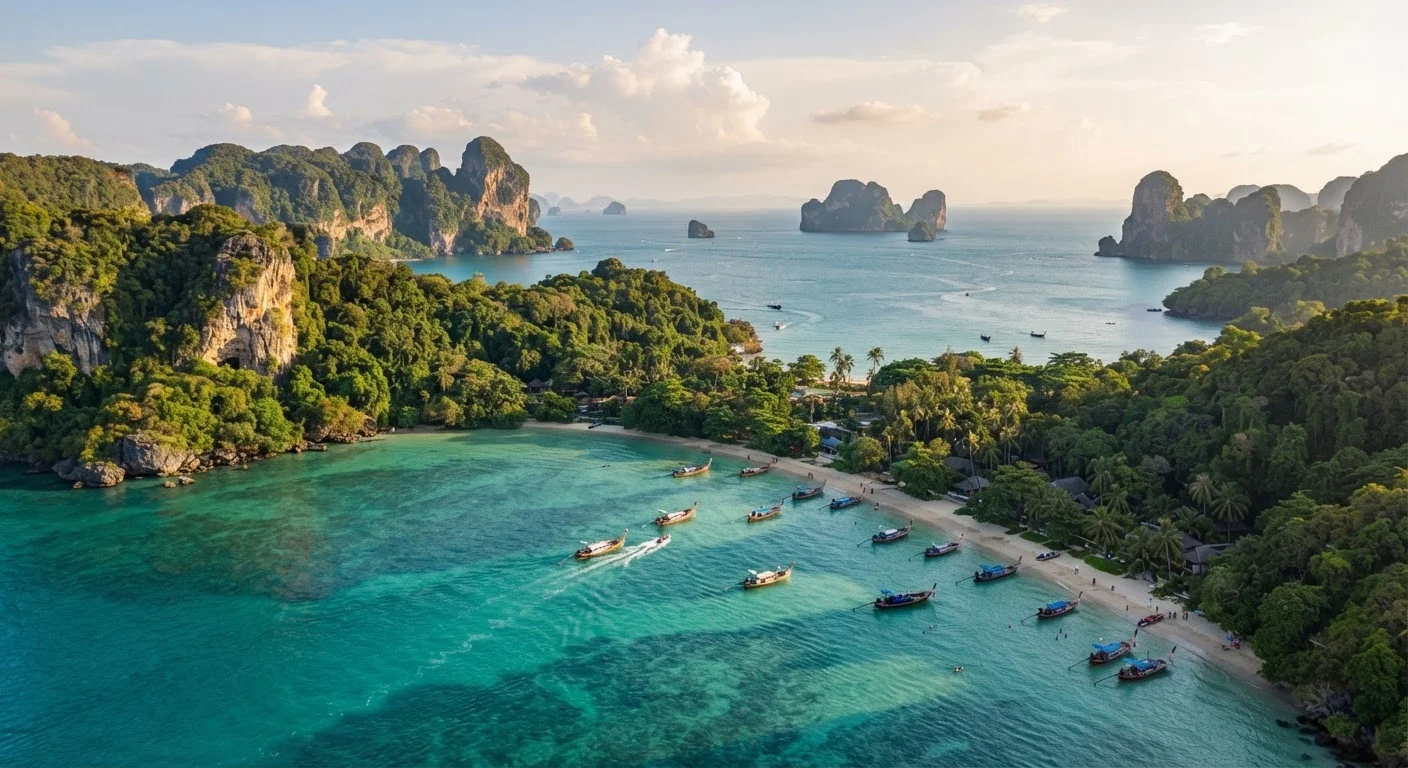
Photo credit: TrendingFaqs.com
In this article
Thailand, Vietnam, Cambodia, Indonesia, and the Philippines each offer something different. Here is a plain-language breakdown of what each involves.
Key Takeaways
- Thailand has the most developed tourist infrastructure but also the most crowded popular sites.
- Vietnam rewards travelers who enjoy variety, covering a wide range of terrain and culture across a long, narrow country.
- Cambodia is affordable and historically rich, though roads and services outside Siem Reap can be limited.
- Indonesia's size means island-hopping takes time and money; the rewards are isolation and natural variety.
- The Philippines suits beach-focused travelers but inter-island transport adds complexity to any itinerary.
Thailand has well-developed, reliable tourist infrastructure
Trains, budget airlines, and English-language signage make logistics manageable, which reduces stress for less experienced international travelers.
Vietnam offers striking geographic and cultural variety
The country covers tropical beaches, mountain landscapes, ancient towns, and two distinct urban centers, giving longer trips a natural structure.
Cambodia is one of the most affordable options in the region
Daily costs for food, accommodation, and transport are low, and the U.S. dollar is accepted widely, which simplifies budgeting for American travelers.
Indonesia includes genuinely remote natural destinations
Islands like Komodo and Raja Ampat offer wildlife and underwater scenery that have no real equivalent elsewhere in Southeast Asia.
The Philippines has high English fluency and uncrowded beaches
Communication is easier than in most of the region, and many beaches remain far less visited than comparable spots in Thailand or Bali.
Thailand's popular sites are heavily crowded
Islands like Phi Phi and temples in Chiang Mai see large visitor numbers year-round, and a sense of solitude can be difficult to find without traveling off the main circuit.
Vietnam's length makes thorough coverage time-consuming
A trip that attempts to cover both ends of the country plus central highlights involves significant transit time, which can leave less room for slower exploration.
Cambodia's infrastructure outside Siem Reap is limited
Road quality, power reliability, and health services vary considerably once you move away from the main tourist zones.
Indonesia and the Philippines require complex logistics
Inter-island travel by flight or ferry adds cost and time, and schedules in more remote areas can be unreliable or infrequent.
Typhoon season creates real weather risk in the Philippines
Travelers visiting between roughly June and November face a meaningful chance of disrupted transport and dangerous conditions, depending on which islands they visit.
Thailand: easy to navigate, hard to have to yourself
Thailand has better transport links, more English signage, and a wider range of accommodation than most of its neighbors. Trains connect the north and south, budget airlines are frequent, and tourist infrastructure in places like Chiang Mai and Bangkok is genuinely well-developed. That ease comes with a trade-off: popular sites are crowded, and some areas feel more oriented toward tourist consumption than local life.
Costs have risen over the past decade. While Thailand is still affordable compared to Western destinations, it is no longer the cheapest option in the region. Street food remains inexpensive, but accommodation in popular areas has moved upmarket. Travelers who want to stretch a budget might find Vietnam or Cambodia more forgiving. Those who want a manageable first trip to Southeast Asia, with good hospitals, reliable transport, and predictable logistics, tend to find Thailand the most comfortable starting point.
Thailand has well-developed, reliable tourist infrastructure
Trains, budget airlines, and English-language signage make logistics manageable, which reduces stress for less experienced international travelers.
Vietnam offers striking geographic and cultural variety
The country covers tropical beaches, mountain landscapes, ancient towns, and two distinct urban centers, giving longer trips a natural structure.
Cambodia is one of the most affordable options in the region
Daily costs for food, accommodation, and transport are low, and the U.S. dollar is accepted widely, which simplifies budgeting for American travelers.
Indonesia includes genuinely remote natural destinations
Islands like Komodo and Raja Ampat offer wildlife and underwater scenery that have no real equivalent elsewhere in Southeast Asia.
The Philippines has high English fluency and uncrowded beaches
Communication is easier than in most of the region, and many beaches remain far less visited than comparable spots in Thailand or Bali.
Vietnam: geographic variety, logistical effort
Vietnam runs nearly 1,000 miles from north to south, and the difference between Hanoi and Ho Chi Minh City is not just geographic. The food, accents, culture, and pace change noticeably as you move through the country. That variety is one of Vietnam's strongest draws. The trade-off is that covering it takes time. A two-week trip that tries to include Hanoi, Ha Long Bay, Hoi An, and Ho Chi Minh City will involve a lot of moving.
Costs are generally lower than Thailand. Street food is cheap, guesthouses are affordable, and local transport is inexpensive if you use sleeper buses or trains rather than domestic flights. The downside is that scams targeting tourists, particularly around motorbike rentals and tour bookings, are more common in certain cities. Traveling with a clear plan and using vetted operators reduces that friction considerably. For those considering whether to book independently or join a group, the trade-offs between solo travel and guided tours are worth thinking through before you go.
Thailand's popular sites are heavily crowded
Islands like Phi Phi and temples in Chiang Mai see large visitor numbers year-round, and a sense of solitude can be difficult to find without traveling off the main circuit.
Vietnam's length makes thorough coverage time-consuming
A trip that attempts to cover both ends of the country plus central highlights involves significant transit time, which can leave less room for slower exploration.
Cambodia's infrastructure outside Siem Reap is limited
Road quality, power reliability, and health services vary considerably once you move away from the main tourist zones.
Indonesia and the Philippines require complex logistics
Inter-island travel by flight or ferry adds cost and time, and schedules in more remote areas can be unreliable or infrequent.
Typhoon season creates real weather risk in the Philippines
Travelers visiting between roughly June and November face a meaningful chance of disrupted transport and dangerous conditions, depending on which islands they visit.
Cambodia: low cost, uneven infrastructure
Angkor Wat alone draws many visitors to Cambodia, and the temple complex genuinely delivers. Siem Reap, the nearest city, has a solid tourist infrastructure built around those visits. Beyond it, the picture is more mixed. Roads outside the main routes can be poor, and power and water reliability vary in rural areas. Phnom Penh has improved significantly as a city to visit, but it is not as polished as Bangkok or Hanoi.
Cambodia is among the most affordable countries in the region for daily spending. The U.S. dollar is widely accepted alongside the riel, which simplifies transactions for American travelers. Health infrastructure is limited outside the capital, so travel insurance with medical evacuation coverage is worth taking seriously here. The history, particularly around the Khmer Rouge period, is confronted openly at sites like Tuol Sleng and the Killing Fields, which are sobering and worth visiting if you want to understand the country beyond its temples.
Travel insurance in Cambodia
Medical facilities in Cambodia are limited outside Phnom Penh, and serious cases are often referred to Thailand for treatment. Travel insurance that includes medical evacuation is widely recommended by travelers and health organizations for visits here. Check your policy terms carefully before departure, and verify what your specific plan covers.
Indonesia and the Philippines: islands mean choices
Indonesia has more than 17,000 islands, and Bali is only one of them. Lombok, the Gili Islands, Komodo, and Raja Ampat each offer something distinct. The challenge is that getting between them requires domestic flights, ferries, or both, and schedules are not always reliable. Budget well for inter-island transport because it adds up quickly. Bali itself is developed and tourist-friendly; the more remote islands trade comfort for isolation and natural variety.
The Philippines faces a similar geography. More than 7,600 islands mean that itinerary planning requires careful attention to ferry routes and flight schedules. The country has excellent diving, some of the least-crowded beaches in the region, and a population with high English fluency, which eases communication considerably. Typhoon season runs roughly from June through November, and travel during that period carries weather risk that varies by island group. Checking conditions for your specific destination before travel is important. How you handle money across these destinations also matters: the practical differences between carrying cash and using cards abroad can affect your options in smaller towns and islands where card readers are scarce.
Timing your trip wisely matters across all five countries. Traveling during peak season versus the off-season involves real trade-offs in Southeast Asia, where shoulder months often offer lower prices and thinner crowds but also higher rainfall in some areas.
17,000+
Islands in Indonesia
Indonesia's official island count, cited by the Indonesian government, illustrates the scale of logistical planning required for multi-destination trips.
7,600+
Islands in the Philippines
The Philippine government estimates more than 7,600 islands, making inter-island ferry and flight connections central to any itinerary.
~1,000 miles
North-to-south length of Vietnam
Vietnam's geographic length means climate, cuisine, and culture shift substantially between Hanoi in the north and Ho Chi Minh City in the south.

Author
Travel Editorial Team
Travel Editorial Team is the collective byline for our editorial team and contributor network. Articles published under this byline or an editorial pen name are researched, written, and reviewed according to our editorial standards for clarity, consistency, and independence before publication.
View all articles →