
Decluttering Sentimental Items Without Regret
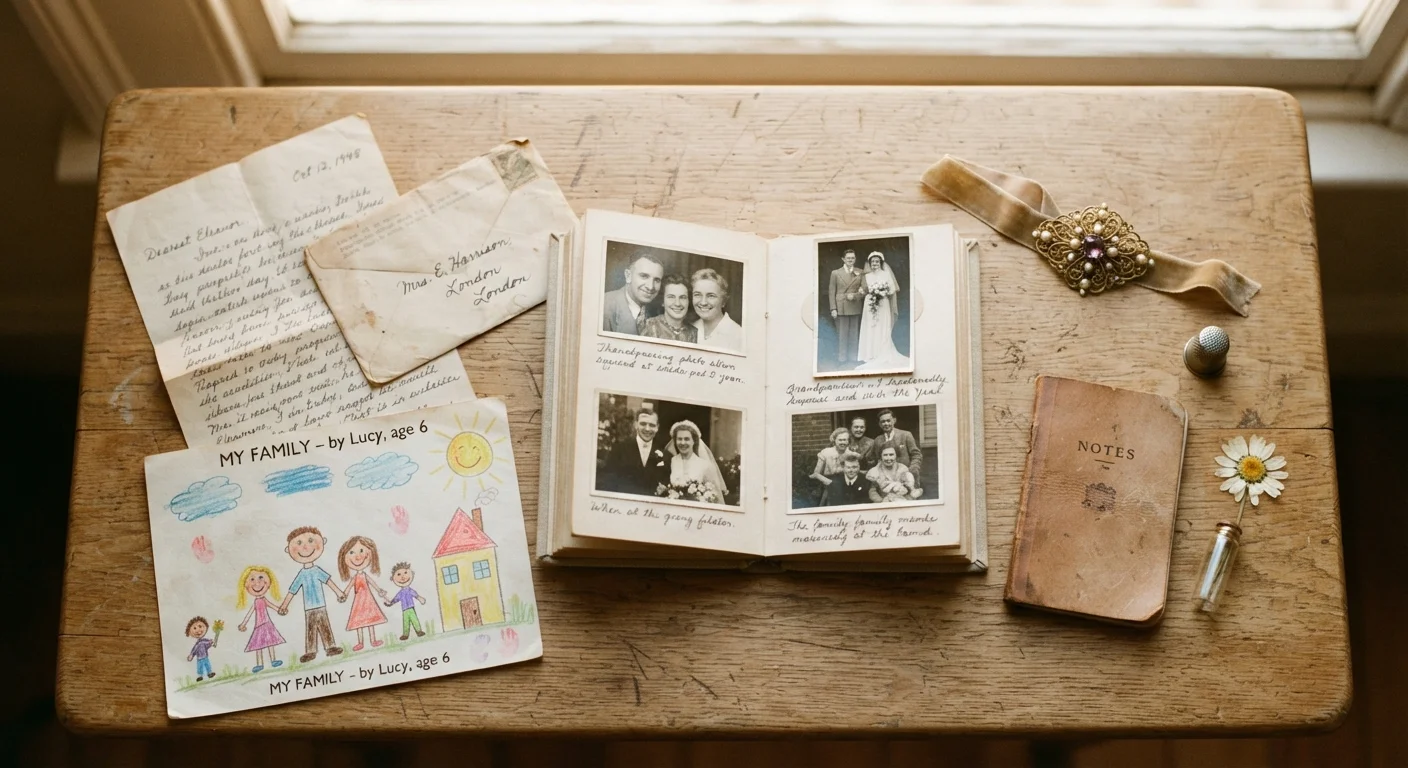
Photo credit: TrendingFaqs.com
In this article
Letting go of meaningful possessions is hard. A thoughtful framework for deciding what to keep, display, photograph, or pass on.
Key Takeaways
- Sentimental clutter is harder to address than ordinary clutter because it carries emotional weight, not just physical bulk.
- Working in short, focused sessions prevents decision fatigue and emotional burnout.
- Photographing or passing items to relatives can preserve meaning without keeping physical objects.
- Keeping a small, curated collection of the most meaningful items is more satisfying than holding everything.
- Setting a category limit before you start helps you decide without second-guessing every piece.
Why sentimental items are so difficult to release
A stack of your grandmother's dishes. A box of your child's artwork from kindergarten. A jacket that belonged to someone you miss. These objects are not just things; they represent relationships, time periods, and versions of yourself. That is why the usual decluttering advice, "if you haven't used it in a year, toss it," does not apply here.
The difficulty is not confusion about practicality. It is that letting go of an object can feel like letting go of the person or moment connected to it. Understanding that distinction is the first step. The memory lives in you, not in the item. Physical objects can trigger memories, but they do not hold them.
For a broader framework on working through your home one area at a time, this room-by-room decluttering guide is a good companion to what follows here.
Work by category, not by room
Sentimental items are usually scattered across a home: photos in the living room, children's artwork in a closet, old gifts in a spare bedroom. Gathering one full category before sorting it gives you a complete picture and prevents you from making decisions in isolation.
Before you start: set yourself up to make clear decisions
Sentimental decluttering done impulsively, usually when moving or in the middle of a larger cleanout, tends to produce two bad outcomes: keeping too much out of guilt or discarding things you later regret. A slower, deliberate approach works better.
Gather everything in one category before making any decisions. If you are working through photos, collect all photos from every drawer, album, and box first. Seeing the full volume helps you set realistic limits and spot duplicates. Give yourself a time boundary per session, around 60 to 90 minutes, to avoid emotional exhaustion.
What you will need
How to decide what to keep, pass on, or let go
Set a category limit before you touch anything
Decide in advance how much space you are willing to give a category. One memory box per person. One shelf for childhood keepsakes. One album per decade of photos. This limit is not arbitrary; it forces you to identify what matters most within that group rather than keeping everything by default.
Write the limit down before you start. Once you are holding objects, it is easy to expand the boundary. A written limit gives you something to return to.
Sort into four groups, not two
Most people try to sort into "keep" or "discard," which forces a binary choice on items that are genuinely hard to evaluate. Use four groups instead:
- Keep and display: items you actively enjoy and want to see regularly.
- Keep and store: items with strong meaning that you do not need to access often.
- Pass on: items that belong with a specific family member or organization.
- Release: items where the connection is mild or where duplicates exist.
This structure reduces the pressure on any single decision. Something in the "pass on" pile is not being discarded; it is being placed thoughtfully.
Ask two specific questions about each item
Broad questions like "do I love this?" are hard to answer quickly and tend to stall progress. Two more specific questions work better:
- Would I notice if this were gone a year from now?
- Does keeping this serve me, or does it only serve my fear of letting go?
The second question is harder to answer, but it is worth sitting with. Guilt, obligation, and anxiety about forgetting are common reasons people hold onto things that no longer bring any real comfort.
Photograph items before releasing them
Before anything leaves your hands, photograph it. Use natural light, a plain background, and take two or three angles. This takes under two minutes per item and removes the fear that you will forget what something looked like.
Create a dedicated folder for these images so they are easy to find. If you have a lot of them, a simple naming system, such as the person's name and year, is enough to keep them manageable.
Follow through on the 'pass on' pile within two weeks
Items intended for family members or organizations need a deadline, or they tend to settle back into your home. Contact the person or organization within two weeks of finishing your sort. If no one wants an item after one round of outreach, move it to the release category rather than holding it indefinitely.
Prolonged limbo is harder emotionally than a clear decision. Give yourself a firm endpoint.
If you find yourself holding items that are more paperwork than sentiment, such as old cards tucked into boxes of memorabilia, this guide to managing paper clutter can help you sort through what is worth saving.
Alternatives to throwing things away
Discarding is not your only option, and for many sentimental items it should not be your first. Consider these paths before putting something in the trash.
- Offer items to relatives who share the connection. A sibling or cousin may treasure an heirloom more than you do, and passing it on keeps it in the family.
- Donate to a relevant organization. A veteran's uniform might be wanted by a military museum or historical society. Vintage clothing often fits well at theater costume departments.
- Photograph it. A clear, well-lit photo of an object preserves the visual memory without the physical space. Keeping those photos organized digitally does not have to be complicated.
- Repurpose it. A loved one's fabric items can be made into a quilt. Children's drawings can be printed onto a calendar or small book.
The goal is to find a path that feels intentional rather than careless.

Author
Home Editorial Team
Home Editorial Team is the collective byline for our editorial team and contributor network. Articles published under this byline or an editorial pen name are researched, written, and reviewed according to our editorial standards for clarity, consistency, and independence before publication.
View all articles →