
Pantry Organization: Principles That Make Cooking Simpler
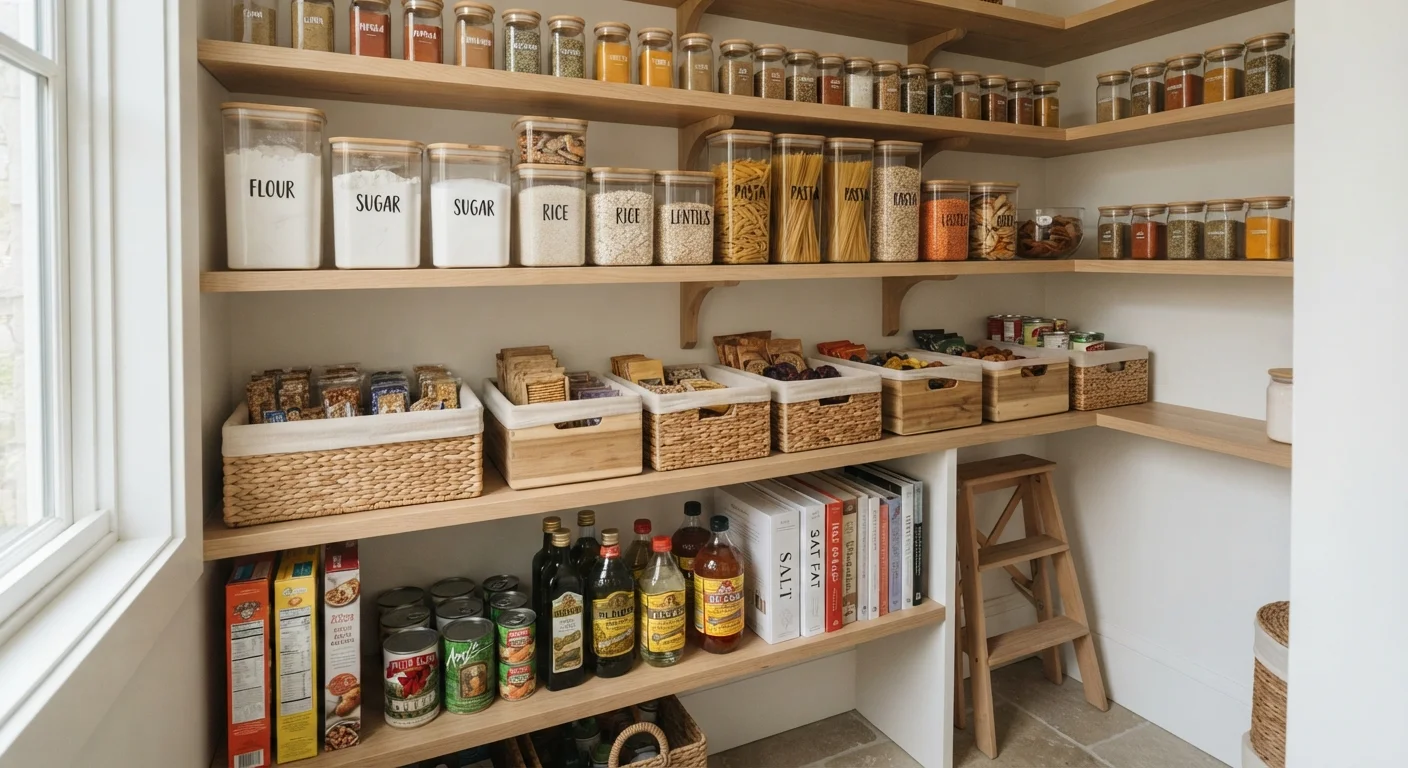
Photo credit: TrendingFaqs.com
In this article
A well-organized pantry saves time, reduces food waste, and makes meal planning easier. Here's how to build a system that lasts.
Key Takeaways
- Group pantry items by how you use them, not by category alone, to speed up cooking.
- Visibility is the most important factor in reducing food waste and repeat purchases.
- A good system requires only occasional resets, not daily maintenance.
- Containers and labels are tools, not the starting point: sort first, then contain.
Why most pantries stop working
Most pantries fail for the same reason: items get put away wherever there is space rather than in a consistent place. Over time, the pantry becomes a mix of half-used bags, duplicates bought because the original was invisible, and items that expired before anyone noticed them. The fix is not more storage. It is a clear logic that everyone in the household can follow without thinking.
Before reading about zones, labels, and designated spots, many people assume organizing means buying matching containers. Those containers can help, but only after you have decided how the space should function. The sequence matters: sort, then assign zones, then contain.
Core principles for a pantry that lasts
The practices below address the most common reasons pantries fall back into disorder. Each one is simple on its own; together they create a system that does not require constant attention.
Assign zones based on how you cook, not just what the items are.
Grouping baking supplies together, breakfast items together, and dinner staples together means you reach for one area during a specific task rather than scanning the whole pantry. This reduces decision fatigue and speeds up both cooking and putting groceries away.
Keep the most-used items at eye level and within easy reach.
Items that are hard to see or reach get ignored. Placing frequently used staples at eye level means they get used before they expire and you do not lose time searching.
Label every container and shelf zone, including the shelf itself.
Labels make the system self-explanatory for everyone in the household, not just the person who set it up. They also provide a visual cue when something is out of place.
Practice first-in, first-out rotation every time you restock.
Moving older items to the front when new stock arrives prevents food from expiring unnoticed at the back of shelves. This habit alone can significantly reduce household food waste over time.
Consolidate duplicates before adding any new storage containers.
Buying containers before purging leads to organizing clutter rather than eliminating it. Knowing what you actually have prevents over-purchasing and reveals how much space you genuinely need.
Quick actions you can take today
You do not need a full weekend to start. A few targeted moves will produce immediate improvements in how your pantry feels and functions.
How pantry organization connects to food costs
A disorganized pantry has a direct effect on spending. When items are buried or invisible, households buy duplicates and let perishables expire. The relationship between household organization and saving money is straightforward: knowing what you have means buying only what you need.
30-40%
Share of food wasted per household
The U.S. Department of Agriculture estimates that 30 to 40 percent of the food supply is wasted, with household-level waste a significant contributor.
$1,500+
Estimated annual food waste per household
The USDA has cited estimates suggesting the average American family discards roughly $1,500 worth of food each year, much of it from poor storage visibility.
Rotating stock so that older items sit at the front is the single most effective habit for reducing waste. It takes seconds to do when putting groceries away and eliminates the frustration of discovering expired food during cooking. If your pantry has deep shelves, pull-out bins or tiered risers make rotation much easier without adding complexity to the system.
For households where multiple people share the pantry, agreeing on a few simple rules prevents the system from degrading. A shared space needs a shared logic. The principles for shared storage in multi-person households apply directly here: assign ownership to zones, not individual items, so anyone can maintain the system without needing to memorize where everything lives.
Avoiding common pitfalls
Several habits quietly undermine a pantry system even after a good initial setup. Common storage myths include the idea that more bins solve the problem: they often just relocate it. If a zone is consistently messy, the zone is wrong for your actual habits, not just your intentions.
Decanting everything into uniform containers looks tidy but adds work. Transfer items that genuinely benefit from a sealed container (flour, sugar, cereals) and leave well-sealed original packaging alone. The goal is function, not uniformity for its own sake.
A pantry system also needs a reset roughly once a season. Pull items forward, check dates, and adjust zones if your cooking habits have changed. This takes less time when the system is already logical, and it prevents the slow drift that turns order back into chaos.
If your pantry challenges extend to the rest of the kitchen, the same zoning and visibility principles apply. See how to handle a kitchen with limited cabinet space for approaches that work alongside a well-organized pantry.

Author
Home Editorial Team
Home Editorial Team is the collective byline for our editorial team and contributor network. Articles published under this byline or an editorial pen name are researched, written, and reviewed according to our editorial standards for clarity, consistency, and independence before publication.
View all articles →