
Plumbing Basics Every Renter and Owner Should Understand
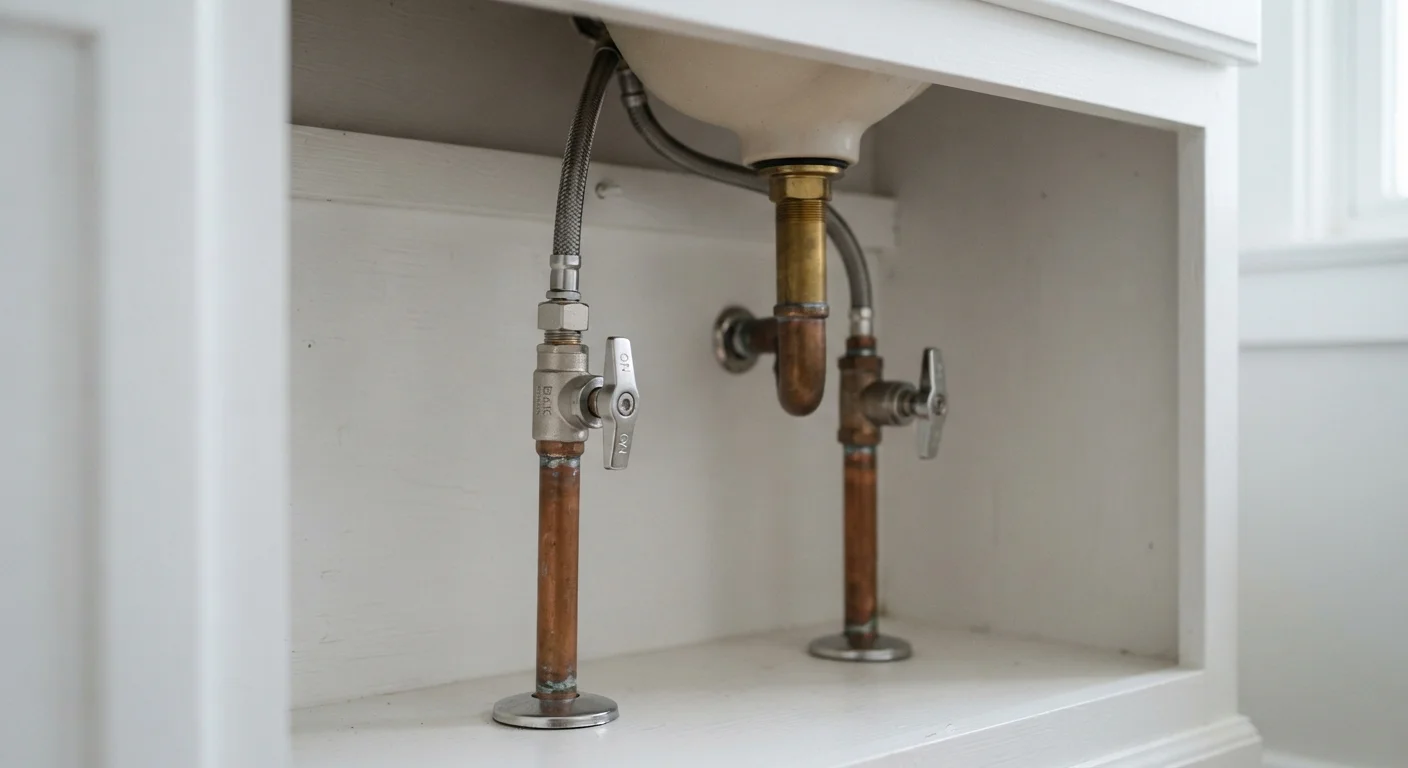
Photo credit: TrendingFaqs.com
In this article
Knowing where your shutoff valves are and how to spot a slow leak can save you from a flooded floor. A practical plumbing primer for everyday people.
Key Takeaways
- Every home has a main shutoff valve; finding it before a crisis is essential.
- Slow leaks often show up as water stains, soft flooring, or a steadily rising water bill.
- Most drain clogs respond to a plunger or drain snake before chemicals are needed.
- Renters should document plumbing issues in writing and report them to landlords promptly.
- Work involving pipes inside walls, water heaters, or main lines needs a licensed plumber.
How your home's plumbing system works
A home's plumbing has two separate jobs. Supply lines bring pressurized fresh water in from the municipal main or a private well, routing it to every faucet, toilet, appliance, and shower. Drain-waste-vent lines carry used water away by gravity to the sewer or a septic system.
The pressure difference is worth remembering. Supply lines are under constant pressure, so a break or loose fitting will push water out until something stops it. Drain lines are not pressurized; they rely on slope and gravity, which is why a partial blockage can cause water to back up slowly rather than gush immediately.
Pipes in most homes built since the 1980s are either copper or one of two plastics: CPVC for hot and cold supply, and white PVC for drains. Older homes may have galvanized steel supply pipes, which can corrode internally over time, or cast-iron drain lines. Knowing roughly what your pipes are made of helps you recognize when corrosion or age could be a factor.
Supply line
A pressurized pipe that carries fresh water from the main source to a fixture or appliance. Because it is under pressure, any break releases water continuously until the flow is stopped.
Drain-waste-vent (DWV)
The network of pipes that removes used water and waste from fixtures by gravity. Vent pipes connected to this system prevent sewer gas from building up inside the home.
Shutoff valve
A valve that stops water flow when turned off. There is usually one main shutoff for the whole building and smaller fixture-level shutoffs under each sink and behind each toilet.
P-trap
The curved section of drain pipe beneath a sink or tub that holds a small amount of water. That water forms a seal that blocks sewer gases from coming back up through the drain.
Water pressure
The force at which water moves through supply lines, measured in pounds per square inch (psi). Normal household pressure is roughly 40 to 80 psi; consistently higher pressure can stress pipe fittings and appliance connections.
Shutoff valves: where they are and when to use them
The main shutoff valve controls all water entering the building. In a basement or crawl space, it is usually on the wall closest to the street, near the point where the supply pipe enters. In a slab-foundation home it may be in a utility closet or garage. Outdoor and warmer-climate installations sometimes place it in a covered box flush with the ground near the curb, operated with a special meter key. Walk through your home now and locate it; do not wait for a burst pipe.
Fixture-level shutoffs are the oval or round handles on the supply lines directly under each sink and behind each toilet. Turn them clockwise to close. These let you isolate one fixture without cutting water to the whole house, which is useful for a dripping faucet or a running toilet you need time to address.
Appliances with water connections, such as dishwashers, washing machines, and refrigerators with ice makers, typically have their own shutoffs nearby. Note where each one is when you move in or when an appliance is installed.
Spotting and responding to leaks early
A slow leak causes more damage over time than a dramatic burst, partly because it often goes unnoticed for weeks. Common signs include water stains on ceilings directly below a bathroom or kitchen, soft or spongy flooring near a toilet or dishwasher, peeling paint near baseboards, and a musty smell with no obvious source.
The meter test is a reliable check: read your water meter, avoid all water use for two hours (or overnight), then read it again. Any change points to a leak somewhere in the system. Your utility company's website often explains how to read your specific meter model.
If you find a leak at a supply fitting, close the nearest shutoff valve immediately. For a toilet that keeps running, the flapper inside the tank is the most common cause and is inexpensive to replace. Keeping tile and caulk watertight around fixtures also prevents water from getting behind walls, where damage can go undetected for months.
Test your shutoff valves once a year
Fixture-level shutoff valves can seize if they go untouched for years, making them useless in an emergency. Turn each one off and back on once a year to keep the mechanism moving. If a valve feels stuck or continues dripping after you close it, have a plumber replace it before you need it in a hurry.
Common clogs and what actually clears them
Most kitchen sink clogs are grease and food particles that have built up on pipe walls over time. Most bathroom sink and tub clogs are hair and soap scum. A cup plunger (the flat-bottomed one) handles most of both when used correctly: cover the drain, push down slowly, then pull up sharply to create suction.
For tougher clogs, a hand-operated drain snake (also called a drain auger) reaches deeper into the pipe and physically breaks up or retrieves the blockage. These are available at any hardware store and are safe for all pipe types.
Chemical drain cleaners can clear a clog but are not a long-term strategy. Their caustic ingredients can corrode older metal pipes over time and damage PVC fittings with repeated use. If a clog returns within days of clearing it, or if multiple drains back up at once, the problem is likely deeper in the drain-waste line and needs professional attention. See our guide on which repairs are safe for beginners and which are not for a broader overview.
What renters should know specifically
Renters have less authority over plumbing systems but still need to understand them. In most U.S. states, landlords are legally responsible for maintaining plumbing in working order, but the obligation to report a problem falls on the tenant. Report plumbing issues to your landlord in writing (email is fine) as soon as you notice them, and keep a copy. This protects you if damage worsens because of delayed repairs.
You are generally allowed to use shutoff valves in an emergency to stop flooding, and you can clear a simple drain clog yourself. Larger repairs, such as replacing supply lines or working on the building's main drain stack, belong to the landlord or their licensed contractor. Attempting repairs beyond your skill can complicate questions of liability if damage follows.
For bathroom organization that works within rental constraints, see bathroom organization on a tight budget, which covers approaches that do not require permanent modifications.
When to call a licensed plumber
Some plumbing work is genuinely within reach for a careful DIYer: replacing a toilet flapper, swapping a faucet, or clearing a drain. Other work is not, either because it requires specialized tools, because it touches systems that affect the whole building, or because permits and inspections are required.
Call a licensed plumber for any of the following: a leak inside a wall or ceiling, work on the main water line or main drain stack, water heater installation or repair (gas water heaters add combustion risks beyond plumbing), sewage backup from more than one drain, and any job your municipality requires a permit for. Crawl spaces can hide slow leaks and pipe damage that are difficult to assess without proper access and experience.
Unpermitted plumbing work can affect your homeowner's insurance coverage and create complications if you sell the home. Your local building department will tell you what requires a permit in your area. When costs concern you, the saving and debt hub has general guidance on managing unexpected household expenses.
Frequently Asked Questions

Author
Home Editorial Team
Home Editorial Team is the collective byline for our editorial team and contributor network. Articles published under this byline or an editorial pen name are researched, written, and reviewed according to our editorial standards for clarity, consistency, and independence before publication.
View all articles →