
What Makes a Bedroom Actually Restful: Beyond Mattresses and Pillows
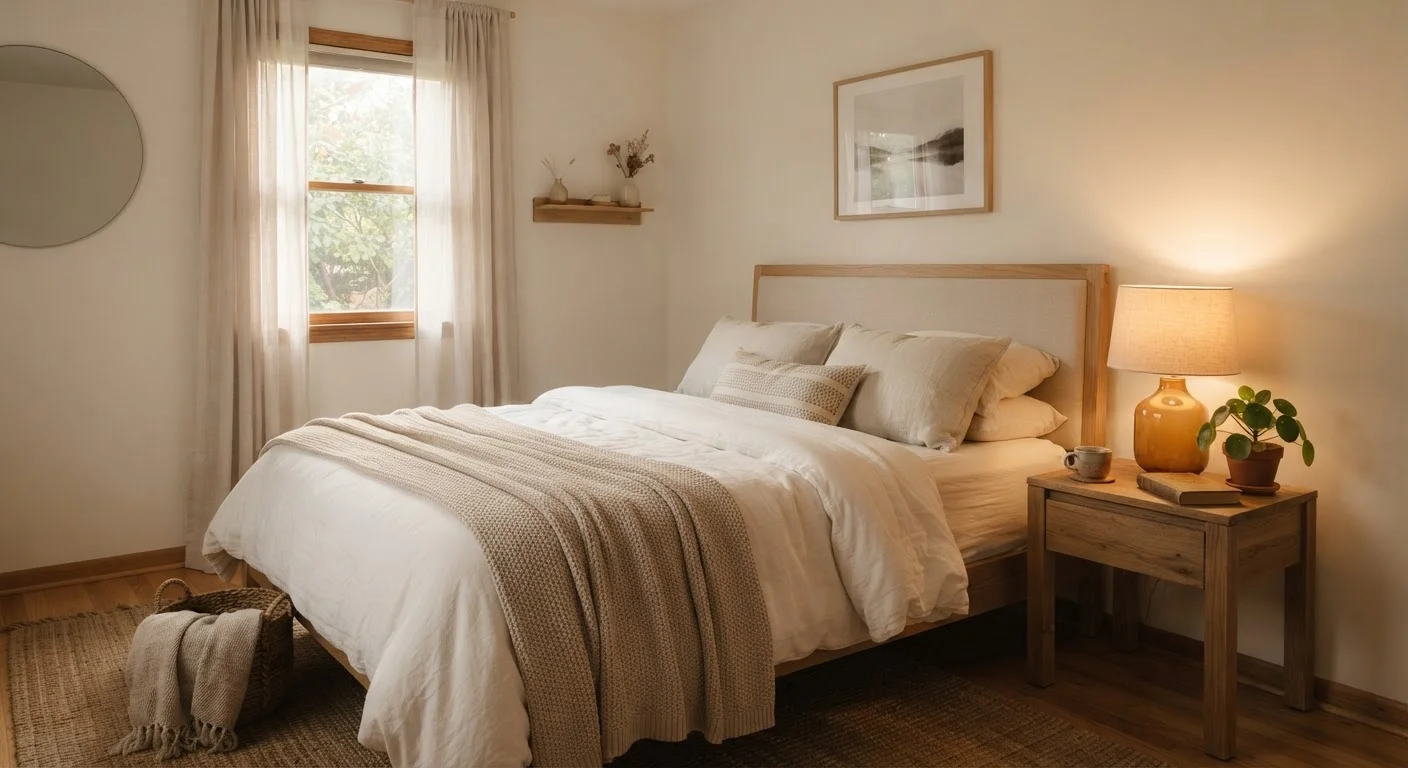
Photo credit: TrendingFaqs.com
In this article
Lighting, clutter, color, and airflow all shape how well you rest. This guide covers the full picture of what makes a bedroom genuinely restorative.
Key Takeaways
- Warm, dim light in the hour before bed signals the brain to wind down.
- Most adults sleep better in a room between 60 and 67 degrees Fahrenheit.
- Visual clutter raises perceived stress levels and makes it harder to mentally disengage.
- Muted, cool wall colors tend to feel less stimulating at night than warm, saturated tones.
- Consistent sensory conditions, light, temperature, and sound, reinforce the body's sleep cues.
Why the whole room matters, not just your bed
Most sleep improvement advice stops at the mattress. That is understandable: what you lie on is immediate and tactile. But the nervous system responds to a room, not just a surface. The brain reads environmental cues continuously, and if those cues signal alertness, it stays alert, regardless of how supportive your mattress is.
Bedrooms that genuinely support rest tend to share a few characteristics: controlled light, stable temperature, low visual stimulation, and a narrow purpose. When a bedroom doubles as a home office, a TV lounge, and a laundry staging area, the brain has no consistent signal that this space means sleep. The associations pile up and compete.
The good news is that most of the changes that make a bedroom more restful are low-cost and reversible. You do not need to redecorate from scratch. You need to audit the sensory conditions the room creates. See our sensory checklist for a comfortable home for a room-by-room audit framework you can use alongside this guide.
Lighting: your biggest lever for better sleep
Light is the primary signal the body uses to regulate its internal clock. Bright, blue-spectrum light suppresses melatonin production. Warm, dim light does the opposite. The practical consequence: the light in your bedroom during the hour before sleep matters a great deal.
Overhead fixtures with cool-white or daylight bulbs (color temperatures above 4000K) are not suited to a bedtime environment. Swap them for warm-white bulbs (2700K to 3000K) or use a bedside lamp instead of the overhead light after sunset. A simple dimmer switch on any existing fixture gives you control without replacing hardware.
Screens are a separate problem. The light from phones and tablets is concentrated and short-range, which makes it more disruptive than ambient overhead light at the same hour. Keeping screens out of the bedroom entirely is the most effective solution, though reducing screen brightness and using a warm display setting in the evening helps if that is not practical for you.
Blackout curtains or blinds matter on the other end: early morning light is one of the most common reasons people wake before they intend to. External light from streetlights also affects sleep quality in lighter sleepers. For more on balancing natural and artificial light throughout the home, see Natural Light and Artificial Light: Finding the Right Balance at Home.
Install a warm-white smart bulb in your bedside lamp and set it to dim automatically at a fixed time each evening. The automation removes the decision, so the light shift happens even when you forget.
Consistent light reduction at the same time each night reinforces circadian cues more reliably than one-off manual adjustments.
If you cannot keep work materials out of the bedroom entirely, store them in a drawer or behind a closed closet door before you get into bed. Out of sight is enough to reduce the cognitive load they create.
Visible unfinished tasks activate planning and problem-solving brain regions, making mental disengagement harder at sleep onset.
Temperature and airflow
Core body temperature drops naturally as the body prepares for sleep. A cooler room supports this drop; a warm one works against it. Sleep researchers generally point to a range of 60 to 67 degrees Fahrenheit as comfortable for most adults, though individuals vary.
If your thermostat is shared with the rest of the house, a ceiling fan on low can approximate a cooler environment without adjusting the whole system. Good airflow also reduces the buildup of carbon dioxide and humidity that can make a closed room feel stuffy and disruptive to sleep. Poor air quality affects more than comfort. For a closer look at what drives it and how to address it, see The Hidden Role of Air Quality in How Comfortable Your Home Feels.
Heavy bedding that traps heat is a common culprit for night waking. Layering lighter blankets you can push off is more adaptable than one very thick duvet, particularly for people who run warm or live in climates with variable nighttime temperatures.
Clutter and visual noise
A visually busy room is harder to mentally leave behind at bedtime. This is not a style preference: research in environmental psychology has consistently linked cluttered environments with elevated cortisol and difficulty disengaging from task-oriented thinking. Piles of laundry, open shelving loaded with objects, and visible work materials all register as unfinished business.
You do not need a minimalist aesthetic to benefit from reducing visual noise. The relevant question is: what do you see from your pillow? That sightline is what the brain processes as it tries to settle. Closed-door storage, a hamper with a lid, and keeping work materials out of the bedroom or behind a closed closet door are practical starting points.
Tackling clutter room by room is more manageable than addressing the whole house at once. Our guide to decluttering without the overwhelm walks through a low-pressure approach you can apply directly to the bedroom. For broader organization strategies, the Home Organization hub has additional frameworks.
Color and surface choices
Paint color has a smaller effect on sleep than lighting or temperature, but it is not zero. Saturated, warm colors like deep red and bright orange tend to feel more activating than cool, muted tones. Blues, gray-greens, and soft neutrals are consistently reported as calming in user surveys, which aligns with how the visual cortex processes lower-saturation colors at low light levels.
Surface texture also affects perceived warmth and noise. Hard floors and bare walls reflect sound; rugs and fabric wall hangings absorb it. A rug beside the bed reduces the jarring sensory experience of stepping onto a cold floor at night, which can be enough to pull someone fully awake when they would otherwise have returned to sleep easily.
You do not need to repaint to test these ideas. Swapping out bright-colored throw pillows or a loud duvet cover for something more muted costs little and can change how the room feels within the existing palette.
Sound and scent
Intermittent sound, a neighbor's TV, traffic that stops and starts, is more disruptive to sleep than steady ambient noise because the brain continues monitoring for change. A white noise machine or a fan running consistently can mask this kind of interruption without requiring you to eliminate the source.
Scent has a more modest and variable effect. Lavender is the most studied option in the context of relaxation, with some studies finding reduced heart rate and self-reported improvements in sleep quality, though effect sizes are modest and individual responses vary. A consistent scent in the bedroom, whatever you find calming, can become a learned environmental cue over time, similar to how a consistent bedtime routine works. Avoid strong synthetic fragrances, which can irritate airways and disrupt sleep for sensitive individuals.
Physical activity during the day also shapes how readily the body is ready to sleep at night. If you want to understand that connection more fully, Exercise and Sleep: How Physical Activity Affects Rest Quality covers the relevant factors. For general strategies around sleep and stress, the Mental Wellness hub is a useful resource.
This article is for general informational purposes only and is not medical advice. If you have ongoing sleep difficulties, speak with a qualified healthcare provider.

Author
Home Editorial Team
Home Editorial Team is the collective byline for our editorial team and contributor network. Articles published under this byline or an editorial pen name are researched, written, and reviewed according to our editorial standards for clarity, consistency, and independence before publication.
View all articles →