
Building a Home Workout Space on a Realistic Budget
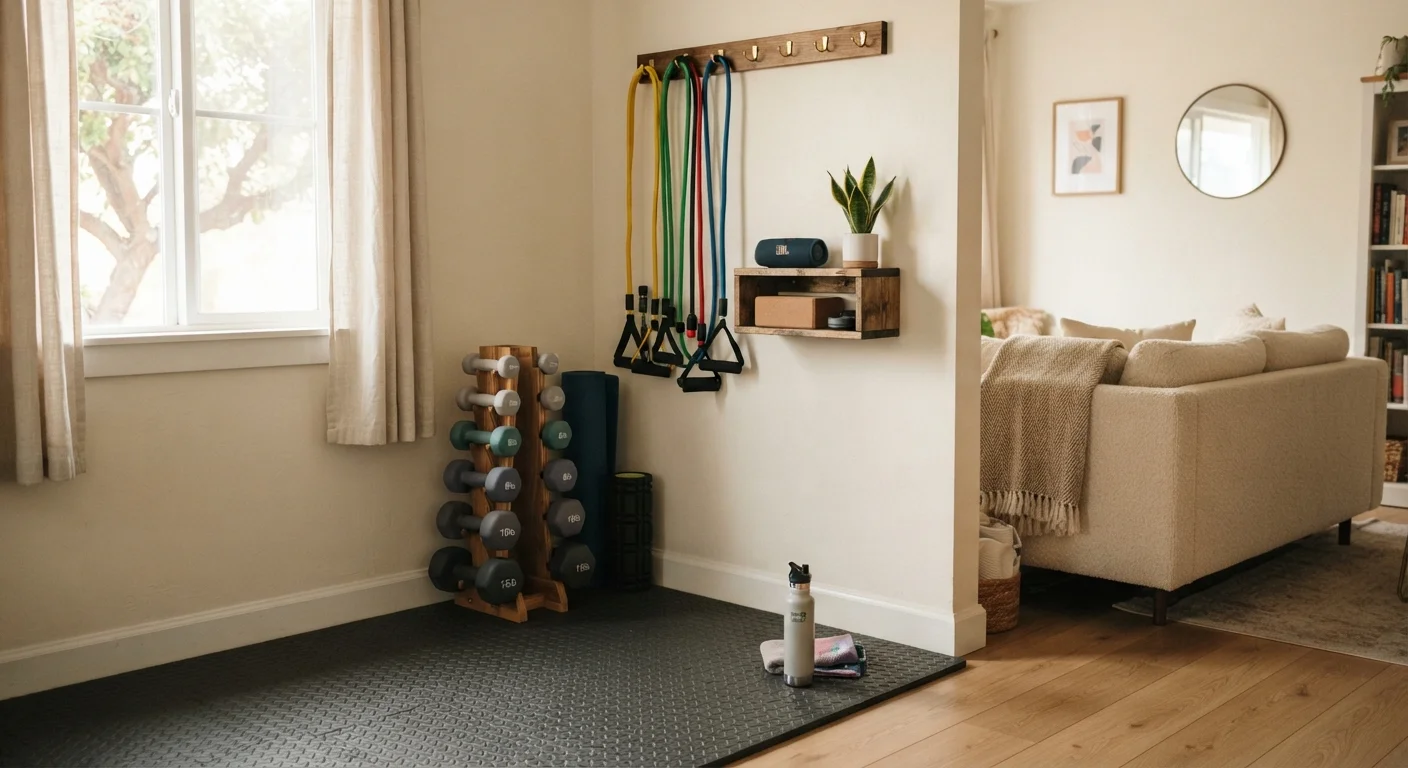
Photo credit: TrendingFaqs.com
In this article
You do not need a full gym to exercise at home. Learn what space, flooring, and equipment genuinely matter for effective home workouts.
Key Takeaways
- A 6-by-6-foot clearing is enough floor space for most effective home workouts.
- Flooring protection matters more than most people expect, especially for joint safety.
- Resistance bands and a set of adjustable dumbbells cover the majority of strength training needs.
- Spending more money does not automatically produce better fitness results at home.
- Your setup can grow incrementally as your routine becomes consistent.
How much space you actually need
The single biggest obstacle people cite before setting up a home gym is not money: it is space. The good news is that a 6-by-6-foot area, roughly the footprint of a yoga mat with a little clearance around it, is workable for bodyweight training, resistance band work, and dumbbell exercises. A spare bedroom is ideal, but a cleared corner of a living room or a section of a finished basement works just as well.
Before buying anything, stand in the space you have in mind and physically move through a few motions: a squat, a lunge, a lateral step. Check ceiling height if you plan to do jumping exercises or overhead presses while standing. Make sure doors and furniture are far enough away that you will not clip them during a swing or a step-back.
If the space doubles as a living or sleeping area, consider how you will store equipment out of the way. Keeping gear accessible but tidy makes it easier to actually use it. Building a consistent exercise habit is much harder when you have to move furniture every time you want to work out.
Flooring: the step most people skip
Hard floors, whether hardwood, tile, or concrete, create two problems during exercise: they are unforgiving on joints during jumping or high-rep movements, and they can be genuinely slippery when you sweat. Neither issue is catastrophic on its own, but together they raise injury risk and make workouts less comfortable, which affects whether you keep showing up.
Interlocking foam tiles (often called EVA foam tiles) are the most cost-effective solution. A set of eight to ten tiles covers roughly a 4-by-8-foot area and typically runs well under $50. They absorb impact, provide grip, and can be pulled apart and stored flat if the room is multi-purpose. Rubber flooring is more durable and better suited to heavy weights, but it costs more and is harder to move.
A single thick yoga mat alone is not enough padding for repeated jumping or heavy dumbbell work. It works fine for stretching and floor-based movements, but combining a mat with foam tiles underneath gives you more protection for a modest total cost.
Check used equipment before you buy new
Dumbbells, foam tiles, and yoga mats appear frequently in local secondhand marketplaces, often at a fraction of the retail price. Dumbbells in particular hold up well over time and are worth looking for used. Inspect for cracks or damage before purchasing, and clean any secondhand equipment thoroughly before use.
Equipment: what to buy first and what to skip
Resist the urge to purchase a large set of items at once. Most people overestimate what they will use in the first few months and underestimate how their needs shift once a routine takes hold. Starting lean and adding later is smarter than spending $400 upfront on equipment that gathers dust.
A set of resistance bands with varying tension levels is the highest-value starting point. They are light, inexpensive, storable in a drawer, and cover a wide range of exercises for legs, arms, and back. If you want to add weight training, a pair of adjustable dumbbells gives you the most flexibility per dollar spent: you can change the load without buying multiple fixed-weight sets. Bodyweight training alone can take you further than most people expect before you need any added resistance at all.
What you can generally skip early on: a pull-up bar mounted in a doorframe (useful but not essential at the start), a weight bench (a sturdy chair or the floor substitutes for many moves), and any machine-based equipment. Cardio machines like treadmills and stationary bikes are large, expensive, and often underused. Low-impact cardio options such as walking, cycling outdoors, or following along with a video routine require no equipment at all.
Setting a realistic budget and building over time
A functional starting setup, foam tiles or a mat, one set of resistance bands, and one pair of fixed-weight dumbbells, can come together for under $75 if you shop without urgency. That budget covers the essentials for a full-body routine without buying anything redundant.
If your budget is tighter, start with just resistance bands and use bodyweight movements for the rest. The practical strategies for saving on a tight budget that apply to other household costs apply here too: buy one thing at a time, watch for sales on sporting goods, and check secondhand sources like local buy-and-sell groups where lightly used dumbbells and mats appear regularly.
Equipment does not define the quality of a workout. What matters is consistency over weeks and months, not the size of your initial investment. A $30 resistance band used three times a week will produce better results than a $300 piece of equipment used twice. As your routine stabilizes, you will have a clearer sense of which specific gaps in your training are worth spending money to fill.
This article provides general fitness and budgeting information for educational purposes only. Consult a qualified healthcare professional before starting any new exercise program, especially if you have an existing health condition or injury.

Author
Health Editorial Team
Health Editorial Team is the collective byline for our editorial team and contributor network. Articles published under this byline or an editorial pen name are researched, written, and reviewed according to our editorial standards for clarity, consistency, and independence before publication.
View all articles →