
Bodyweight Training: A Full-Picture Look at Working Out Without Equipment
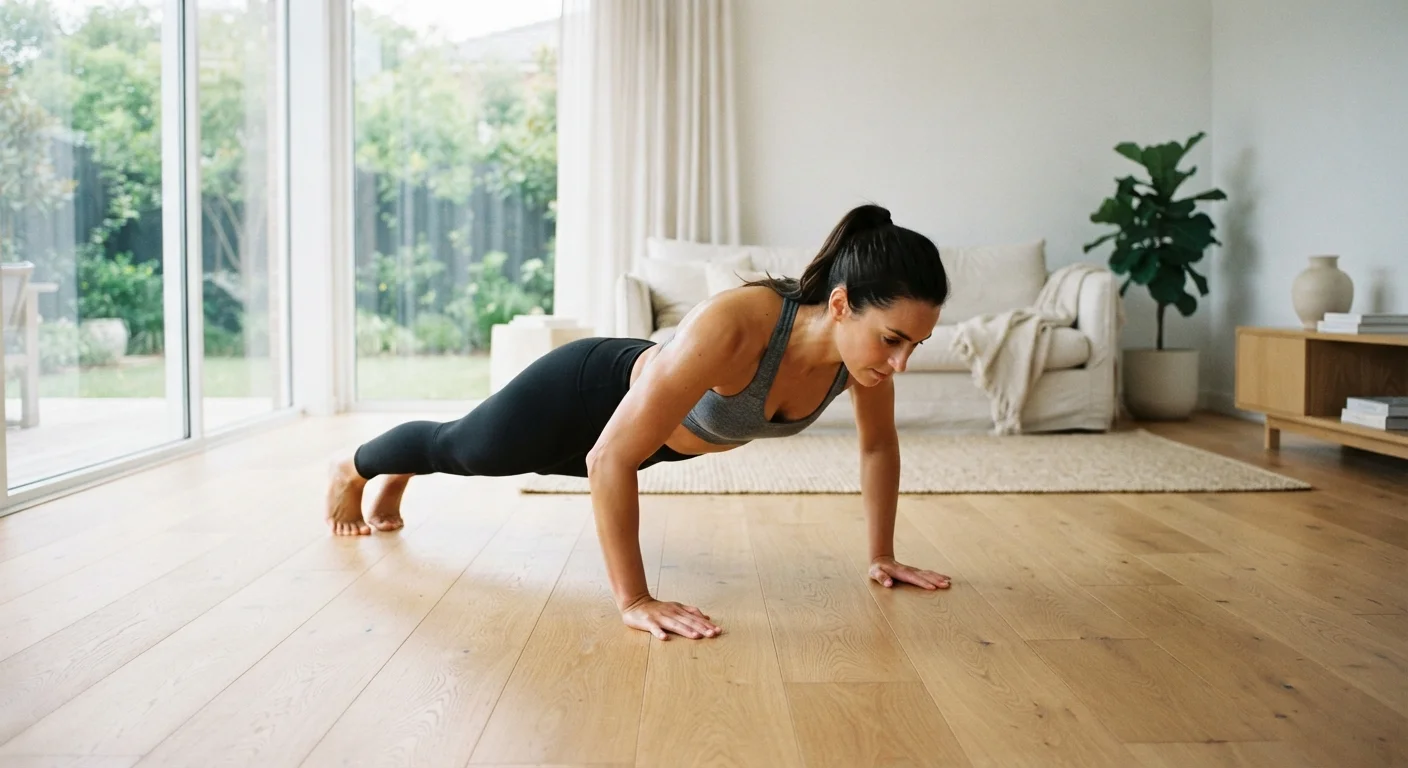
Photo credit: TrendingFaqs.com
In this article
Bodyweight workouts are accessible and effective, but they have real limitations too. Here is an honest look at what they can and cannot do for you.
Key Takeaways
- Bodyweight training builds real strength and cardiovascular fitness without a gym membership or equipment.
- Progressive overload is harder to achieve with bodyweight exercises once you pass the beginner stage.
- Exercises like push-ups, squats, and planks are well-supported by research for general health and functional fitness.
- People with specific goals such as maximum muscle mass or heavy powerlifting will likely need added resistance.
- Bodyweight training works at any fitness level when exercises are chosen and progressed thoughtfully.
No equipment or gym membership needed
Bodyweight training can be done in a living room, hotel room, or park. The cost barrier is essentially zero, which removes one of the most common reasons people delay starting.
Builds functional strength and movement patterns
Exercises like squats, hinges, and push-up variations mirror everyday movements. Training these patterns improves coordination and joint stability alongside raw strength.
Scales across a wide range of fitness levels
A push-up can be made easier by raising your hands on a surface or harder by elevating your feet or slowing the tempo. Most bodyweight exercises have modifications for beginners and progressions for advanced trainees.
Lower injury risk for beginners
Without external load, the forces on joints and connective tissue are generally lower than in barbell or heavy machine training. This makes bodyweight work a reasonable starting point for people new to exercise or returning after time off.
Supports cardiovascular fitness alongside strength
Circuit-style bodyweight training raises heart rate significantly. Research supports its use for improving aerobic capacity, particularly in people who are not yet highly conditioned.
Progressive overload becomes harder over time
Adding resistance with weights is straightforward. With bodyweight, progression depends on exercise variations and tempo manipulation, which requires more knowledge and planning as strength improves.
Limited for building maximum muscle mass
Hypertrophy research generally favors external loading with consistent volume and intensity increases. Bodyweight training can maintain or build muscle to a moderate degree, but has a practical ceiling for advanced trainees.
Pulling movements require some equipment
Horizontal and vertical pulling, which train the back and biceps, are hard to do with no equipment at all. Pull-ups need a bar, and rows need a surface or suspension trainer, making some setups incomplete.
Form errors are harder to detect
Without load to provide feedback, poor movement patterns can persist unnoticed. This is less of a safety issue than with heavy weights, but it can limit the effectiveness of the training over time.
What bodyweight training actually is
Bodyweight training uses the resistance of your own body to build strength, endurance, and mobility. Push-ups, squats, lunges, planks, pull-ups, and dips are common examples. No barbells, dumbbells, or machines are required, though some movements do use a fixed surface like a pull-up bar or a sturdy chair.
The category is broad. It covers low-intensity mobility work, moderate-difficulty circuits, and advanced skill work such as handstands or single-leg squats. That range is part of what makes it worth examining carefully rather than dismissing or overselling.
If you are thinking about building a dedicated space for this kind of training at home, see our guide to setting up a home workout space for practical advice on flooring and layout.
Where bodyweight training genuinely delivers
No equipment or gym membership needed
Bodyweight training can be done in a living room, hotel room, or park. The cost barrier is essentially zero, which removes one of the most common reasons people delay starting.
Builds functional strength and movement patterns
Exercises like squats, hinges, and push-up variations mirror everyday movements. Training these patterns improves coordination and joint stability alongside raw strength.
Scales across a wide range of fitness levels
A push-up can be made easier by raising your hands on a surface or harder by elevating your feet or slowing the tempo. Most bodyweight exercises have modifications for beginners and progressions for advanced trainees.
Lower injury risk for beginners
Without external load, the forces on joints and connective tissue are generally lower than in barbell or heavy machine training. This makes bodyweight work a reasonable starting point for people new to exercise or returning after time off.
Supports cardiovascular fitness alongside strength
Circuit-style bodyweight training raises heart rate significantly. Research supports its use for improving aerobic capacity, particularly in people who are not yet highly conditioned.
Research consistently shows that compound bodyweight movements, particularly push-up variations and squat patterns, produce meaningful gains in muscular strength and endurance for beginners and intermediate exercisers. A 2019 study published in the Journal of Human Kinetics found that a structured bodyweight program produced similar strength improvements to a free-weight program in untrained participants over eight weeks.
Because the barrier to entry is low, bodyweight training is one of the more reliable ways to build a lasting exercise habit. There is no commute, no membership cost, and no waiting for equipment.
Where bodyweight training falls short
Progressive overload becomes harder over time
Adding resistance with weights is straightforward. With bodyweight, progression depends on exercise variations and tempo manipulation, which requires more knowledge and planning as strength improves.
Limited for building maximum muscle mass
Hypertrophy research generally favors external loading with consistent volume and intensity increases. Bodyweight training can maintain or build muscle to a moderate degree, but has a practical ceiling for advanced trainees.
Pulling movements require some equipment
Horizontal and vertical pulling, which train the back and biceps, are hard to do with no equipment at all. Pull-ups need a bar, and rows need a surface or suspension trainer, making some setups incomplete.
Form errors are harder to detect
Without load to provide feedback, poor movement patterns can persist unnoticed. This is less of a safety issue than with heavy weights, but it can limit the effectiveness of the training over time.
The most significant limitation is the ceiling on progressive overload. In resistance training, progressive overload means gradually increasing the demand on your muscles over time. With weights, you add plates. With bodyweight, your options are changing leverage, slowing tempo, reducing rest, or moving to harder exercise variations. These strategies work, but they become harder to manage systematically and require more planning as you get stronger.
For goals tied to maximum hypertrophy (muscle size) or sport-specific strength, most exercise science literature points toward external loading as the more efficient path. Bodyweight training alone is unlikely to produce the same results as a progressive barbell program for those specific outcomes.
A note on special populations
Older adults, people managing osteoporosis, and those recovering from injury have specific needs that general bodyweight guidelines may not address. Resistance loading recommendations for bone density, for example, often require guidance from a physical therapist or physician. If you fall into one of these groups, consult a qualified professional before designing or changing your routine.
If you want to track whether any program is actually working, our article on signs your workout routine is working covers the metrics worth monitoring beyond the scale.
How to make progress without adding weight
The concept of making a bodyweight exercise harder without equipment is called mechanical progression. A standard push-up becomes more demanding when you elevate your feet, slow the lowering phase to four seconds, or work toward a single-arm variation. A two-legged squat progresses to a Bulgarian split squat, then toward a pistol squat.
This progression requires learning and patience. It also means that bodyweight training rewards people who pay attention to movement quality. Poor form in a loaded barbell lift gets exposed quickly by the weight. In bodyweight work, it is easier to compensate through bad mechanics and still complete a rep.
Pairing bodyweight work with shorter, more frequent sessions can also maintain training density. For context on how session length affects results, see our piece on short workouts versus long sessions.
8 weeks
Time to measurable strength gains in untrained adults
A study in the Journal of Human Kinetics found a structured bodyweight program produced similar strength results to free weights over eight weeks in untrained participants.
~30%
Reduction in exercise barriers when no gym is required
Survey data from the American College of Sports Medicine consistently lists cost and access as among the most-cited obstacles to regular exercise for American adults.
Who benefits most, and who may need more
Bodyweight training is well-suited to people at the beginning of a fitness journey, those managing joint sensitivities, and anyone without reliable gym access. Low-impact bodyweight options in particular protect joints while still building real fitness across multiple levels.
People who have been training consistently for two or more years and want to keep building strength will likely find bodyweight work insufficient on its own. The same applies to those training for a sport with specific strength demands, older adults managing significant muscle loss, or anyone whose clinician has recommended resistance loading for bone density.
Bodyweight training can also complement other modalities rather than replace them. Alternating bodyweight sessions with resistance training or group classes is a common and practical approach. If group fitness is part of your routine, our beginner checklist for group fitness classes can help you prepare for that environment.
This article is for general informational purposes only and is not medical or fitness advice tailored to your individual circumstances. Consult a qualified healthcare professional or certified fitness professional before starting or changing an exercise program, especially if you have an existing health condition or injury.

Author
Health Editorial Team
Health Editorial Team is the collective byline for our editorial team and contributor network. Articles published under this byline or an editorial pen name are researched, written, and reviewed according to our editorial standards for clarity, consistency, and independence before publication.
View all articles →