
Distracted Driving Myths That Put Drivers at Risk
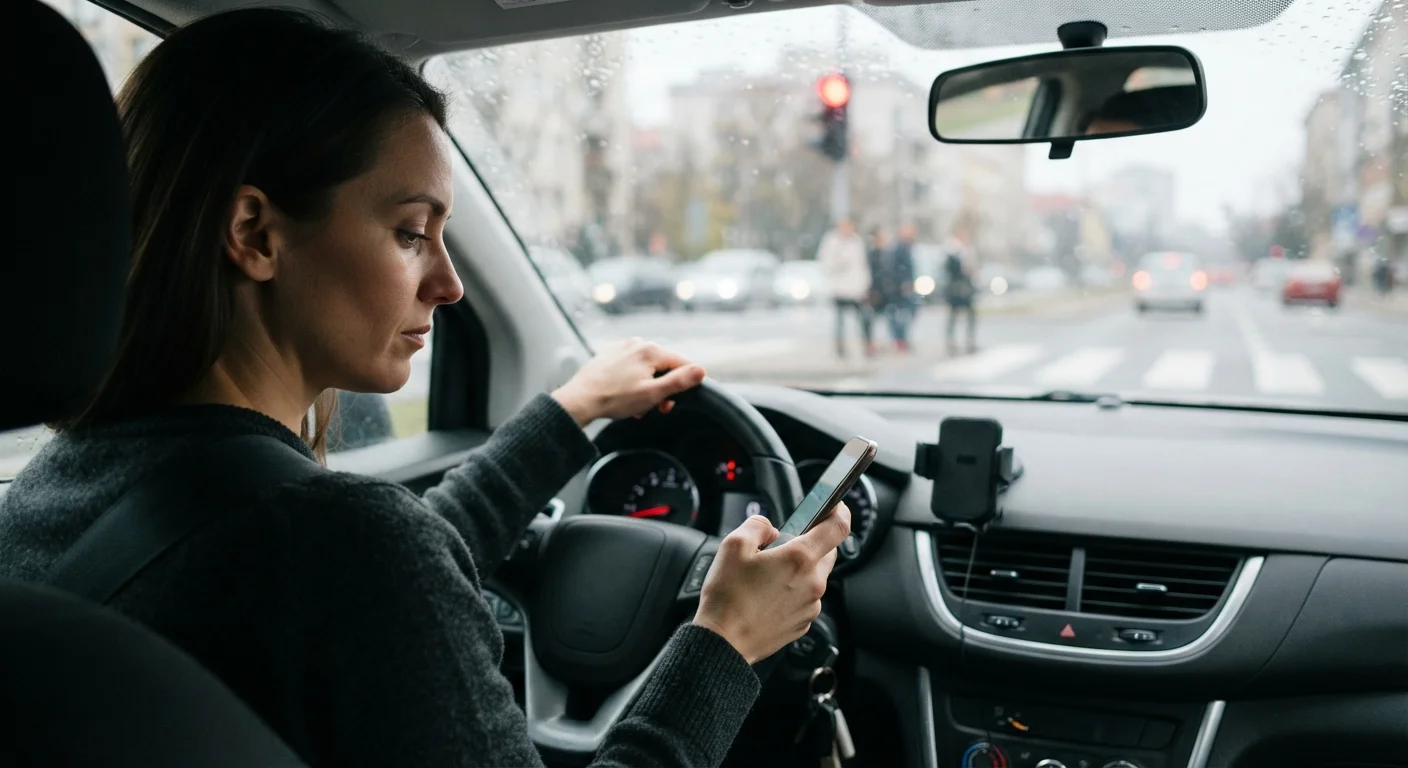
Photo credit: TrendingFaqs.com
In this article
Many drivers believe hands-free calls are safe or that glancing at a phone takes only a second. The research says otherwise.
Key Takeaways
- Hands-free phone calls still impair driving by diverting mental attention from the road.
- At 55 mph, a five-second phone glance covers the length of a football field blind.
- Multitasking while driving is not a skill that improves with practice.
- Distracted driving contributes to thousands of deaths on U.S. roads every year.
- Stopping the habit starts with understanding what distraction actually does to the brain.
Why distracted driving myths persist
Most drivers think of themselves as careful. That self-image makes it genuinely hard to accept that a quick phone check or a hands-free call poses real danger. The myths around distracted driving are not random; they are built from the way distraction actually feels in the moment. It feels manageable. It feels controlled. The crash data tells a different story.
NHTSA reports that distracted driving claimed more than 3,000 lives in a single recent year. That number does not capture the full scope of injury crashes attributed to inattention. Understanding which beliefs are wrong is the first step toward driving differently, and that applies to new drivers building habits and experienced drivers who think they have already figured this out.
Myth
Hands-free phone calls are safe because my hands stay on the wheel.
Fact
Hands-free calls still pull significant mental attention away from driving and slow your reaction time.
The danger in phone use while driving is not primarily about where your hands are. It is about where your brain is. When you hold a conversation by phone, your mind processes language, formulates responses, and tracks an absent person's meaning simultaneously with the task of driving. Research from the American Automobile Association (AAA) Foundation for Traffic Safety has found that hands-free calls produce measurable cognitive distraction that slows driver reaction time and narrows the area of the road a driver actively scans. Talking to a passenger in the same car is less distracting because passengers can see the road, pause naturally, and adjust their conversation when conditions change. A caller on the phone cannot.
Myth
Glancing at my phone takes only a second, so the risk is minimal.
Fact
The average phone glance lasts about five seconds, long enough to travel the length of a football field at highway speed without watching the road.
The National Highway Traffic Safety Administration (NHTSA) has cited the five-second figure repeatedly in public safety research. At 55 mph, five seconds of inattention means roughly 400 feet traveled while not processing what is ahead of you. Hazards, braking traffic, and pedestrians can appear and require a response faster than that. The problem is compounded by the fact that most drivers underestimate how long they actually look away. A glance to read a notification rarely stays at one second; the eye naturally follows the content it finds.
Myth
I am a good enough driver that I can multitask behind the wheel.
Fact
Driving proficiency does not make the brain better at splitting attention between driving and a secondary task.
Experience helps with specific mechanical skills like steering smoothly or parallel parking. It does not rewire how the brain manages competing cognitive demands. The human brain does not truly multitask; it switches between tasks rapidly, and each switch carries a brief lag. For driving, that lag can be the difference between stopping in time and not. The same cognitive limits that make multitasking inefficient at work apply at the wheel, where the stakes are far higher. Years of driving can build overconfidence in this area without building actual capacity.
Myth
Distracted driving is mainly a teen problem.
Fact
Drivers of all ages engage in distracted behavior, and middle-aged adults are also frequently involved in distraction-related crashes.
Teen drivers do face higher risk overall, partly because of inexperience. Crash statistics for new drivers show that distraction is one factor among several that raise their risk in the first year. But NHTSA data consistently shows that distracted driving crashes occur across all age groups. Older and more experienced drivers are not immune, and phone use rates among adults have remained high. Framing this as a youth problem lets many adult drivers avoid honest self-assessment.
Myth
Voice-to-text is safe because I never actually look at my phone.
Fact
Composing or listening to messages by voice still imposes significant cognitive load and does not eliminate distraction.
Voice-to-text feels safer because eyes stay forward. The problem is that constructing a message verbally, listening for the playback, and correcting errors all demand active mental processing. AAA Foundation studies have found that some voice-based interfaces produce distraction levels as high as or higher than typing manually, depending on how much cognitive effort the system requires from the user. The feeling of safety that comes with a hands-free interface can lead drivers to engage in longer, more complex exchanges than they would tolerate if holding a phone.
Myth
If something dangerous were about to happen, I would notice in time to react.
Fact
Distraction specifically reduces your awareness of the environment, so you often do not notice a hazard until it is too late to avoid it.
This myth relies on a flawed assumption: that the brain continues to monitor the road even when attention is elsewhere. Cognitive research shows that mental engagement with a secondary task reduces what is called "situation awareness," your ongoing mental model of what is around you and where things are heading. Drivers who are cognitively distracted can look at the road and still fail to process what they see, a phenomenon sometimes called "looked but failed to see." By the time the hazard registers, reaction time has already been eaten into. Drowsy driving produces a similar narrowing of awareness, and the two states share more in common than most drivers expect.
What the evidence says about attention behind the wheel
Attention is not a binary switch. The brain manages a continuous stream of sensory input, and driving demands a large share of that capacity even under normal conditions. Add navigation, a conversation, or a notification, and something gets less processing power. Usually, that something is the road itself.
The six myths above share a common thread: they all involve a driver overestimating their own awareness. A practical foundation in road safety starts with accepting that no driver is exempt from these limits. Checking in honestly with your own habits, whether you pick up the phone at red lights, whether you read texts at low speeds, whether you assume voice commands are harmless, is more useful than assuming the research applies to someone else.
If you are a parent or guardian of a new driver, crash data on teen drivers makes clear that the conversations you have now about distraction will carry more weight than any rule you post. Model the behavior you expect. Put the phone away before the car moves.
No task is worth the risk
There is no message, navigation adjustment, or conversation important enough to justify taking your attention off the road at speed. If a task truly cannot wait, pull over safely and park before handling it. Attempting to multitask at the wheel is not a judgment call that becomes acceptable in certain conditions.

Author
Cars Editorial Team
Cars Editorial Team is the collective byline for our editorial team and contributor network. Articles published under this byline or an editorial pen name are researched, written, and reviewed according to our editorial standards for clarity, consistency, and independence before publication.
View all articles →