
Fluids Under the Hood and What Happens When You Ignore Them
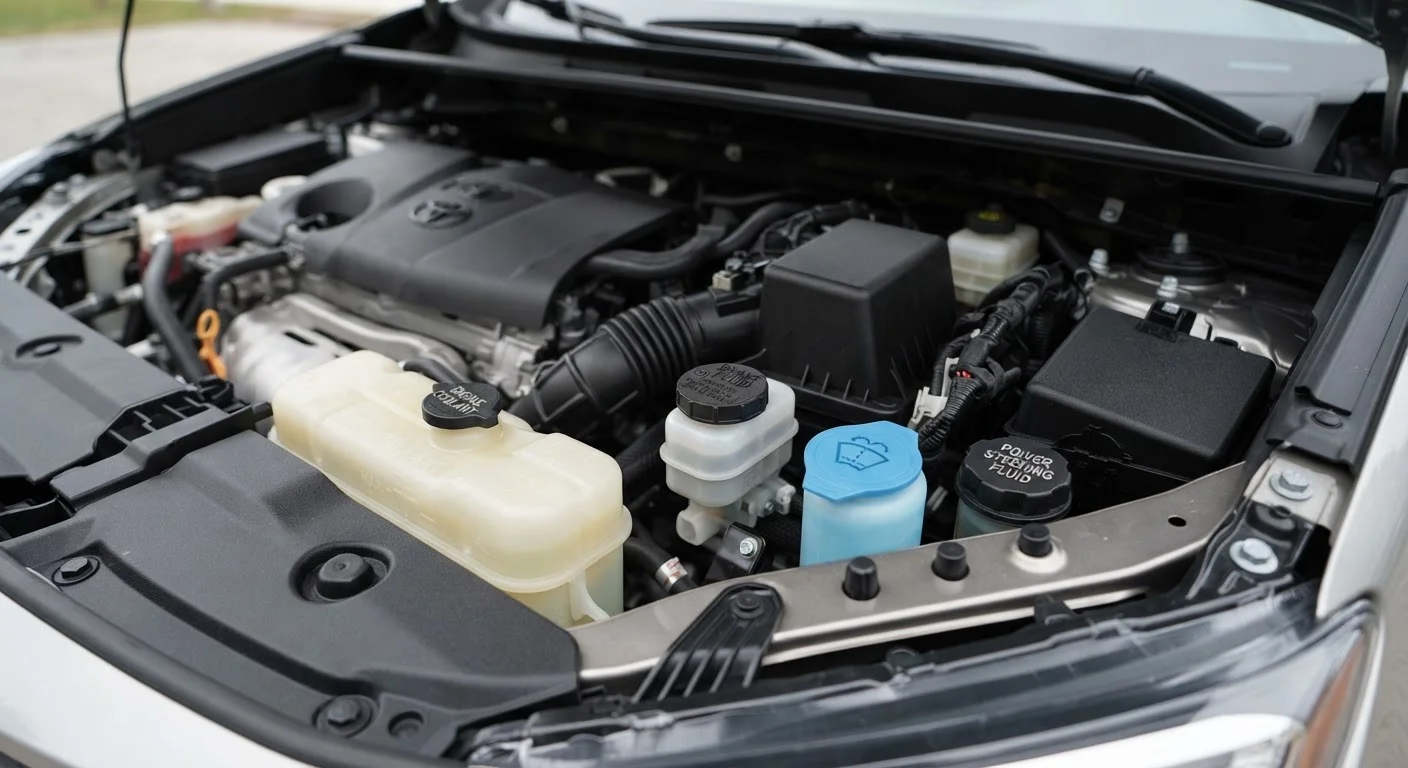
Photo credit: TrendingFaqs.com
In this article
From coolant to transmission fluid, this guide covers every reservoir under the hood, what each fluid does, and signs it needs attention.
The fluids your car depends on
Pop the hood on most passenger vehicles and you will find several capped reservoirs, each holding a fluid that keeps a different system alive. Ignore any one of them long enough and the repair bill grows fast. This guide covers what each fluid does, where to find it, and what happens when it runs low or goes bad.
If you are new to checking fluids yourself, the first-time owner maintenance basics article is a practical starting point before diving into specifics here.
Engine oil
Engine oil coats the metal surfaces inside your engine so they do not grind against each other. It also carries heat away from parts the coolant cannot reach and holds tiny contaminants in suspension until the oil is drained.
Check the level with the dipstick when the engine is cold or has been off for at least ten minutes. The oil should sit between the two marks on the stick and look amber to dark brown. Black, gritty oil or oil with a milky appearance (which can signal coolant mixing in) both call for prompt attention.
Low oil or oil that has broken down will cause metal-to-metal contact. The engine can sustain permanent damage within miles, not weeks. The hidden work inside every oil change explains why that service covers more than just swapping fluid.
Coolant, brake fluid, and transmission fluid
Coolant (also called antifreeze) circulates through the engine and radiator to absorb combustion heat and release it through the radiator. Without enough coolant, an engine overheats in minutes. The reservoir is usually a translucent plastic tank near the radiator; check the level only when the engine is cold, because a hot pressurized system can spray scalding fluid if opened. The cooling system explainer covers exactly how these parts work together.
Brake fluid transfers the force of your foot on the pedal through hydraulic lines to each wheel. It absorbs moisture over time, which lowers its boiling point and can make brakes feel spongy before they fail more dramatically. The reservoir sits near the firewall on the driver's side. Fluid that looks dark or cloudy has likely absorbed too much water and should be flushed.
Transmission fluid lubricates the gears and clutch packs in the transmission and, in automatics, acts as a hydraulic fluid. Low or degraded transmission fluid causes slipping gears, delayed shifts, and eventually internal damage that costs several times more to fix than a fluid service. Some vehicles have a dipstick for this; others require a lift and a drain-and-fill procedure at a shop.
Coolant (antifreeze)
A water-and-chemical mixture that circulates through the engine and radiator to regulate operating temperature. It also prevents freezing in winter and corrosion inside the cooling system.
Hydraulic fluid
Any fluid used to transmit force through a closed system of lines and pistons. Brake fluid and power steering fluid both work this way.
Dipstick
A long metal rod inserted into a fluid reservoir that lets you check the level and condition of engine oil or transmission fluid without opening the system.
Differential
A gear assembly in the axle that lets the left and right wheels turn at different speeds, especially during cornering. It requires its own lubricating fluid.
Fluid flush
A service in which old fluid is completely removed from a system and replaced with fresh fluid. This is more thorough than simply topping off a low reservoir.
Power steering fluid, differential fluid, and windshield washer fluid
Power steering fluid (in vehicles with hydraulic steering) pressurizes the steering rack to make turning easier. A whining noise when you turn the wheel is often the first sign the reservoir is low. Electric power steering systems do not use this fluid at all, so check your owner's manual if you are unsure which type your vehicle has.
Differential fluid is less discussed but equally important on vehicles with a separate front axle, rear axle, or transfer case. It lubricates the gears that let wheels spin at different speeds during turns. Most drivers never touch it because it lasts a long time, but it does break down and should be changed on the schedule your owner's manual specifies.
Windshield washer fluid is the one fluid on this list that will not strand you if it runs out, but driving without it in winter or bug season is a real safety issue. Use washer fluid rated for your climate; water alone can freeze in the reservoir and lines.
When money is limited and you cannot address everything at once, the car maintenance budget priorities guide can help you decide which services to tackle first.
Dashboard warning lights often announce fluid problems before you notice them yourself. The guide to dashboard warning lights explains what each symbol means and when to act fast.
This article is for general informational purposes only. For vehicle-specific maintenance intervals and safety-critical repairs, consult a qualified mechanic and your vehicle's owner's manual.

Author
Cars Editorial Team
Cars Editorial Team is the collective byline for our editorial team and contributor network. Articles published under this byline or an editorial pen name are researched, written, and reviewed according to our editorial standards for clarity, consistency, and independence before publication.
View all articles →