
What the Numbers on Your Car's Dashboard Warning Lights Actually Mean
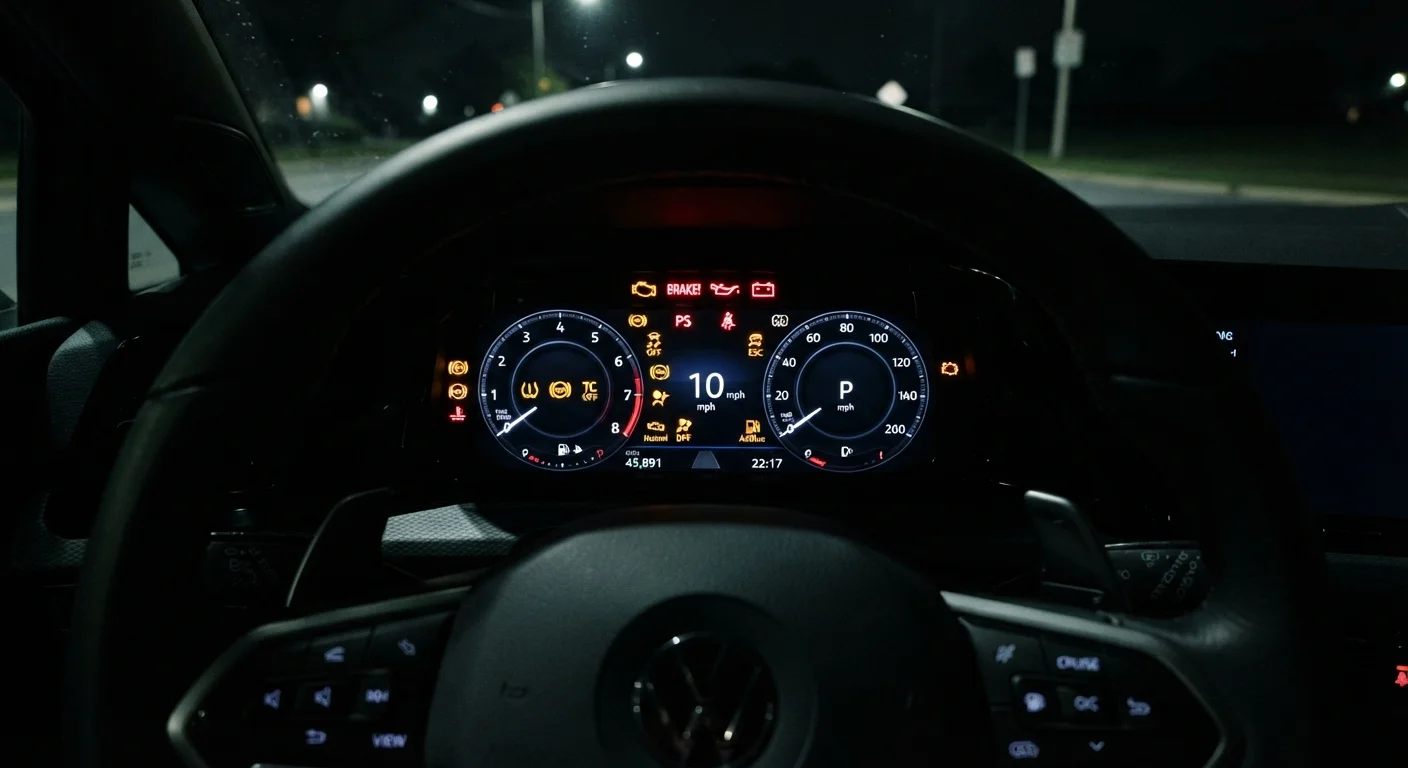
Photo credit: TrendingFaqs.com
In this article
A plain-language guide to the most common dashboard warning lights, what triggers them, and when to act quickly.
How dashboard warning lights work
Your car's onboard computer continuously monitors sensors throughout the vehicle. When a reading falls outside the expected range, the computer stores a fault code and switches on the corresponding warning light. The light is the messenger, not the problem itself.
Colors follow a traffic-light logic across almost all modern vehicles:
- Red means stop or take immediate action. Continuing to drive risks serious damage or a safety hazard.
- Amber or yellow means pay attention. Something needs to be checked or serviced, but the situation is not usually an emergency right now.
- Green or blue are informational. They confirm that a system (high beams, turn signal, cruise control) is active.
That color logic is not a guarantee. A few vehicles use amber for conditions that other manufacturers show in red. Your owner's manual is always the definitive reference for your specific car. Most automakers post digital copies on their websites if you do not have the printed version.
| Light colors used | Red, amber/yellow, green, blue |
| Red light meaning | Stop or act immediately; serious risk of damage or safety hazard |
| Amber/yellow light meaning | Attention needed soon; monitor or schedule service |
| TPMS required since | 2008 (all new US passenger vehicles) (NHTSA FMVSS No. 138) |
| OBD-II required since | 1996 (all US cars and light trucks) (EPA and CARB mandate) |
| Check engine light triggers | Hundreds of possible fault codes, from loose gas cap to catalytic converter failure |
The warning lights that demand immediate attention
Red lights fall into a short list of situations where pulling over or stopping the engine quickly can prevent major damage or an accident.
Oil pressure warning
This light (often an old-fashioned oil can symbol) means oil pressure has dropped dangerously low. It does not simply mean the oil level is low, though that can cause it. Low oil pressure means moving engine parts are not being lubricated. Pull over safely and shut off the engine. Check the oil level with the dipstick before driving further. If the level is fine and the light stays on after a restart, have the car towed rather than driven.
Engine coolant temperature
A thermometer symbol or the letters TEMP in red means the engine is overheating. Pull over, turn off the engine, and let it cool before opening the hood. Driving an overheating engine even a short distance can warp cylinder heads or cause more serious damage. See the
OBD-II port
A standardized diagnostic connector found in virtually all cars sold in the US after 1996. A mechanic or scan tool plugs into this port to read stored fault codes from your car's computer.
Fault code (DTC)
A Diagnostic Trouble Code stored by your car's onboard computer when it detects a problem. Codes follow a standardized format (e.g., P0420) and help technicians narrow down what triggered a warning light.
Malfunction indicator lamp (MIL)
The technical name for the check engine light. It lights up when the engine management system detects a fault that affects emissions or engine performance.
TPMS
Tire Pressure Monitoring System. A federal safety requirement on all new US passenger vehicles since 2008 that alerts the driver when one or more tires drops significantly below the recommended pressure.
ABS
Anti-lock Braking System. It prevents wheel lockup during hard braking so you can steer while stopping. When the ABS light is on, that system may be disabled even if normal brakes still work.
Coolant temperature
The temperature of the liquid that circulates through your engine to carry heat away. An overheating engine can suffer serious internal damage within minutes if you keep driving.
Battery warning
A red battery symbol means the electrical charging system is not working properly. Your car is running on battery reserve only. Electrical systems will start failing within minutes. Drive directly to a service location if you are close, or call for help.
Brake system warning
A red circle with an exclamation point (sometimes the letter P inside) can indicate the parking brake is engaged, but if it comes on while driving with the parking brake released, it may signal low brake fluid or a hydraulic problem. For more on what brake symptoms mean, see our guide to brake warning signs.
Amber lights: watch and schedule service
Amber lights generally give you some time, but ignoring them tends to turn smaller problems into larger ones.
Check engine light (MIL)
This is the most misunderstood light on the dashboard. It can be triggered by anything from a loose gas cap to a failing catalytic converter. A steadily lit check engine light means the car's computer has logged a fault and you should have it scanned soon. A flashing check engine light is more urgent: it often indicates an active engine misfire that can damage the catalytic converter. Have a flashing light checked the same day.
A mechanic reads the stored fault code (DTC) through the OBD-II port to identify the source. The code narrows the diagnosis; it does not always point to one specific part.
Tire pressure monitoring system (TPMS)
A horseshoe-shaped symbol with an exclamation point means at least one tire is significantly underinflated. Check all four tires with a gauge, inflate to the pressure listed on the door jamb sticker (not the number on the tire sidewall), and the light should go off once pressure is restored. For a full breakdown of tire pressure and tread depth, see our tire pressure and tread guide.
ABS warning
When the ABS light is on, normal braking typically still works, but the anti-lock system that prevents wheel lockup may be disabled. Avoid situations requiring hard stops until the system is checked.
What to do when a light comes on
A few practical steps apply regardless of which light appears:
- Check the owner's manual first. Symbols are not fully universal, and your manual confirms exactly what a light means for your vehicle.
- For any red light, stop driving as soon as it is safe to do so. For amber lights, check whether the condition is something you can address yourself (like low tire pressure) before scheduling a shop visit.
- Do not assume the light will reset itself and the problem will disappear. Even if a light goes off on its own, the fault code usually stays stored in the computer and a mechanic can still read it.
- When you bring the car in, mention the light color, the symbol, and whether it was steady or flashing. That context helps the technician start in the right place.
Your VIN is useful to have on hand when calling a shop, since it tells the technician exactly what systems your car has. You can learn how to find and read it in our guide to reading your VIN.

Author
Cars Editorial Team
Cars Editorial Team is the collective byline for our editorial team and contributor network. Articles published under this byline or an editorial pen name are researched, written, and reviewed according to our editorial standards for clarity, consistency, and independence before publication.
View all articles →