
New York City for People Who Find It Overwhelming
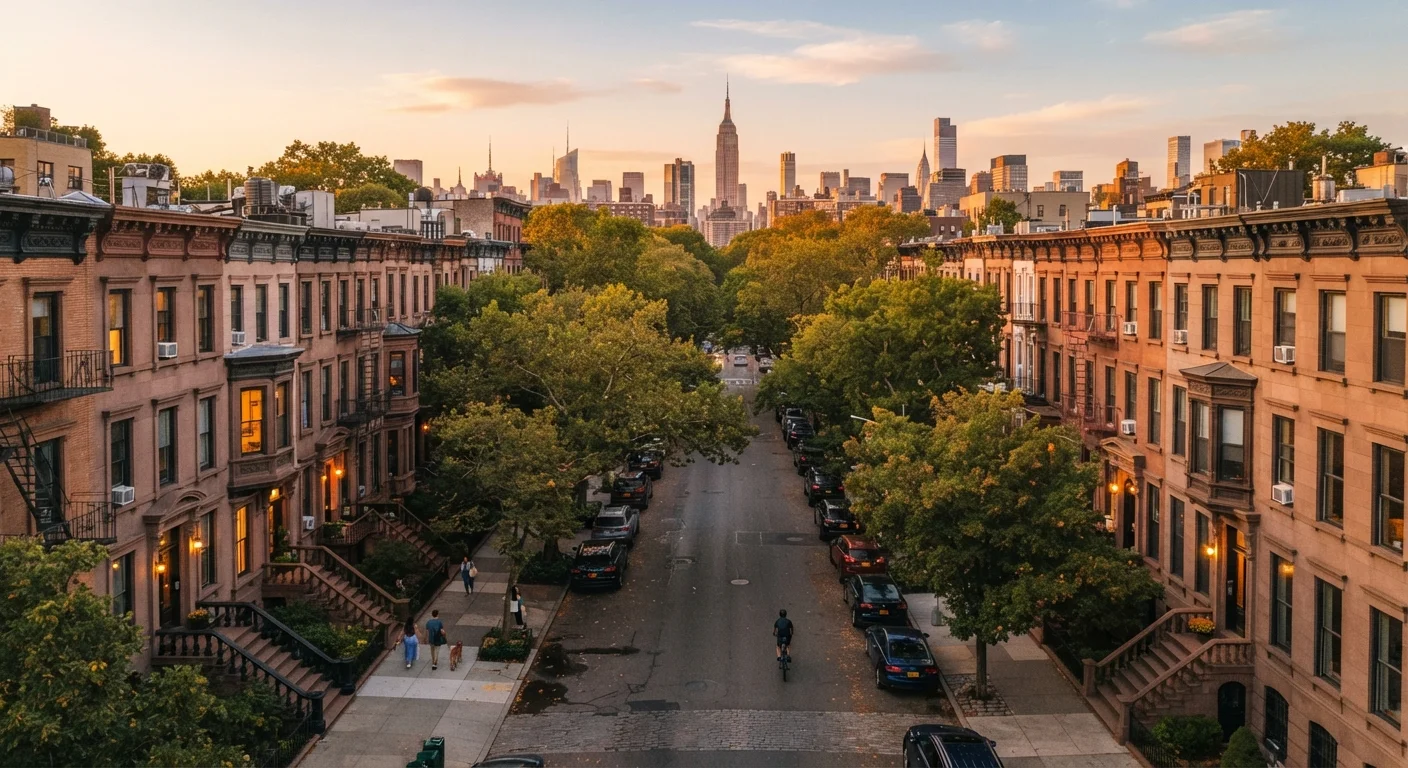
Photo credit: TrendingFaqs.com
In this article
NYC does not have to be chaotic. This guide helps first-timers plan a manageable, neighborhood-focused trip without trying to do everything at once.
Key Takeaways
- Anchoring each day to one or two neighborhoods reduces decision fatigue significantly.
- The subway is the fastest way to move around, and a MetroCard covers nearly every trip.
- Skipping tourist-trap landmarks frees up time for the city's more rewarding street-level experiences.
- A two-day framework can feel satisfying without trying to cover all five boroughs.
- Preparation matters more than spontaneity when visiting one of the world's densest cities.
Why NYC feels overwhelming (and why it does not have to)
New York City has roughly 8.3 million residents and an estimated 60 million visitors a year. Every travel guide seems to respond to that scale by listing 200 things you cannot miss, which is exactly how a trip turns into a panic spiral before you even pack. The city is large, loud, and genuinely complicated. None of that is going away.
What can change is your approach. The visitors who leave feeling good about New York almost always did fewer things with more intention. They picked a base, learned one subway line, ate at spots that were not on the cover of anything. The right trip-planning mindset matters more here than in almost any other American city.
NYC is not one place. It is five boroughs made up of dozens of distinct neighborhoods, each with its own character. Once you stop treating it as a single monolithic destination and start treating it as a collection of smaller towns you dip into, it becomes manageable.
Borough
One of the five main administrative divisions of New York City: Manhattan, Brooklyn, Queens, the Bronx, and Staten Island. Each has its own character and is worth thinking of as a separate destination.
MetroCard / OMNY
Ways to pay for subway and bus rides. OMNY lets you tap a contactless credit or debit card directly at the turnstile. MetroCard is the older physical card option still widely available at station machines.
Express vs. local train
Local trains stop at every station on a line. Express trains skip many stations and travel faster over long distances. Both share the same tracks and platforms in most stations.
Neighborhood anchoring
A trip-planning approach where you organize each block of time around one specific neighborhood rather than a list of scattered landmarks, which cuts down on transit time and decision fatigue.
DUMBO
Short for Down Under the Manhattan Bridge Overpass. A Brooklyn waterfront neighborhood with Manhattan skyline views, cobblestone streets, and easy walking access to the Brooklyn Bridge.
Pick a neighborhood, not an itinerary
The most common first-timer mistake is building a day around landmarks rather than geography. Hopping from the Statue of Liberty to Central Park to Brooklyn Bridge in one day means spending most of that day in transit, stressed and rushed.
A smarter structure: anchor each half-day to a neighborhood. Here are four that work well for first-timers, each with a distinct feel.
- The West Village: Low-rise townhouses, quiet streets, good coffee. Easy to walk for two or three hours without a plan.
- Brooklyn Heights and DUMBO: Great views of the Manhattan skyline, the Brooklyn Bridge on foot, and waterfront access without midtown crowds.
- The Lower East Side: Dense food and cultural history. The Tenement Museum offers a genuinely good introduction to immigrant New York.
- Harlem: Historic brownstones, gospel brunch on Sundays if that interests you, and real neighborhood energy above 110th Street.
You do not need to see all four on one trip. Pick two and actually be in them rather than rushing through them.
Getting around without losing your mind
The subway is fast, cheap, and runs all night. It is also confusing until you spend about 20 minutes studying a map before your trip. The MTA website has a current system map; download it rather than relying on cell service underground.
A few practical points worth knowing: the OMNY contactless payment system means you can tap a credit or debit card at most turnstiles without buying a separate card. Express trains skip local stops, which matters when you are traveling long distances but can be disorienting if you board one by accident. The A, C, E line runs north-south on the west side of Manhattan; the 4, 5, 6 runs on the east side. Those two lines cover a large portion of what most first-timers want to see.
Check the subway map before you leave your hotel
Five minutes with a printed or downloaded subway map each morning saves significant stress underground. Identify your destination line and direction before you descend. The MTA website and app have current service alerts, which matter because weekend track work often reroutes trains with little visible signage.
Walking is underrated. Midtown blocks are longer east-to-west than north-to-south. In most of Manhattan below 59th Street, you can walk a mile in about 20 minutes and see far more than you would on the subway. For trips to other boroughs, take the train.
If NYC's density makes you nervous about logistics, consider how visitors handle other high-complexity cities. The Japan first-timer's guide covers a similar philosophy: pre-learn the transit system, commit to one area per day, and let the city reveal itself at ground level.
What to skip on a first trip
Some of the most-recommended experiences in New York are genuinely worth it. Others are there because they are easy to photograph. A few concrete notes:
- Times Square: Walk through it once in the evening if you want to understand the spectacle. Do not eat there.
- Top of the Rock vs. the Empire State Building: Both observation decks offer great views, but lines can be long and tickets expensive. The free view from the Staten Island Ferry, looking back at lower Manhattan, is legitimately impressive and costs nothing.
- Double-decker bus tours: These cover a lot of ground but keep you above street level, which is where New York actually happens. Walking tours by neighborhood cover less territory and give you far more.
Freed from those, you have time for things that do not make every list: the Neue Galerie on the Upper East Side for a quieter art experience, the High Line for a 30-minute walk above the streets of Chelsea, or the food stalls inside Chelsea Market.
A manageable two-day framework
This is a structure, not a prescription. Adjust it to what interests you.
Day one: lower Manhattan and Brooklyn
Morning in the West Village on foot. Lunch somewhere along Hudson Street. Afternoon walk across the Brooklyn Bridge, arriving in DUMBO. Spend an hour at the waterfront, then head back on the A or C train. Evening in the Lower East Side or a nearby neighborhood.
Day two: midtown and Central Park
Central Park is best before 10 a.m., before tour groups arrive in volume. Enter at the 72nd Street entrance and walk north toward the Reservoir. By mid-morning, head down to the Museum of Natural History or, if modern art is your thing, MoMA. Afternoon in Hell's Kitchen for food, which is dense with options that are far better and cheaper than the Times Square adjacent blocks two streets over.
Two days done this way leaves you with specific memories rather than a blur of crowds. If you want contrast, underestimated American cities can offer a slower, more spacious version of urban travel that some people find more immediately livable.
Frequently Asked Questions

Author
Travel Editorial Team
Travel Editorial Team is the collective byline for our editorial team and contributor network. Articles published under this byline or an editorial pen name are researched, written, and reviewed according to our editorial standards for clarity, consistency, and independence before publication.
View all articles →