
Understanding Device Certifications: What IP Ratings, CE Marks, and FCC Labels Mean
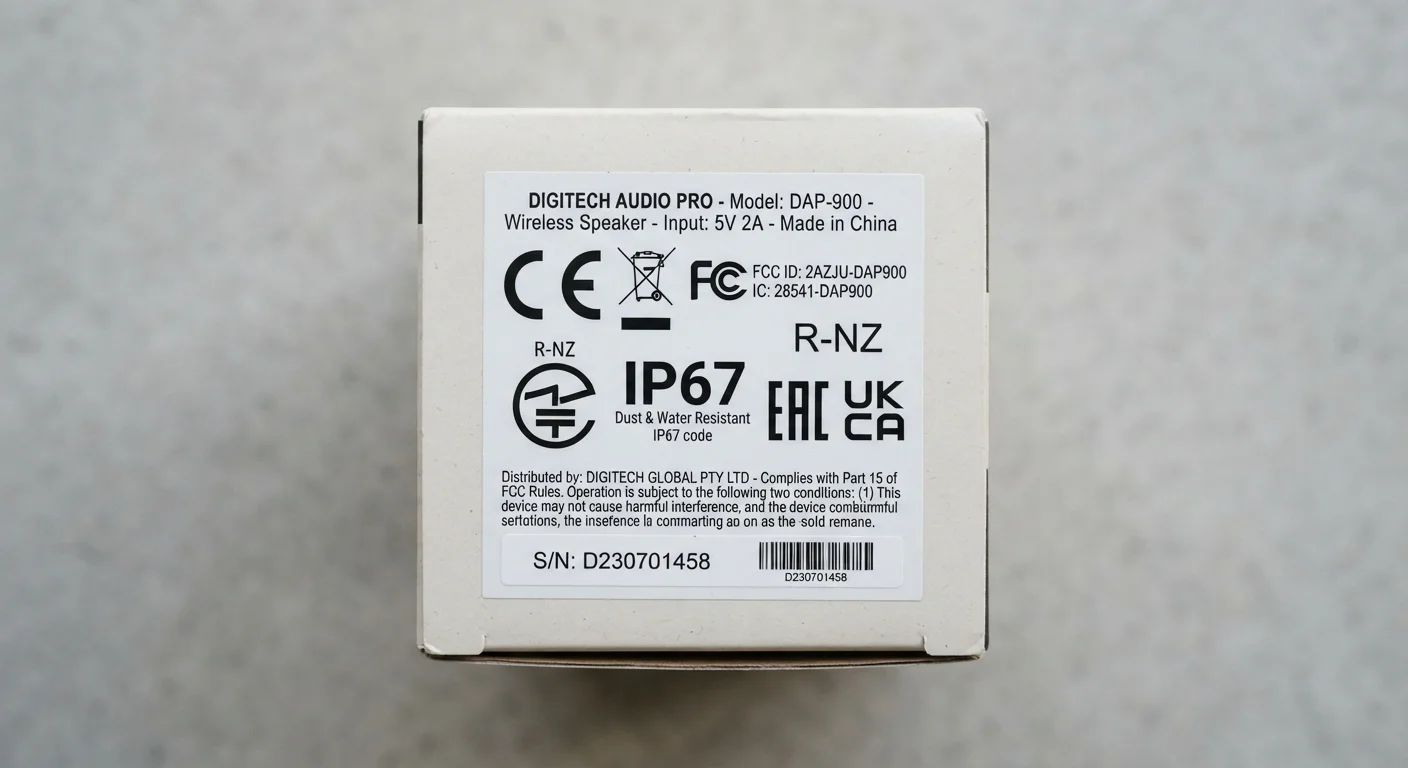
Photo credit: TrendingFaqs.com
In this article
The symbols and codes stamped on your gadgets tell you a lot about safety and durability. This reference guide explains what each one actually certifies.
Why these symbols matter
Look at the back of a smartphone, a pair of wireless earbuds, or a laptop charger, and you will find a cluster of small logos, alphanumeric codes, and abbreviations. Most people ignore them. That is a missed opportunity, because each mark records a specific test a device passed, a regulatory requirement it met, or a performance threshold it reached.
Understanding what these marks certify lets you compare devices accurately, know what a product can safely do, and spot gear that has skipped important testing. This guide covers the three most common categories: ingress protection ratings, CE marking, and FCC labeling.
IP ratings: what water and dust resistance numbers actually say
IP stands for Ingress Protection, a standard defined in IEC 60529 by the International Electrotechnical Commission. An IP rating always appears as two digits after the letters IP. The first digit rates protection against solid particles (dust, grit, fingers). The second rates protection against liquids.
The solid-particle scale runs from 0 (no protection) to 6 (dust-tight). A 6 means no dust entered the enclosure during an 8-hour test under low pressure. The liquid scale runs from 0 to 9K. Common values you will see on consumer devices:
- IPX4: splash-resistant from any direction. Common on budget earbuds.
- IP67: dust-tight and can be submerged to 1 meter for 30 minutes.
- IP68: dust-tight and can be submerged beyond 1 meter, at a depth specified by the manufacturer.
The X in a rating like IPX4 means the solid-particle rating was not tested, not that it passed. That distinction matters if you plan to use a device in dusty conditions.
IP ratings are also context-specific. They reflect conditions in a lab test, not continuous real-world immersion. Chlorinated pool water, saltwater, and high-pressure sprays can degrade seals over time in ways the standard test does not capture. The rating does not come with a warranty against liquid damage in every scenario.
Ingress protection (IP)
A two-digit rating system defined in IEC 60529 that describes how well a device enclosure resists solid particles and liquids. The first digit covers solids; the second covers liquids.
CE marking
A declaration by the manufacturer that a product meets applicable EU safety and regulatory directives. It is required for products sold in the EU and EEA and can, for many product types, be self-declared.
FCC ID
An alphanumeric identifier assigned when a device receives Federal Communications Commission authorization to be marketed in the United States. It confirms the device was evaluated for radio frequency emissions and interference.
IEC 60529
The international standard published by the International Electrotechnical Commission that defines ingress protection rating codes and the test methods behind them.
Declaration of Conformity
A document a manufacturer issues to state that a product meets a specific set of regulatory requirements. In the EU context it accompanies CE-marked products and lists the directives the product complies with.
Radio Equipment Directive (RED)
An EU directive that sets safety and spectrum requirements for devices that intentionally transmit or receive radio waves, including Wi-Fi and Bluetooth equipment. Products covered by RED require third-party testing for CE compliance.
CE marking: what it covers in practice
The CE mark is a declaration by a manufacturer that a product meets European Union safety, health, and environmental requirements. It is required for products sold in the EU and European Economic Area, which means it appears on a large share of consumer electronics sold globally, including devices imported into the United States from European supply chains.
CE does not mean a third-party lab tested the product. For many product categories, a manufacturer can self-declare compliance after internal testing. Independent testing is required only for higher-risk categories such as medical devices and radio equipment covered by the Radio Equipment Directive.
What CE marking covers depends on which EU directives apply to the product type. A wireless device typically falls under the Radio Equipment Directive and the Low Voltage Directive. A toy falls under different rules entirely. When you see CE on a device, it tells you the manufacturer claims conformity with relevant EU rules, not that any single authority inspected that specific unit.
Counterfeit CE marks exist. A genuine CE mark has specific proportions, and a legitimate product ships with a Declaration of Conformity document that names the directives covered. If you are evaluating a device for use in a professional or regulated setting, ask the supplier for that documentation.
CE and UKCA: two separate marks post-Brexit
Since January 2021, products placed on the market in Great Britain (England, Scotland, Wales) require the UKCA mark rather than CE. Northern Ireland continues to accept CE marking under the Windsor Framework. If you buy a device sourced from the UK market, check which mark applies. Manufacturers selling in both markets sometimes carry both marks on the same product.
FCC ID and FCC authorization: what the label means in the US
The Federal Communications Commission requires that any device capable of emitting radio frequency energy be authorized before it can be marketed in the United States. The FCC ID label records that authorization. It typically appears as a alphanumeric string on the device body or in the settings menu of a smartphone or tablet.
FCC authorization comes in three forms. Certification (the most rigorous) requires testing at an FCC-recognized lab and applies to devices that could cause significant interference, including Wi-Fi radios, cellular modems, and Bluetooth transceivers. Supplier's Declaration of Conformity (SDoC) applies to devices with lower interference potential, such as personal computers and monitors. Verification, the least strict, covers devices unlikely to cause interference and can be handled internally.
You can look up any FCC ID at the FCC's public database (fccid.io mirrors the official data in a more searchable format). The record shows the device type, the applicant, test reports, and internal photos if the lab submitted them. This is useful for confirming that a device sold under an unfamiliar brand has legitimate US authorization.
The FCC ID is distinct from a safety certification. It does not mean the device has been tested for electrical safety or build quality. Electrical safety in the US is handled separately by organizations such as UL (Underwriters Laboratories), CSA Group, or ETL, whose marks appear alongside the FCC ID on compliant products.
For more information on other technical labels you encounter on device packaging, see our guides on Bluetooth version numbers and screen resolution figures.

Author
Tech Editorial Team
Tech Editorial Team is the collective byline for our editorial team and contributor network. Articles published under this byline or an editorial pen name are researched, written, and reviewed according to our editorial standards for clarity, consistency, and independence before publication.
View all articles →