
Bluetooth Versions Decoded: Why the Number on the Box Matters
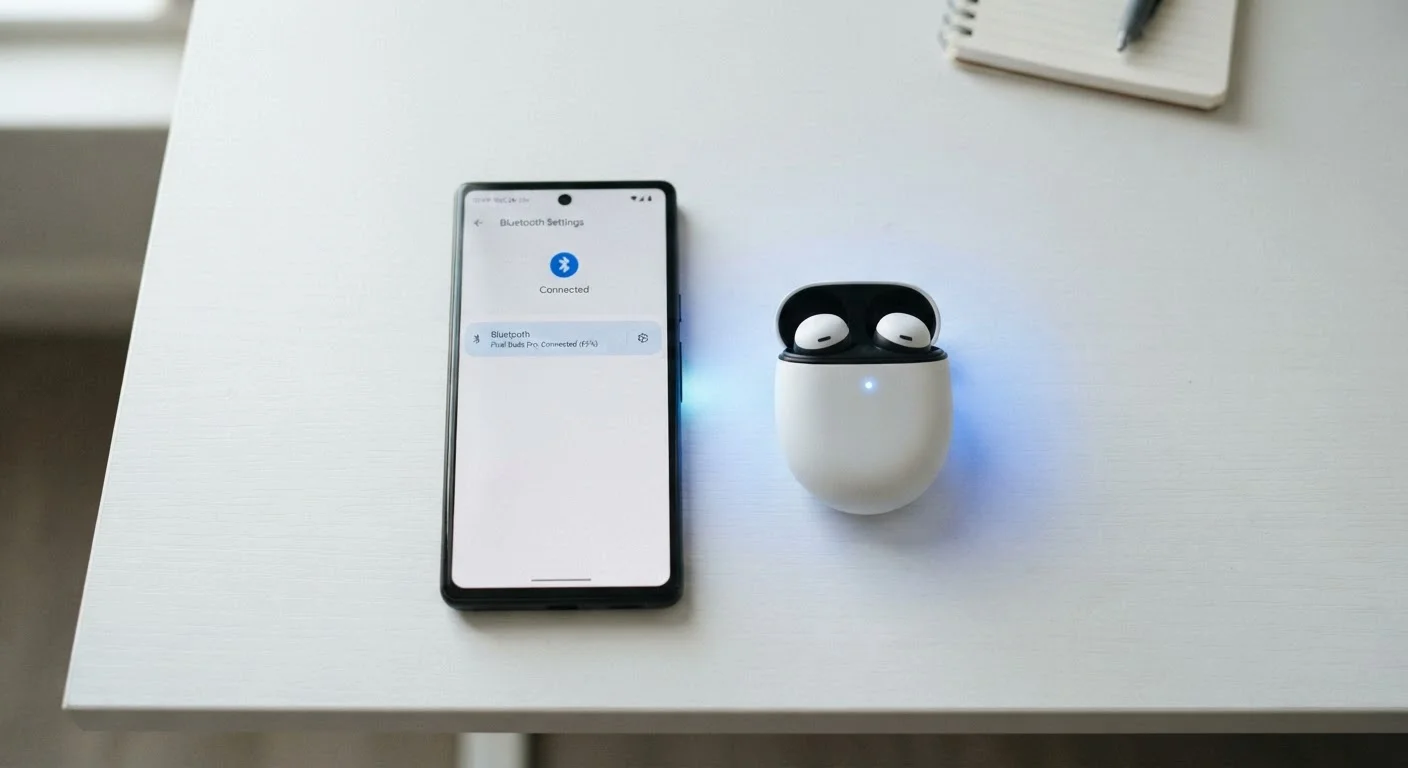
Photo credit: TrendingFaqs.com
In this article
Bluetooth 4.0, 5.0, 5.3 — what do these numbers mean for range, speed, and compatibility? A clear reference for everyday device shoppers.
What Bluetooth version numbers actually mean
Bluetooth is a short-range wireless standard maintained by the Bluetooth Special Interest Group (SIG). Each version number marks a specification update that changes one or more technical properties: range, data throughput, power use, or the number of simultaneous connections a device can manage.
The number printed on a box or listed in a spec sheet tells you which version of that specification the hardware supports. Higher is generally more capable, but a device only performs to the higher version when both sides of the connection share it. A Bluetooth 5.3 speaker paired to a phone running Bluetooth 4.2 will operate at 4.2 capability.
Versions are backward compatible. A newer device will connect to an older one; it simply negotiates down to the older standard for that session.
Version-by-version breakdown
The versions most consumers encounter fall into a few distinct generations.
Bluetooth 4.0 and 4.2
Version 4.0, released in 2010, introduced Bluetooth Low Energy (BLE), a separate radio mode designed for sensors, fitness trackers, and small devices that run on coin-cell batteries for months. Version 4.2, from 2014, added faster data transfer over BLE and improved privacy controls. Most wearables and smart home sensors from the mid-2010s use this generation.
Bluetooth 5.0
Released in 2016, version 5.0 doubled the maximum speed of BLE (to 2 Mbps) and quadrupled its theoretical range compared to 4.2, reaching up to 800 feet in open, unobstructed conditions. It also increased broadcast capacity, which benefits devices like beacons and location tags. Phones released after 2017 typically include 5.0 or later.
Bluetooth 5.1 and 5.2
Version 5.1 added direction-finding, a feature that lets compatible hardware estimate the angle of a signal and improve location accuracy. Version 5.2, released in 2020, introduced the LE Audio framework, which includes a new audio codec called LC3. LC3 delivers comparable or better audio quality at lower bit rates than the older SBC codec, and it enables Auracast broadcast audio, a feature that lets one source stream to multiple listeners simultaneously.
Bluetooth 5.3 and 5.4
These incremental updates refined connection reliability and added features for managing multiple audio streams. Version 5.3 is common on devices released after 2022. Version 5.4, released in 2023, added Periodic Advertising with Responses (PAwR), mainly useful for large-scale sensor networks rather than consumer audio.
Bluetooth Low Energy (BLE)
A radio mode introduced in Bluetooth 4.0, designed for devices that send small amounts of data intermittently. It uses far less power than Classic Bluetooth, making it common in fitness trackers, sensors, and location tags.
LC3 codec
The Low Complexity Communication Codec, introduced with LE Audio in Bluetooth 5.2. It compresses audio more efficiently than the older SBC codec, which can mean better sound quality at the same or lower data rate.
Auracast
A broadcast audio feature built on Bluetooth 5.2's LE Audio framework. It allows one audio source to stream simultaneously to multiple receiving devices without a traditional pairing step.
Bluetooth profile
A standardized set of rules that defines how Bluetooth devices use the connection for a specific purpose (for example, A2DP for stereo audio or HID for keyboards). Both devices must support the same profile for that function to work.
SBC codec
The Sub-Band Codec, the mandatory baseline audio codec for Bluetooth stereo audio. All A2DP-compatible devices support it, but it is less efficient than newer codecs like LC3 or aptX.
What this means when you shop or troubleshoot
For everyday audio devices, earbuds, headphones, and speakers, the difference between 5.0 and 5.3 is small in practice. The LE Audio and LC3 codec support introduced in 5.2 matters more for audio quality and multi-device streaming than the jump from 5.0 to 5.1 does.
Range figures in spec sheets reflect ideal, open-air conditions. Walls, interference from other 2.4 GHz devices (Wi-Fi routers, microwaves), and the antenna design of the specific hardware all reduce real-world range significantly. Treat published range numbers as a ceiling, not a guarantee.
For fitness trackers and health sensors, BLE (available since 4.0) is the relevant capability. The version number matters less than whether the device and your phone both support BLE, which any hardware made after 2012 almost certainly does.
If a new device will not pair with an older phone, a version mismatch is rarely the cause. Profile incompatibility (the device uses a Bluetooth profile the phone does not support) or a software bug is far more common. Checking for firmware and OS updates is usually a better first step than assuming a hardware limitation.

Author
Tech Editorial Team
Tech Editorial Team is the collective byline for our editorial team and contributor network. Articles published under this byline or an editorial pen name are researched, written, and reviewed according to our editorial standards for clarity, consistency, and independence before publication.
View all articles →