
Bathroom Organization on a Tight Budget
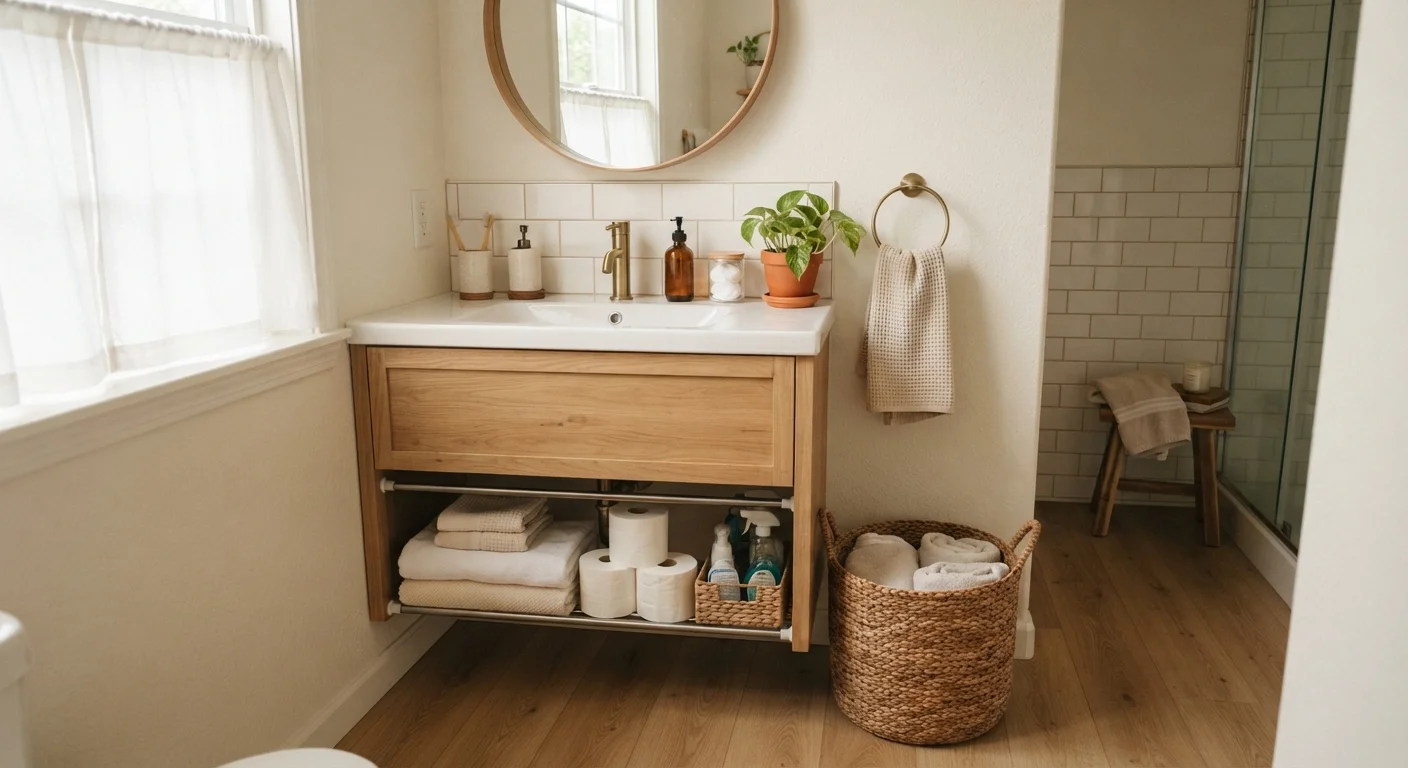
Photo credit: TrendingFaqs.com
In this article
You don't need expensive storage solutions for a tidy bathroom. Creative, low-cost approaches that work in small or rented spaces.
Key Takeaways
- Repurposing everyday household items like jars and baskets costs little and works well for bathroom storage.
- Vertical wall space is the most underused storage area in most bathrooms.
- Renters can add functional storage without drilling or damaging walls.
- Decluttering expired or unused products is the first step before buying any storage solutions.
- Consistent categories and designated spots keep a small bathroom tidy long-term.
Why bathroom clutter builds so fast
Bathrooms are small rooms that hold a lot. Toiletries, towels, cleaning supplies, medicine, and personal care products all compete for limited surface and cabinet space. Without a clear system, items pile up quickly, and the room feels chaotic even when it's technically clean.
The good news is that most bathroom organization problems don't require expensive built-ins or custom cabinetry. They require a bit of thought and some low-cost adjustments. The same thinking that helps with organizing a kitchen with limited cabinet space applies here: work with what you have before spending anything.
Declutter before you organize
No storage system works well when it holds things you don't need. Go through every product in your bathroom and remove anything expired, nearly empty, or unused for more than a few months. This step costs nothing and immediately makes the space feel larger.
Pay attention to duplicates. Two half-used bottles of shampoo can be consolidated into one. A drawer crammed with sample-size items you've never touched is wasted space. Once you know exactly what stays, you can plan storage around real needs rather than guessing.
Decluttering costs nothing and makes every other step easier.
Use vertical wall space
Most bathroom walls between the mirror and the ceiling go completely unused. Floating shelves in that zone, even a single narrow shelf, can hold rolled hand towels, a small plant, or spare toiletries. In many cases, a few adhesive-backed shelf brackets are enough to get started without power tools.
Over-the-door organizers are another vertical option. They hang from the back of the bathroom door and hold everything from hair tools to cleaning supplies. Renters can use them without touching the walls at all.
Wall space above eye level is the most overlooked storage area in a bathroom.
Repurpose containers you already own
Glass jars from the kitchen are good holders for cotton balls, Q-tips, and hair ties. A small ceramic mug works as a toothbrush holder. Shallow trays that held candles or decorative items can corral makeup or daily-use products on the counter.
This approach costs nothing if you already have these items. Before purchasing any organizers, look through your kitchen, office, and closets. Containers meant for other uses often fit bathroom items well, and a consistent style across a few repurposed pieces still looks intentional.
Glass jars and ceramic mugs you already own often work as well as purchased organizers.
Make the space under the sink work harder
Under-sink cabinets tend to collect a chaotic pile of cleaning products, spare rolls, and miscellaneous items. A tension rod mounted inside the cabinet creates an instant second tier: hang spray bottles from it so they're off the floor and easy to grab. Small bins or baskets on the shelf below then hold other items more neatly.
Stackable shelf risers inside the cabinet double the usable surface area without permanent modifications, which matters for renters. Group items by function: cleaning supplies together, personal care together, and spare products together.
A tension rod inside a cabinet door costs under a few dollars and doubles usable space.
Assign every item a specific spot
A bathroom stays tidy when each item has a fixed home. Without designated spots, surfaces collect clutter by default because there's no clear place to return things. This doesn't require labels or elaborate systems. It just means deciding, for example, that hair tools live in one drawer and skincare lives on one tray.
If you share a bathroom with others, defined zones help even more. Each person having a dedicated shelf or bin reduces confusion and makes it easier for everyone to maintain the system. The organizing approach for shared spaces is worth reviewing if multiple people use the same bathroom.
Without a designated spot for each item, surfaces accumulate clutter by default.
Hang a small basket or two on the wall
Woven baskets with hanging hardware come at low cost and add practical storage without looking purely functional. Mount one at hand height for items used daily, like a phone charger for the counter, hair bands, or a small notebook. A second basket slightly higher can hold backup supplies.
Adhesive hanging strips rated for moderate weight can hold lighter baskets on tile or painted drywall without drilling, which is useful in rentals. Check the weight rating on the packaging carefully and follow the installation instructions to avoid damage.
Woven wall baskets combine practical storage with a tidier visual result.
Keep the counter clear on purpose
A clear counter looks cleaner and is easier to wipe down. The goal isn't to hide everything, but to limit what lives on the surface to only daily-use items. A small tray containing five or six items still reads as organized; fifteen loose products scattered across the counter does not.
Move anything used less than daily into a drawer or cabinet. Refillable dispensers for soap and lotion take up less visual space than several individual bottles and reduce the number of containers you manage. This fits naturally with the broader point in storage myths that quietly make clutter worse: adding more containers isn't always the solution.
A small tray with a few daily items reads as organized; scattered products don't.
Making the habits stick
Renters: check before you drill
Many of these strategies require no permanent changes, but if you're considering mounting anything with screws, review your lease first. Some landlords allow small holes for shelves; others require written permission or prohibit them entirely. Adhesive-backed strips and tension rods are generally safe alternatives that leave walls intact.
Organization works when the system is easy to maintain, not just easy to set up. If putting something away takes more effort than leaving it on the counter, the counter wins. Keep the most-used items in the most accessible spots, and reserve harder-to-reach areas for things used occasionally.
A quick weekly reset of five minutes or less is usually enough to keep a well-organized bathroom tidy. Return anything that drifted, wipe down surfaces, and restock whatever ran low. That rhythm is more effective than a major monthly overhaul. If you want to go further with space perception in the room, common myths about making a small home feel bigger separates useful ideas from overclaimed ones.

Author
Home Editorial Team
Home Editorial Team is the collective byline for our editorial team and contributor network. Articles published under this byline or an editorial pen name are researched, written, and reviewed according to our editorial standards for clarity, consistency, and independence before publication.
View all articles →