
Furniture Arrangement Principles That Make Any Room More Livable
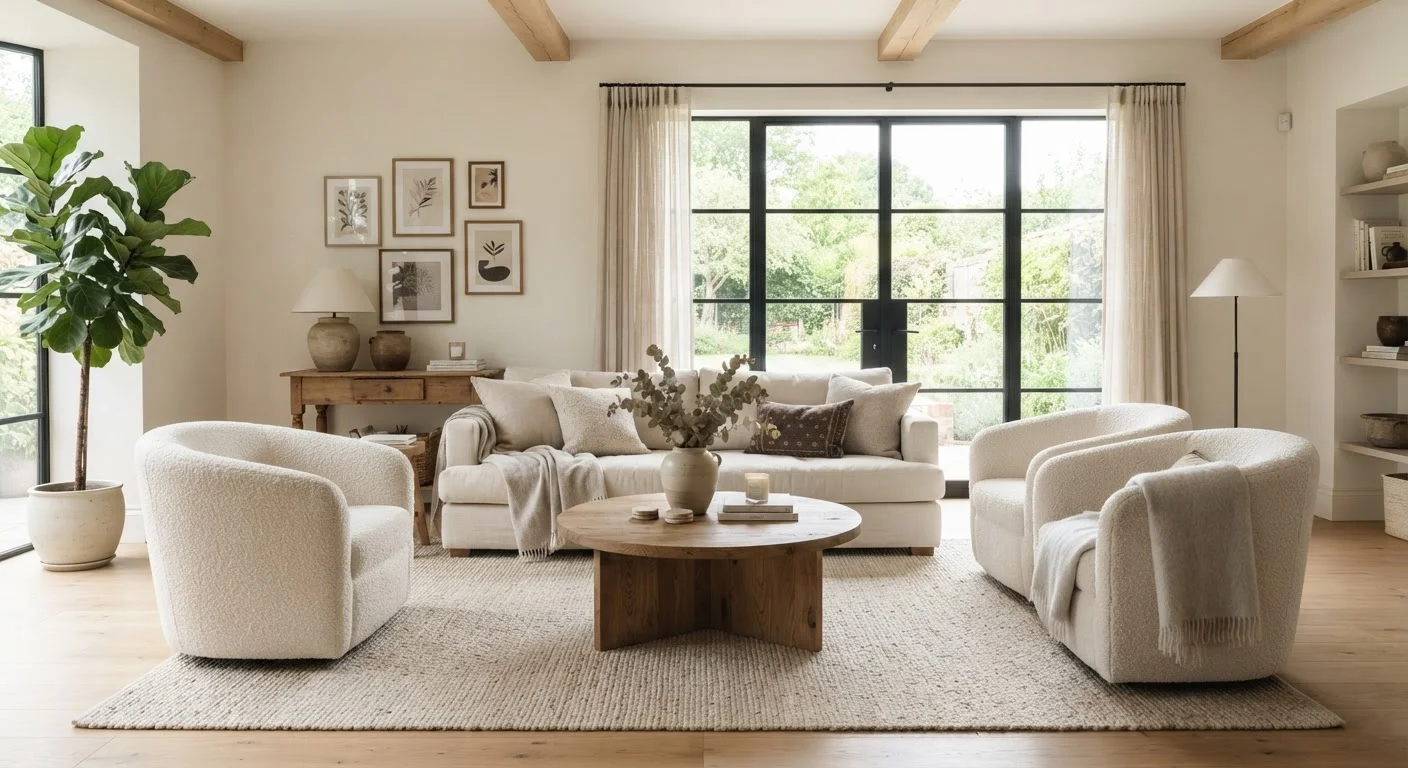
Photo credit: TrendingFaqs.com
In this article
How you arrange furniture shapes traffic flow, conversation, and how spacious a room feels. Learn the core principles behind comfortable layouts.
Key Takeaways
- Anchor each seating area with a rug to define the zone and unify the furniture grouping.
- Leave at least 18 inches of clearance between a sofa and coffee table for comfortable use.
- Pulling furniture away from walls often makes a room feel larger, not smaller.
- Traffic flow should move around conversation areas, not through the middle of them.
- A focal point, such as a fireplace or window, should orient the main seating arrangement.
Why arrangement matters more than furniture itself
Most people focus on buying the right pieces, but how those pieces are placed has a bigger effect on daily comfort than the furniture itself. A room that feels cramped or awkward often has nothing wrong with its contents; the layout is simply working against the space.
Good arrangement does three things: it guides people through the room without forcing them to navigate around furniture, it creates groupings where conversation and activity feel natural, and it gives the eye a clear place to land. When all three are present, a room feels comfortable without anyone being able to say exactly why.
For more on how other design choices affect comfort, see how open and divided floor plans compare.
Start with a focal point
Every room benefits from one dominant feature that anchors the layout. In a living room, that might be a fireplace, a large window with a view, or a media console. In a bedroom, it is almost always the bed itself.
Identify the focal point before placing anything else. The main seating or the largest piece of furniture should face or acknowledge it. This gives the room a clear sense of orientation, so the arrangement feels intentional rather than improvised.
If a room has no obvious focal point, you can create one with a piece of art, a large mirror, or a well-positioned bookcase. The goal is a single wall or area that draws attention and gives the rest of the layout something to respond to.
Sketch the layout before you move anything
Use graph paper or a free room-planning app to map your space at scale before rearranging. Measure each piece of furniture and your room dimensions first. This takes about 20 minutes and saves you from moving a heavy sofa three times to find the right spot.
Core principles for arranging furniture well
These practices apply across room types and furniture styles.
Pull furniture away from the walls.
Pushing every piece against a wall is one of the most common layout mistakes. It scatters the furniture, leaves dead space in the center, and makes conversation feel distant. Floating a sofa even 12 to 18 inches from the wall draws pieces together into a cohesive grouping.
Size your rug to anchor the whole seating group.
A rug that is too small floats in the center of the room and makes furniture look disconnected. The front legs of every major seating piece should sit on the rug, or at minimum the front legs of the sofa and chairs should rest on it.
Plan traffic flow before placing anything.
Traffic should move along the edges of a room or behind a seating grouping, never through the middle of a conversation area. When people have to cut through a seated group to reach another part of the room, the space feels fragmented and uncomfortable.
Keep conversation distances human-scaled.
Comfortable conversation happens when seats are roughly 4 to 8 feet apart. Much beyond 8 feet and people raise their voices; much below 4 feet and the space feels crowded. This distance is often the deciding factor in whether a seating arrangement gets used.
Match the scale of furniture to the room.
Oversized furniture in a small room blocks movement and overwhelms the space. Undersized pieces in a large room look adrift and fail to define zones. Neither condition is comfortable to live in, and both are solved by measuring before buying or rearranging.
Quick adjustments you can make today
Not every fix requires moving heavy furniture. Some of the most effective changes take minutes.
For related spatial thinking, common myths about making a small home feel bigger separates useful advice from popular misconceptions.
Textiles also shape how a layout reads. A rug placed correctly can define a seating area even in an open room. How rugs and curtains change the feel of a room covers this in practical detail.

Author
Home Editorial Team
Home Editorial Team is the collective byline for our editorial team and contributor network. Articles published under this byline or an editorial pen name are researched, written, and reviewed according to our editorial standards for clarity, consistency, and independence before publication.
View all articles →