
Starting a Walking Routine When You Have Not Exercised in Years
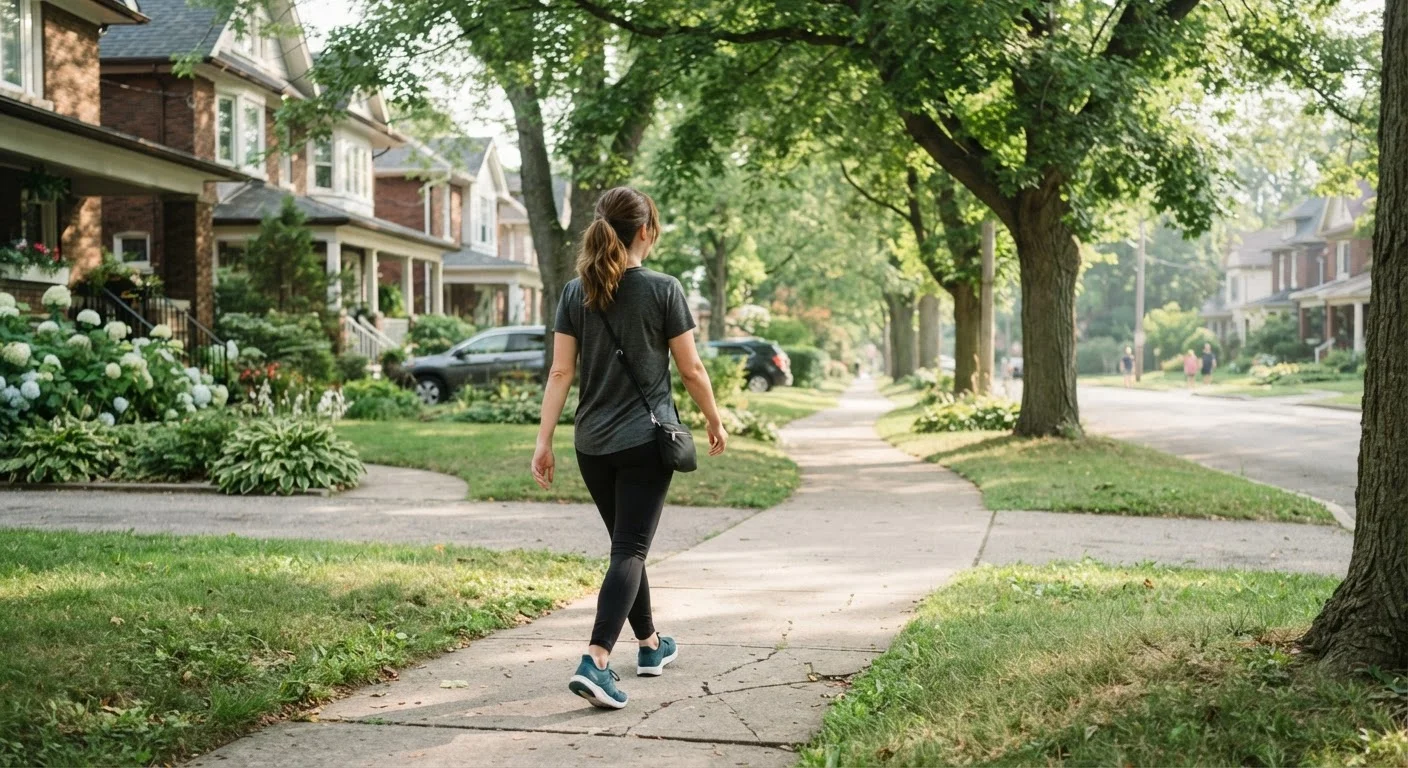
Photo credit: TrendingFaqs.com
In this article
A practical, low-pressure guide to building a walking habit from scratch, including how far to go, how often, and how to keep going when motivation fades.
Key Takeaways
- Ten to fifteen minutes a day is a legitimate and productive starting point after years of inactivity.
- Consistency matters more than distance or speed in the first several weeks.
- Supportive footwear is the only equipment that genuinely affects injury risk for walkers.
- Habit cues, not willpower, are what keep most people walking past the first few weeks.
- Mild muscle soreness is normal; joint pain, chest tightness, or dizziness are reasons to stop and consult a doctor.
Why walking is the right starting point
Walking asks almost nothing of you upfront. There is no gym membership, no class schedule, no technique to learn, and no fitness level required to begin. For someone who has not exercised in years, that low barrier is not a consolation prize; it is the actual point.
From a physiological standpoint, walking is a moderate-intensity aerobic activity that raises heart rate, supports circulation, and engages the major muscle groups of the lower body without the impact stress of running or jumping. The U.S. Department of Health and Human Services physical activity guidelines recognize moderate-intensity aerobic activity as sufficient for meaningful health benefits, including improved cardiovascular function and better blood sugar regulation.
Walking also has a practical advantage that most other forms of exercise lack: it is something your body already knows how to do. You are not learning movement patterns from scratch or managing the soreness of unfamiliar muscles. That familiarity makes it far easier to repeat consistently, and consistency is what produces results. For a broader look at low-impact exercise options beyond walking, there are other gentle modalities worth knowing about as your fitness grows.
Moderate-intensity activity
Exercise that raises your heart rate and makes you breathe harder but still allows you to speak in full sentences. Brisk walking falls into this category.
Aerobic exercise
Physical activity that uses oxygen to fuel muscles over a sustained period, strengthening the heart and lungs over time.
Adaptation
The process by which your muscles, heart, and connective tissues gradually become more efficient in response to regular physical stress. It is why exercise feels harder at first and easier after several weeks.
Habit cue
A consistent trigger in your daily routine that prompts a behavior automatically, reducing the need to rely on willpower or active decision-making.
Progressive overload
Gradually increasing the demand placed on the body over time, such as adding five minutes to a walk each week, so that fitness continues to improve without sudden injury risk.
How far and how often to walk at first
The most common mistake people make when returning to exercise is doing too much too soon. After years of inactivity, your cardiovascular system, muscles, and connective tissue all need time to adapt. Overloading them in the first week leads to soreness, fatigue, and often a complete stop.
A practical starting structure for week one looks like this: walk for 10 to 15 minutes at a pace where you can hold a conversation without gasping, three to four days per week. That is it. The pace should feel easy, not like a workout in the conventional sense.
Each week, if the walks feel comfortable, add five minutes to your duration. Do not add time and frequency at the same time. Increase one variable at a time. By week four or five, you may be walking 25 to 30 minutes per session, which puts you in the range where you start to accumulate the 150 minutes of moderate activity per week that health guidelines recommend for adults.
Rest days between walks are not laziness. They are when your body actually adapts. Three days on, one day off is a reasonable pattern in the first month.
What to wear and where to go
Footwear is the one equipment decision that genuinely matters for walkers. A supportive athletic shoe with adequate heel cushioning and arch support reduces stress on the knees, hips, and lower back. Shoes that are worn down at the heel or completely flat offer little protection over longer distances. You do not need a specialized walking shoe; a general-purpose athletic or running shoe with good support works fine.
Beyond shoes, wear whatever is comfortable for the weather. Moisture-wicking fabric helps in warm conditions, and layering is sensible in cold weather, but there is no gear minimum for starting out.
For location, start close to home. A neighborhood block, a local park, or even a flat indoor space like a mall or large building all work. Flat, predictable surfaces are easier on the body than hilly terrain when you are just starting. Once walking 20 or more minutes feels routine, adding gentle inclines naturally increases the cardiovascular challenge without requiring a faster pace.
Building the habit when motivation fades
Motivation is highest right at the start and tends to drop within two to three weeks, often around the same time that the novelty wears off and the results are not yet visible. This is normal, and it is not a sign that something has gone wrong.
The most durable walking habits are not built on motivation; they are built on cues. A cue is a consistent trigger that precedes the behavior, such as walking right after your morning coffee, during a regular lunch break, or as part of your commute. When the walk follows an established part of your day automatically, you spend less mental energy deciding whether to do it.
Tracking is another practical tool. A simple log, whether in a notebook or a phone app, creates a small streak worth protecting. Missing one day is fine. Missing two in a row makes it easier to miss a third. Why exercise motivation fluctuates and what actually sustains the habit long-term is worth understanding if you find yourself stalling. For strategies that go beyond the first month, building an exercise habit that lasts covers the behavioral side in more depth.
Make your walk the path of least resistance
Set out your shoes the night before and place them somewhere visible. Small environmental cues like this reduce friction and make it easier to follow through without relying on a burst of motivation. The easier you make it to start, the more likely you are to actually go.
When to progress and what to watch for
After four to six weeks of consistent walking, you may notice that your regular route feels easier, your resting heart rate has dropped slightly, or you recover more quickly after a brisk walk. These are real signals of adaptation. Signs that your routine is actually working can help you interpret those changes with more specificity.
Progression options include increasing duration, adding light incline, or picking up pace for short intervals. You do not need to transition to running. Sustained brisk walking, where your heart rate is noticeably elevated but you can still speak in sentences, is a legitimate and effective long-term exercise form.
Pay attention to how your body responds after walks. Mild muscle fatigue in the calves, thighs, or glutes is normal early on. Persistent joint pain in the knees, hips, or ankles is not, and neither is chest tightness, unusual breathlessness, or dizziness during or after a walk. Those symptoms are reasons to stop and speak with a doctor before continuing.
If you have a chronic condition such as heart disease, diabetes, or osteoporosis, or if you are pregnant or have been recently ill, consult your healthcare provider before starting any new exercise program, including walking.
This article is for general informational purposes only and is not medical advice. Consult a qualified healthcare professional before beginning any new exercise routine, particularly if you have existing health conditions or symptoms.
Frequently Asked Questions

Author
Health Editorial Team
Health Editorial Team is the collective byline for our editorial team and contributor network. Articles published under this byline or an editorial pen name are researched, written, and reviewed according to our editorial standards for clarity, consistency, and independence before publication.
View all articles →