
A Practical Checklist for Getting Out of Credit Card Debt
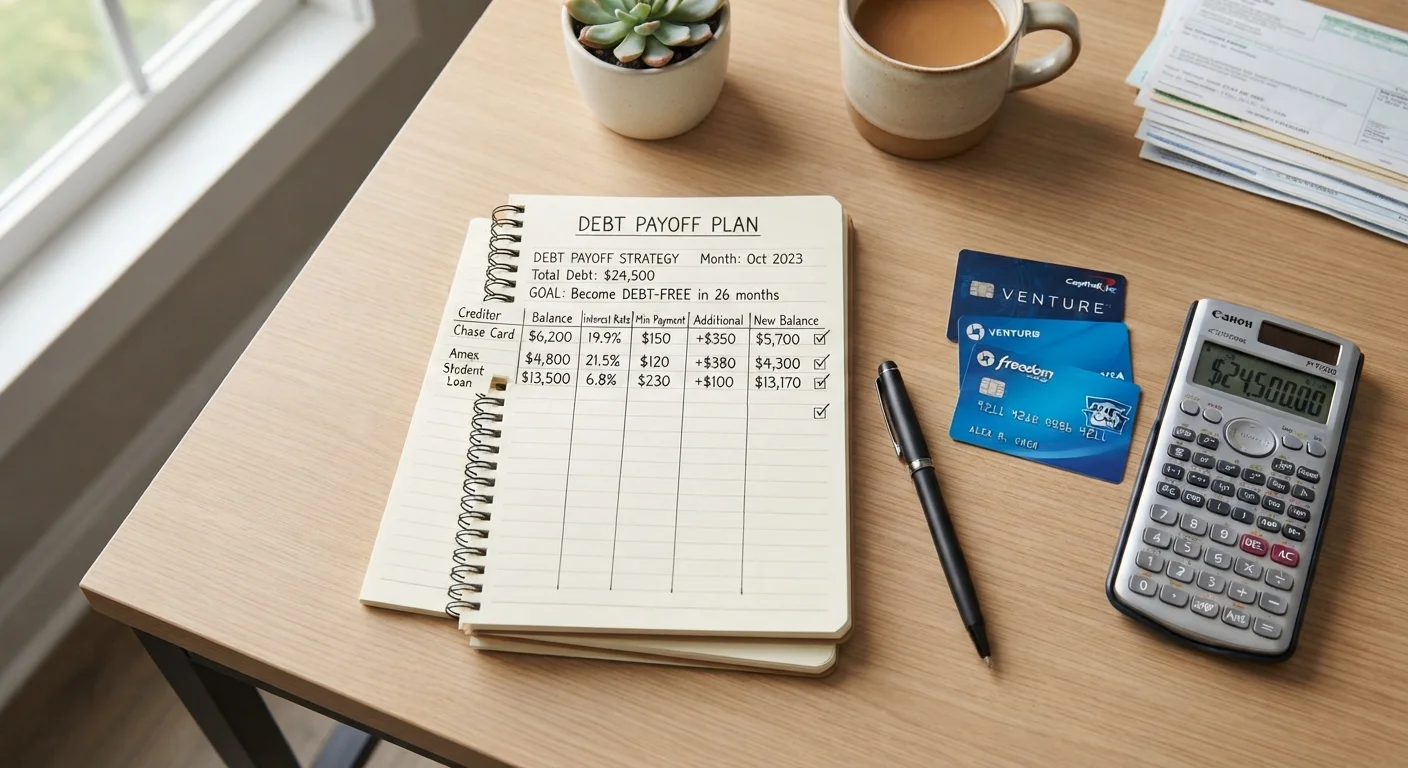
Photo credit: TrendingFaqs.com
In this article
Work through this step-by-step checklist to organize your balances, choose a payoff method, and track your progress toward zero.
Key Takeaways
- Listing every balance and interest rate before choosing a payoff method prevents wasted effort.
- Two well-established payoff strategies are the avalanche method and the snowball method, each with different motivational trade-offs.
- Freeing up even small amounts of monthly cash flow can meaningfully accelerate debt payoff.
- Tracking progress in writing or with a spreadsheet keeps you accountable between payments.
- Addressing the spending habits that created the debt reduces the risk of cycling back into it.
Why a structured checklist helps
Credit card debt is expensive. Interest compounds daily on most cards, meaning every month you carry a balance, the amount you owe grows. Understanding that mechanic is motivating: see how compounding amplifies debt over time before you start so the math reinforces your urgency.
A checklist keeps the process concrete. Rather than vaguely planning to pay more, you identify exact balances, commit to a specific method, and set measurable targets. That structure matters because debt payoff is a multi-month process where small decisions accumulate. Without a framework, it is easy to stall.
This checklist does not replace advice from a licensed financial professional. Use it as a general organizational tool, and consult a certified financial counselor or adviser if your situation involves collections, legal action, or significant hardship.
Minimum payments extend debt significantly
Paying only the minimum on a high-APR card can stretch repayment to many years and cost more in interest than the original purchase amount. The exact timeline depends on your balance and rate, but the general principle holds across most cards. Running even a modest extra payment each month cuts both the time and the total interest paid.
What you need before you start
Gather the following before working through the checklist. Having everything in one place prevents you from stopping mid-process to hunt for a statement.
Recent credit card statements
Provides exact current balances, APRs, minimum payments, and credit limits for every card.
Bank account statements (2 to 3 months)
Lets you map actual spending patterns rather than relying on memory when identifying cash flow to redirect.
Spreadsheet or notebook
Serves as your payoff tracker to log starting balances, payments made, and remaining balances over time.
Online APR or payoff calculator
Helps you estimate how long payoff will take at different monthly payment amounts without manual math.
Budget worksheet or app
Makes it easier to compare income against expenses and locate money to direct toward extra payments.
The payoff checklist
Work through these groups in order. The early steps feed into the later ones, so skipping ahead often means backtracking.
Gather and organize your debt information
Assess your cash flow
Choose a payoff method
Set up your payment system
Guard against slipping back
Once you have a payoff order set, read through the framework for balancing debt payoff with saving goals. Holding zero savings while aggressively paying debt can force you back onto credit cards when an unexpected expense arrives, so the two questions are linked.
Also review whether any of your creditors might offer modified terms. Creditors sometimes accept hardship arrangements or reduced interest rates, particularly if you contact them before missing payments.
Protecting your progress
Paying down a balance improves your credit utilization ratio, which is one of the larger factors in your credit score. The relationship is not always immediate, however. Paying off a debt does not always raise your score right away because other variables like account age and credit mix also shift.
Beyond the score, watch for the behavioral patterns that slow payoff or reverse it. Certain habits make it harder to escape an ongoing debt cycle, and recognizing them early keeps you from undoing months of progress. One practical habit worth reviewing: auditing recurring subscription charges often surfaces monthly costs that can be redirected to debt payments.
This article is for general informational purposes only and does not constitute personalized financial, tax, or legal advice. Consult a licensed financial professional for guidance specific to your circumstances.

Author
Finance Editorial Team
Finance Editorial Team is the collective byline for our editorial team and contributor network. Articles published under this byline or an editorial pen name are researched, written, and reviewed according to our editorial standards for clarity, consistency, and independence before publication.
View all articles →