
Opportunity Cost: The Hidden Price of Every Financial Choice
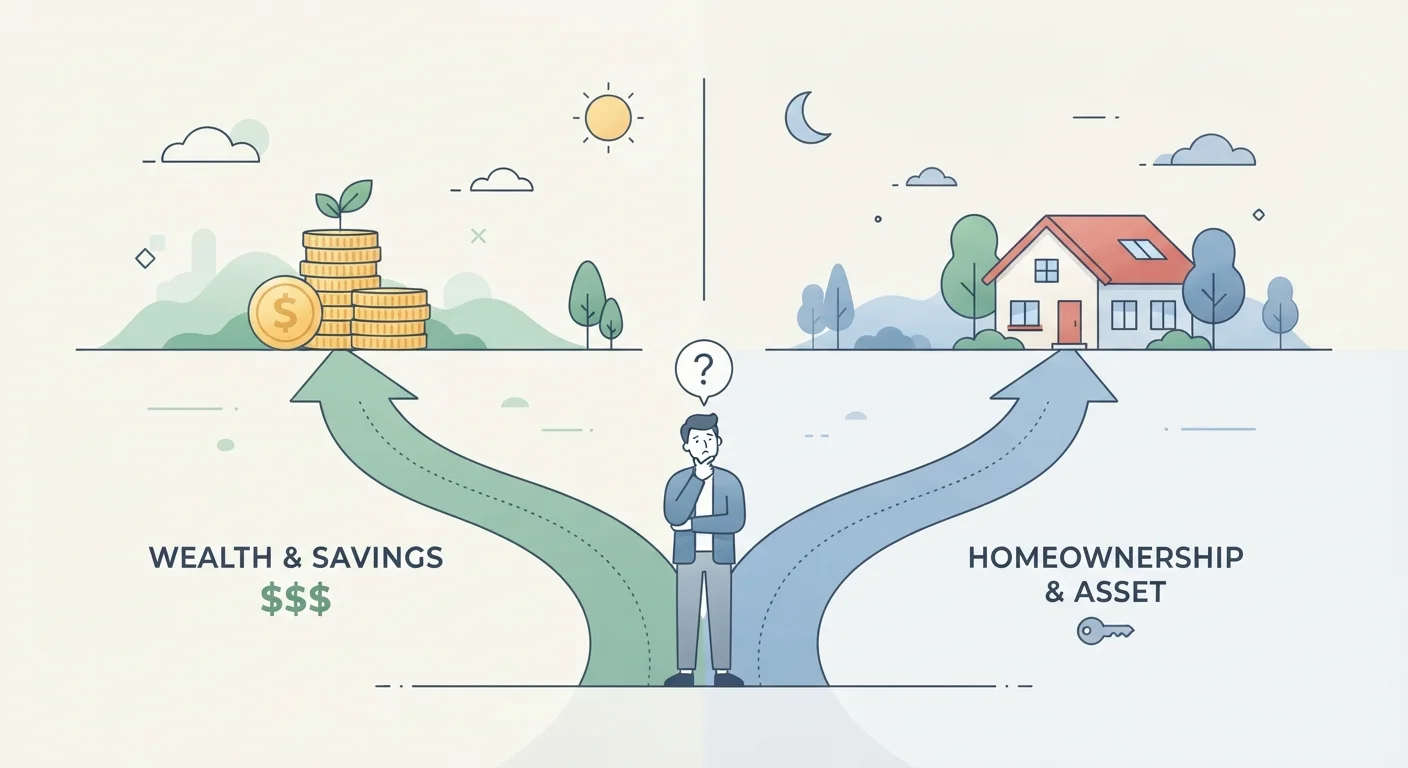
Photo credit: TrendingFaqs.com
In this article
Every financial decision means giving up something else. Understand how opportunity cost works and why it's a useful lens for evaluating everyday money choices.
Key Takeaways
- Every financial choice has a hidden cost: the value of the option you did not take.
- Opportunity cost applies to time and attention, not just money.
- Paying off high-interest debt often has a higher opportunity cost if ignored than investing.
- Recognizing opportunity cost helps you compare choices on equal terms before committing.
- Opportunity cost is not a reason to avoid decisions; it is a framework for making better ones.
What opportunity cost actually means
Financial jargon often makes simple ideas sound complicated. Opportunity cost is one of those ideas that sounds technical but describes something everyone does every day: whenever you choose one thing, you give up another.
The concept comes from economics, where it captures the full price of a decision, not just the dollars that leave your wallet. When you spend $200 on a weekend trip, you are also forgoing whatever else that $200 could have done: paid down a credit card balance, gone into an emergency fund, or been invested. The trip is not just a $200 expense; it is a $200 trip plus the value of the best alternative you skipped.
This matters in personal finance because many decisions feel free or low-cost on the surface. Keeping cash in a checking account costs nothing visible. Holding onto a paid-off car rather than selling it appears to save money. But each of those involves a trade-off with real value attached. Understanding core money concepts before major decisions helps you see those trade-offs clearly rather than discovering them after the fact.
Where opportunity cost shows up in everyday finances
The concept applies across a wide range of ordinary financial situations.
Savings and debt
One of the most direct applications is the choice between saving and paying off debt. If a credit card charges 22% annual interest and a savings account earns 4%, the opportunity cost of saving instead of paying down the card is roughly 18 percentage points per year on every dollar held in savings. The money is working against you in one place faster than it works for you in the other. Comparing those two options systematically can clarify which path makes more sense for a given situation.
Car ownership
Buying a car with cash rather than financing it at a low interest rate is a common scenario where opportunity cost comes up. The cash purchase avoids interest, but the lump sum is no longer available for other uses. The recurring costs of car ownership already stretch many budgets; tying up capital in a vehicle purchase adds an invisible cost on top of those visible ones.
Time and income
Opportunity cost is not limited to money. Time spent on one activity is time not spent on another. Accepting overtime shifts might mean forgoing time for a side project that could eventually earn more. Declining a job offer to stay in a comfortable role involves giving up potential income growth. These trade-offs are harder to quantify but no less real.
A practical shortcut for smaller decisions
You do not need a formal analysis for every purchase. A quick mental check, asking 'what else could this money do right now?' is often enough to surface the most relevant trade-off. For decisions above a few hundred dollars, writing down the two or three most plausible alternatives takes only a few minutes and tends to produce clearer thinking.
How to use opportunity cost in practice
The goal is not to paralyze every decision with endless calculation. Most choices do not require a spreadsheet. The useful habit is asking one question before committing: what am I giving up by choosing this?
For larger financial decisions, that question becomes more specific. If you are considering locking money in a certificate of deposit, ask what interest rate you would forgo if rates rise. If you are debating whether to contribute to a retirement account or pay extra toward a mortgage, compare the expected return of each path, including any employer match that functions as an immediate return. The time value of money connects closely here, because the timing of a financial decision affects how large that opportunity cost becomes over years.
Opportunity cost also appears in decisions that seem entirely personal. Spending two hours per day on a commute has an implicit cost in time that could go elsewhere. Renting a home in a city versus buying involves trade-offs in flexibility, capital tied up, and potential appreciation foregone.
Diversification in investing is partly an application of this concept: concentrating all capital in one asset means forgoing the potential returns and risk reduction that a spread of assets could provide.
This article is for general informational and educational purposes only and does not constitute financial, investment, tax, or legal advice. Consult a qualified financial professional before making decisions based on your individual circumstances.
Frequently Asked Questions

Author
Finance Editorial Team
Finance Editorial Team is the collective byline for our editorial team and contributor network. Articles published under this byline or an editorial pen name are researched, written, and reviewed according to our editorial standards for clarity, consistency, and independence before publication.
View all articles →