
Fixed vs. Variable Rates: What Changes and What Doesn't When You Borrow
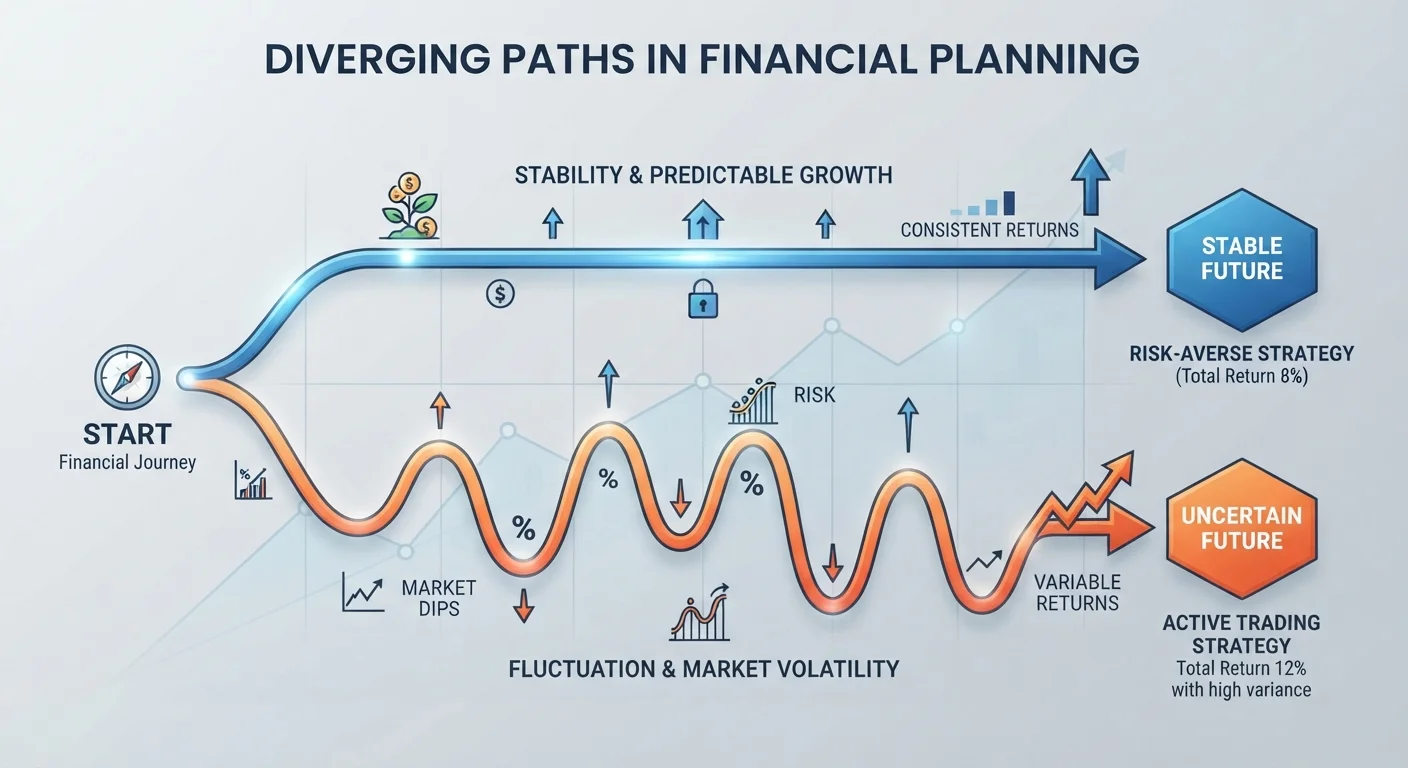
Photo credit: TrendingFaqs.com
In this article
Fixed and variable interest rates behave very differently over a loan's life. Learn how each works and what conditions favor one over the other.
Key Takeaways
- A fixed rate stays the same for the life of the loan; a variable rate moves with a benchmark index.
- Variable rates often start lower but can rise significantly, increasing your total repayment cost.
- Fixed rates cost more predictability, sometimes at a higher initial rate compared to variable options.
- The right choice depends on your loan term, financial cushion, and how rate-sensitive your budget is.
- Consulting a licensed financial adviser helps match the rate structure to your actual situation.
How each rate structure works
A fixed interest rate is set at loan origination and does not change for the repayment period. Whether you borrow for 3 years or 30, the rate on your statement at month one is the same rate at month 300. Your lender calculates your payment using that locked figure, so the monthly principal-and-interest amount stays constant. For a deeper look at how those payments are divided over time, see how amortization works.
A variable rate, sometimes called an adjustable rate or floating rate, is tied to a published benchmark index. Common benchmarks in the U.S. include the Secured Overnight Financing Rate (SOFR) and the prime rate. Your lender adds a fixed margin to that index (for example, index plus 3 percentage points), and the total is your current rate. When the index moves, your rate moves. Most variable-rate products adjust on a set schedule, such as monthly, quarterly, or annually, rather than daily.
One detail that trips up many borrowers: "variable" describes only the rate, not the loan itself. Loan terms, fees, and prepayment rules are separate from how the rate is set. Comparing the full cost of any loan means looking beyond the rate alone. The difference between APR and APY article explains what a complete rate comparison should include.
What stays the same under each structure
With a fixed rate, the predictable element is the payment amount. You can build a budget around it without reserving extra cash for potential increases. The interest rate itself is also fixed, so you know the total interest cost of the loan at signing (assuming you make payments on schedule and do not refinance).
With a variable rate, the fixed element is the margin your lender charges above the benchmark. If your margin is 2.5 percentage points, that spread does not change. What changes is the benchmark itself, which means your total rate and your payment can change at each adjustment period.
| Fixed rate | Variable rate | |
|---|---|---|
| Monthly payment | Constant throughout the loan | Changes at each adjustment period |
| Interest rate | Set at origination, never changes | Moves with benchmark index |
| Starting rate | Often higher than variable | Often lower than fixed initially |
| Total interest predictability | Calculable at signing | Unknown until loan ends |
| Rate-rise risk | None after origination | Real, especially on long terms |
| Best term length | Long-term loans | Short-term loans |
Neither structure eliminates compound interest. Interest accrues on the outstanding balance in both cases. If you carry a large balance and a variable rate rises sharply, compounding accelerates your total interest cost faster than many borrowers expect. The mechanics of compound interest page explains why the outstanding balance matters as much as the rate.
Conditions that favor a fixed rate
Fixed rates are worth the potential premium in a few specific situations. First, when benchmark rates are low by historical standards, locking in avoids paying more if those benchmarks rise later. Second, long loan terms amplify rate risk. A mortgage that runs 30 years carries far more exposure to rate movement than a 2-year personal loan. Third, a tight monthly budget leaves little room to absorb a higher payment, which makes payment certainty more valuable.
Borrowers who plan to hold their loan to maturity also benefit more from a fixed rate. If you refinance or pay off early, the predictability advantage shrinks, because you exit the loan before the full rate environment plays out.
Check the index your variable rate tracks
Before accepting a variable-rate offer, confirm which benchmark index the rate is tied to and how often it adjusts. Some benchmarks are more volatile than others, and adjustment frequency determines how quickly a rate increase reaches your payment. Ask the lender for a sample amortization schedule showing how your payment would change under a 2-percentage-point rate increase.
Conditions that favor a variable rate
Variable rates can cost less when the borrowing period is short. If a variable rate starts 1.5 percentage points below the fixed option and you expect to repay within two or three years, the rate may not have time to climb enough to erase that initial advantage. Short-term borrowing contexts, such as some student loan situations or personal loans with aggressive repayment plans, fit this logic. Federal student loan options operate under different rules entirely; the overview of federal student loan repayment plans covers those structures separately.
Variable rates also favor borrowers who have a financial cushion large enough to absorb payment swings. If your budget can handle a payment that might increase by a few hundred dollars over the loan term without causing hardship, the lower starting rate provides genuine savings potential.
General financial health matters here too. Managing overall debt load alongside variable obligations is part of a broader saving and debt strategy that deserves attention before you commit to either rate type.
Rate caps and conversion options
Many variable-rate products include caps that limit how far the rate can rise. A periodic cap limits the increase at any single adjustment (for example, no more than 2 percentage points per year). A lifetime cap sets a ceiling over the entire loan term (for example, the rate cannot exceed the starting rate by more than 5 percentage points). These caps reduce worst-case risk but do not eliminate it; a series of maximum annual increases over several years can still produce a significantly higher payment.
Some lenders offer conversion features that let borrowers switch from variable to fixed during a set window. The converted fixed rate is typically based on current market rates at the time of conversion, not the original loan rate. Conversion fees may apply. Reading the specific terms of any loan contract before signing determines whether these protections exist and what they actually cover.
This article is for general informational purposes only and does not constitute personalized financial or legal advice. Loan terms, rate structures, and eligibility vary by lender and individual circumstance. Consult a licensed financial adviser before making borrowing decisions.

Author
Finance Editorial Team
Finance Editorial Team is the collective byline for our editorial team and contributor network. Articles published under this byline or an editorial pen name are researched, written, and reviewed according to our editorial standards for clarity, consistency, and independence before publication.
View all articles →