
Transferring a Car Title: What Changes Hands When You Buy or Sell
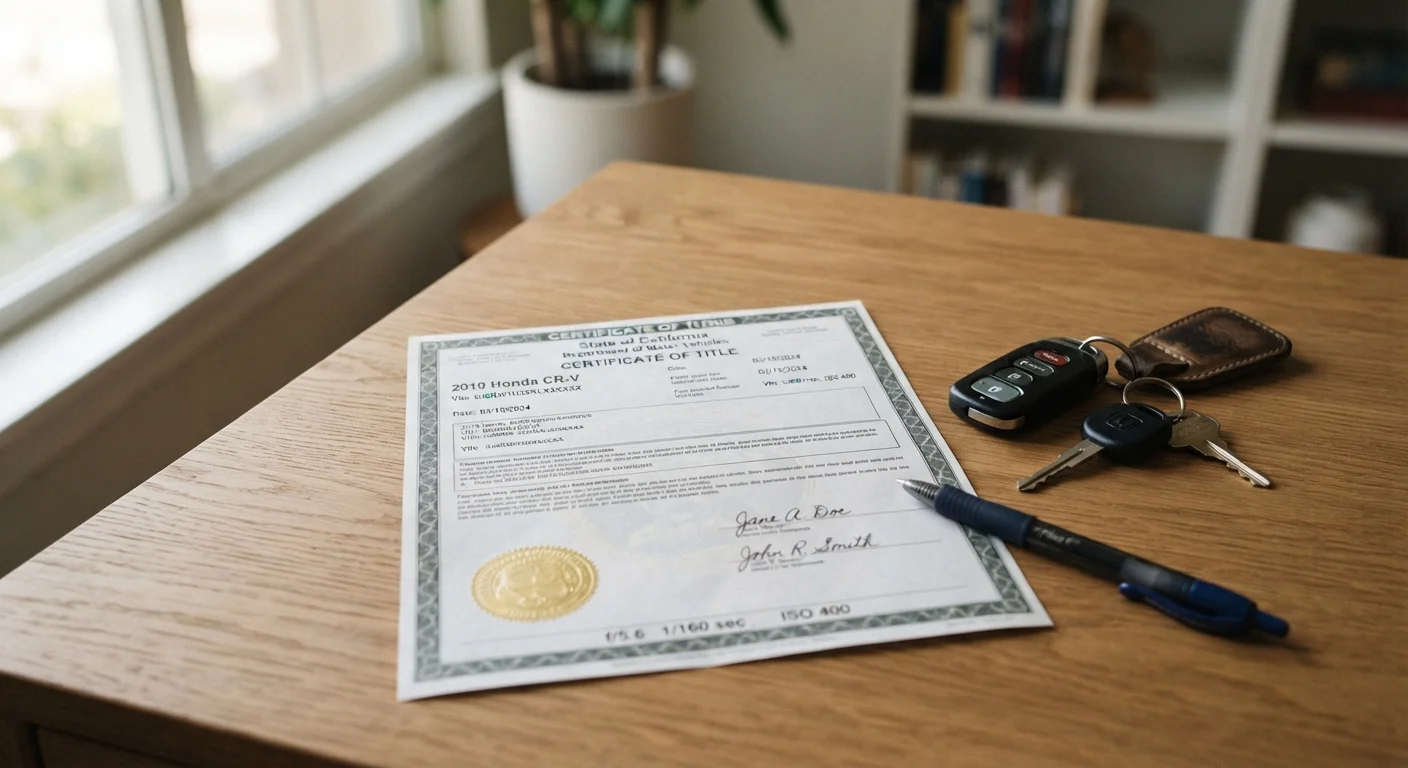
Photo credit: TrendingFaqs.com
In this article
Learn what a vehicle title is, how title transfer works in the US, and the paperwork steps involved for buyers and sellers.
Key Takeaways
- A car title is the legal document that proves ownership of a vehicle.
- Both buyer and seller must sign the title correctly or the transfer can be rejected by the DMV.
- Most states require transfer within a set number of days after the sale date.
- A lien on the title means a lender has a legal claim that must be cleared before the seller can transfer ownership.
- Title fees and requirements vary by state, so check your local DMV before the transaction.
What a car title actually is
A vehicle title is a government-issued document that identifies the legal owner of a car. Each state's department of motor vehicles (DMV) or equivalent agency issues titles. The document lists the vehicle identification number (VIN), the make, model, year, and the owner's name and address. When a vehicle changes hands, the title must be transferred through the state to reflect the new owner.
Titles can carry designations that affect a vehicle's value and legal status. A clean title means the vehicle has not been written off by an insurer. A salvage title means an insurer declared the vehicle a total loss at some point. A rebuilt or reconstructed title means a salvage vehicle was repaired and passed a state inspection. Buyers considering a vehicle with a salvage or rebuilt designation should understand that insurance, financing, and resale may be more difficult. See our pre-purchase car checklist for what to verify before agreeing to any deal.
If you are new to owning a vehicle, the first-time car owner guide covers the broader responsibilities that come after the purchase paperwork is done.
What you need before the transfer
Getting organized before the appointment saves time and avoids a rejected application. Both buyer and seller should bring government-issued photo ID. The seller needs the original title, not a copy. The buyer needs proof of insurance, since most states require coverage before the vehicle can be registered in their name.
What you will need
If the car is being sold while a loan is still open, the lender either holds the physical title or has recorded a lien with the state. The seller must contact the lender to arrange a payoff and obtain a lien release letter before the title can transfer cleanly. This step can take several days to a couple of weeks depending on the lender, so plan accordingly.
Selling with an active lien is complicated
If you still owe money on your car, the lender holds the title or has a recorded lien. You cannot legally transfer a clear title to a buyer until that debt is satisfied. Contact your lender early in the process to understand payoff steps.
The transfer process step by step
Locate and review the title before the sale
The seller should pull the title well before any money changes hands. Check that the name on the title matches a valid ID. If the title lists multiple owners connected by 'and,' both must sign. If connected by 'or,' either owner can sign alone.
Look for any lien holder listed on the face of the title. A lien means a bank or finance company has a legal interest in the vehicle and the lien must be resolved before transfer.
Check the vehicle history report
Before completing the sale, the buyer should run a vehicle history report using the VIN. This can reveal prior accidents, flood damage, odometer discrepancies, or title problems such as a salvage or rebuilt designation. A salvage title means the vehicle was previously declared a total loss by an insurance company, which affects its value and insurability.
Complete the title fields accurately
Most state titles have designated fields on the back for the sale information. Fill in the buyer's full legal name, the sale date, the odometer reading, and the sale price. Write clearly and use the exact name that will appear on the new title.
Do not use correction fluid or cross out errors heavily. Many DMVs will reject an altered title. If you make a mistake, contact the DMV about the correct procedure for that state.
Both parties sign the title
The seller signs the title in the designated seller signature area. The buyer signs where required for their state. Some states have the buyer sign on the title itself; others handle buyer acknowledgment through a separate registration application.
Signatures must match the names as printed. A notary is required in some states, including Louisiana and Ohio. Check your state DMV's requirements before the handoff.
Complete a bill of sale
A bill of sale is a separate written record that documents the agreed price, the vehicle's make, model, year, and VIN, the names and addresses of both parties, and the date of sale. Some states have an official bill of sale form; others accept a simple written document.
Both parties should keep a copy. The buyer may need it for tax purposes, and the seller may need it to release liability if the buyer delays registering the car.
The buyer submits paperwork to the DMV
The buyer takes the signed title, the bill of sale, proof of insurance, and any required state forms to the local DMV or motor vehicle office. The DMV will collect transfer fees and any applicable sales tax, then issue a new title in the buyer's name.
Processing time varies. Some states issue a new title on the spot; others mail it within a few weeks. The buyer typically receives new registration and license plates at this step as well, or within the same visit.
Keep a copy of the signed title
Before handing over the signed title, photograph or photocopy both sides. This protects you if a dispute arises later about what was written or whether you completed the sale. File it with your other vehicle records.
Never sign a blank title
Signing a title before filling in the buyer information leaves the document open to fraud. Complete all required fields first, then sign. If you receive a title that is already signed but blank, contact your state DMV before proceeding.
After the title transfers
Once the DMV processes the transfer, the buyer becomes the legal owner. The new title will arrive by mail in states that do not issue them on-site. Until then, keep all transaction documents in a safe place as proof of ownership.
Buyers who purchase from out of state, or who move after a purchase, face additional steps. Registration, title, and insurance requirements differ across state lines. The guide to moving with your car covers the sequence for getting properly registered after a cross-state move.
If you are weighing whether to buy used or new before going through this process, the used versus new car comparison covers the practical and financial differences. Title history and condition are factors that bear differently on each choice.

Author
Cars Editorial Team
Cars Editorial Team is the collective byline for our editorial team and contributor network. Articles published under this byline or an editorial pen name are researched, written, and reviewed according to our editorial standards for clarity, consistency, and independence before publication.
View all articles →