
Reading Your Vehicle Identification Number (VIN) and Why It Matters
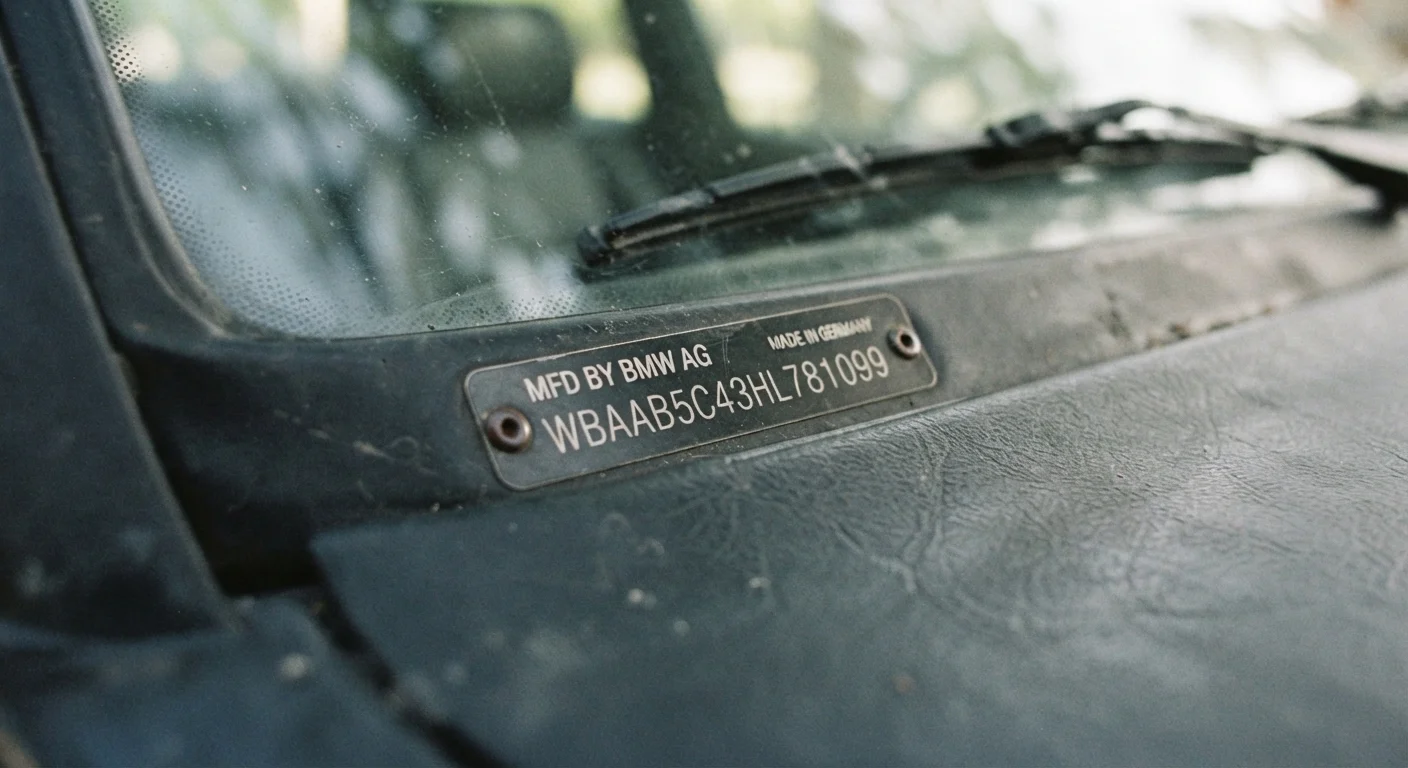
Photo credit: TrendingFaqs.com
In this article
Your car's VIN holds a lot of information. Learn how to decode it and when you will need it for insurance, registration, or repairs.
Key Takeaways
- A VIN is a 17-character code that identifies your specific vehicle.
- Each section of the VIN encodes distinct facts, from country of origin to production sequence.
- You will need your VIN for insurance quotes, registration, title transfers, and recall checks.
- The VIN is found in several locations on every vehicle, including the dashboard and door jamb.
- Running a VIN check before buying a used car can reveal accident history, odometer rollback, or title problems.
What a VIN actually is
Every vehicle sold in the US carries a 17-character VIN stamped, printed, or attached to the car at the factory. The format has been uniform since 1981, so any vehicle manufactured after that year follows the same structure. The characters are a mix of letters and numbers; the letters I, O, and Q are excluded to prevent confusion with 1, 0, and the number sequence.
Think of the VIN as your car's permanent record. It does not change when the vehicle changes owners, gets repainted, or has major repairs. It travels with the car from the assembly line to the salvage yard, and every significant event tied to that specific vehicle is recorded against it.
VINs on older vehicles
Vehicles manufactured before 1981 may have VINs shorter than 17 characters, and the format varied by manufacturer. If you own a pre-1981 vehicle, the VIN may still be useful for parts lookups and registration, but it will not decode the same way as a modern VIN. Check with your state DMV or a marque-specific registry for guidance on older VIN formats.
How to read each section
The 17 characters break into three groups with distinct meanings.
World Manufacturer Identifier (characters 1-3)
The first character is the country where the vehicle was assembled. The second and third narrow it to the manufacturer and division. A VIN beginning with 1, 4, or 5 indicates US assembly; J indicates Japan; W indicates Germany.
Vehicle Descriptor Section (characters 4-8)
These five characters describe the vehicle's physical attributes. Manufacturers use them to encode body style, engine type, and restraint systems, though the exact coding varies by manufacturer. A Ford F-150 and a Ford Mustang made in the same year will have different characters here.
Vehicle Identifier Section (characters 9-17)
Character nine is a check digit calculated from the other 16 characters. It lets computers and inspectors verify that the VIN itself has not been altered. Character ten is the model year code, using a standardized letter or number for each year. Characters eleven through seventeen are the plant code and sequential production number, which together pinpoint exactly when and where your car came off the line.
Where to find your VIN
The most visible spot is the driver's side of the dashboard. Stand outside the car and look through the windshield at the lower left corner: you will see a small metal plate or a label with the VIN printed on it. This location is required by federal regulation.
A second location is the driver's side door jamb. Open the front door and look at the sticker on the pillar between the door and the body. The same number also appears on your title, registration certificate, insurance card, and any loan documents tied to the vehicle. On newer vehicles it may appear under the hood on a sticker near the engine firewall.
If you are checking a vehicle you are considering buying, compare the VIN in all of these locations. Mismatched numbers are a serious warning sign.
When you will actually need your VIN
Insurance companies ask for the VIN when you apply for coverage or update a policy. It lets them confirm the exact trim level and installed safety features, which affect your rate. A vehicle with factory anti-lock brakes and stability control may be rated differently than a stripped base model of the same name.
Registration and title transfers require the VIN to tie the legal record to the physical vehicle. If the VIN on your registration does not match the VIN on the car, that mismatch will surface during an inspection or at the DMV.
Mechanics and parts suppliers use the VIN to look up the correct parts for your specific build. Two vehicles with the same model name can have different engines or transmissions depending on the production run; the VIN removes ambiguity.
Recall checks are one of the most practical uses. NHTSA's free online tool lets you enter your VIN and see any open safety recalls. If a recall is listed, the repair is done at no cost at an authorized dealer. Keeping a maintenance record that includes recall completions gives you a cleaner ownership history and simplifies future repairs.
Using the VIN before buying a used car
A VIN history report can reveal a lot about a vehicle's past: reported accidents, flood or fire damage, salvage title status, odometer discrepancies, and the number of previous owners. This is one of the most useful steps you can take before handing over money. A pre-purchase checklist built around the VIN helps you catch problems before they become your problems.
Run the VIN through NHTSA's recall database as well as a history service. A clean recall history does not mean the recalls were never triggered; it means they were either repaired or never reported to the database. Ask the seller for documentation of any recall work.
The VIN is also a quick way to confirm that the vehicle description matches reality. If the seller says the car has a V8 engine and the VIN decodes to a V6, that discrepancy needs an explanation before the sale goes any further. Just as tire sidewall codes tell you specifics about your tires that a visual glance cannot, the VIN tells you specifics about the vehicle that the trim badges and seller's word cannot always confirm.
Frequently Asked Questions

Author
Cars Editorial Team
Cars Editorial Team is the collective byline for our editorial team and contributor network. Articles published under this byline or an editorial pen name are researched, written, and reviewed according to our editorial standards for clarity, consistency, and independence before publication.
View all articles →