
When Skipping a Service Interval Becomes a Real Problem
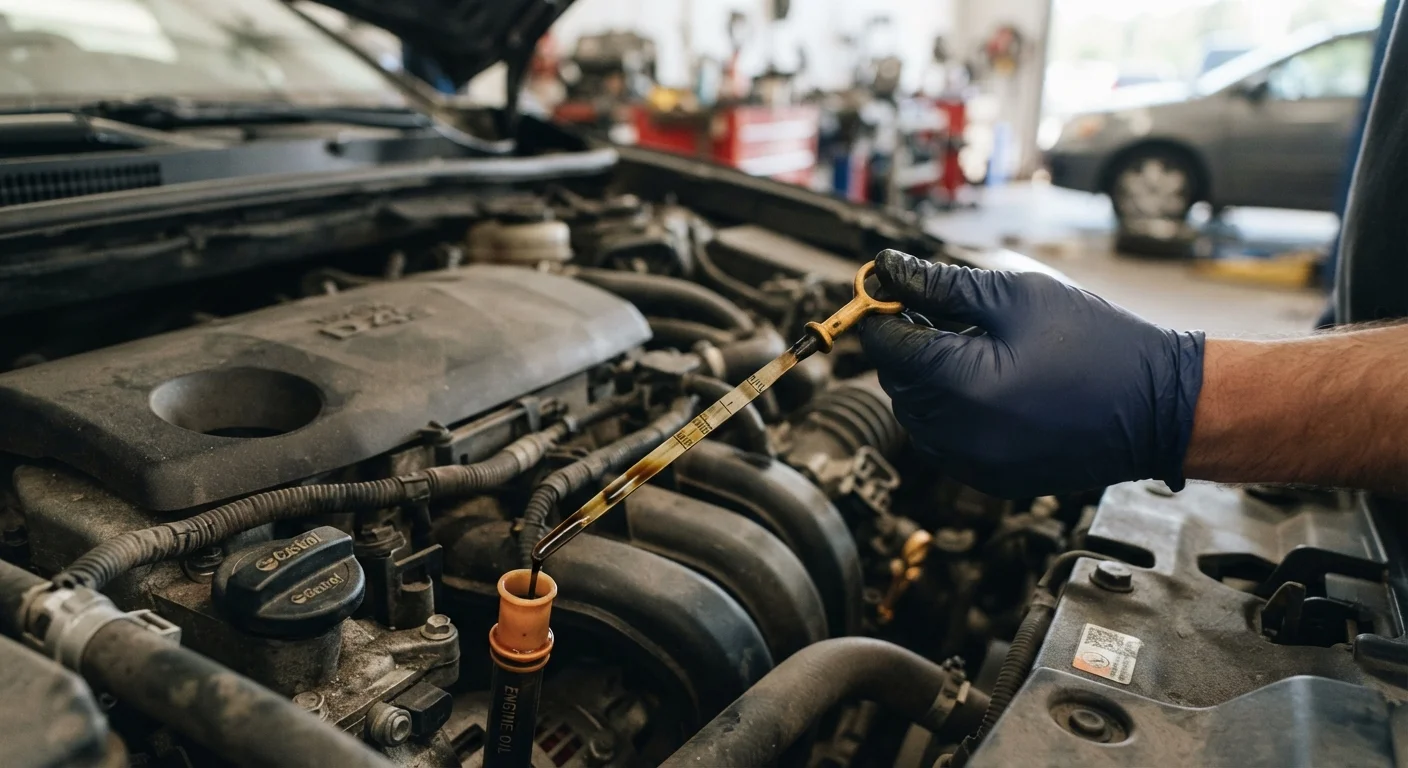
Photo credit: TrendingFaqs.com
In this article
Missing one oil change rarely causes disaster, but patterns of neglect add up. Understand the chain of damage that deferred maintenance can trigger.
Key Takeaways
- Skipping one service interval rarely causes immediate failure, but repeated delays compound the damage.
- Oil degradation is the fastest-moving risk: engine wear accelerates once oil breaks down past its rated life.
- Some deferred services, like coolant flushes and transmission fluid changes, cause damage that shows up months later.
- A consistent service log helps you spot patterns of neglect before they reach the repair shop.
How one skipped service leads to the next problem
Most deferred maintenance does not cause a breakdown the next morning. What it does is set up a chain of stress on related components that becomes harder and more expensive to untangle over time. Oil that stays in the engine past its rated life begins to oxidize, forming sludge that restricts oil passages. A restricted passage means less lubrication reaching the bearings. Worn bearings produce heat. Heat degrades seals. Degraded seals leak. One skipped oil change rarely tells that whole story, but a pattern of late changes can.
The same logic applies to cooling system maintenance. Old coolant turns acidic and corrodes aluminum components inside the engine and radiator. That corrosion can compromise a water pump years before the pump would have otherwise failed. By the time a repair estimate lands in front of you, it is often impossible to trace the damage back to a single skipped service.
For a broader look at which services carry the most safety weight when you have to prioritize, see how to prioritize maintenance on a budget.
Engine damage from old oil is often irreversible
When engine oil breaks down, metal components grind against each other without adequate lubrication. The resulting wear on bearings, camshafts, and cylinder walls cannot be reversed by a fresh oil change. Catching degraded oil early is the only way to prevent this type of damage.
The mistakes drivers make most often
Deferred maintenance follows predictable patterns. Understanding why each mistake happens makes it easier to catch before it compounds.
Treating the oil change interval as a rough suggestion rather than a firm deadline.
Why it happens: Modern cars with oil life monitors sometimes read high percentages well past the mileage most drivers associate with a change, so drivers assume they have more time than they do.
Skipping a coolant flush because the car is not overheating yet.
Why it happens: Coolant degradation is invisible from the outside. Drivers only notice when a warning light comes on or the temperature gauge spikes, by which point internal corrosion is already present.
Ignoring the cabin and engine air filter replacement schedule.
Why it happens: A clogged filter does not produce an obvious symptom right away, so it is easy to skip during a quick service visit, especially if the shop does not physically show the filter.
Deferring brake fluid changes because the brakes still feel fine.
Why it happens: Brake fluid absorbs moisture from the air over time, a process called hygroscopic absorption. Because brake feel rarely changes noticeably until moisture content is very high, drivers assume the fluid is fine.
Never changing the transmission fluid on vehicles with a 'lifetime fill' label.
Why it happens: Some automakers originally marketed certain transmission fluids as lasting the life of the vehicle. Many mechanics and independent analysts now consider that claim optimistic, particularly for vehicles driven under severe conditions.
Keeping a written or digital service log makes these patterns visible. If you want a practical system for tracking what has been done and when, logging your vehicle's service history explains what to record and why it matters at resale.
When the damage shows up later than the service was due
Some deferred services are time-delayed problems. Transmission fluid that has never been changed does not produce obvious shifting issues at 40,000 miles. The problems typically emerge at 80,000 or 100,000 miles, long after the skipped service has been forgotten. This delay makes it easy to underestimate the connection between maintenance history and current repair costs.
Transmission fluid neglect can mean a full replacement
Transmission fluid that is never changed gradually loses its ability to protect clutch packs and internal gears. By the time shifting problems appear, the internal damage may already require a full transmission rebuild or replacement, which can cost several thousand dollars. This is one service where waiting for symptoms is too late.
Brake fluid is similar. Moisture-saturated fluid has a lower boiling point than fresh fluid. Under hard braking, overheated fluid can vaporize inside the brake lines, producing a spongy pedal or, in extreme cases, a sudden loss of braking response. The risk is not theoretical, but it builds slowly and invisibly.
For a closer look at what a technician actually checks and replaces during a standard service visit, see what happens during an oil change. Many of the inspections done at that visit are specifically designed to catch deferred maintenance before it becomes expensive.
~40%
Engine wear caused by contaminated oil
Industry estimates suggest a large share of premature engine wear is linked to degraded or infrequently changed oil rather than mechanical defects.
3% to 10%
Fuel economy lost to a clogged air filter
The U.S. Department of Energy has noted that a severely restricted air filter can reduce fuel economy measurably on older carbureted engines, with some efficiency loss on modern fuel-injected vehicles as well.
Tracking your service history also ties directly into ownership value. A well-documented maintenance record can support a higher resale price and gives any future buyer confidence in the vehicle's condition. Details on what to keep and how to organize it are in keeping maintenance records.

Author
Cars Editorial Team
Cars Editorial Team is the collective byline for our editorial team and contributor network. Articles published under this byline or an editorial pen name are researched, written, and reviewed according to our editorial standards for clarity, consistency, and independence before publication.
View all articles →