
New Orleans Beyond Bourbon Street: The City's Overlooked Neighborhoods
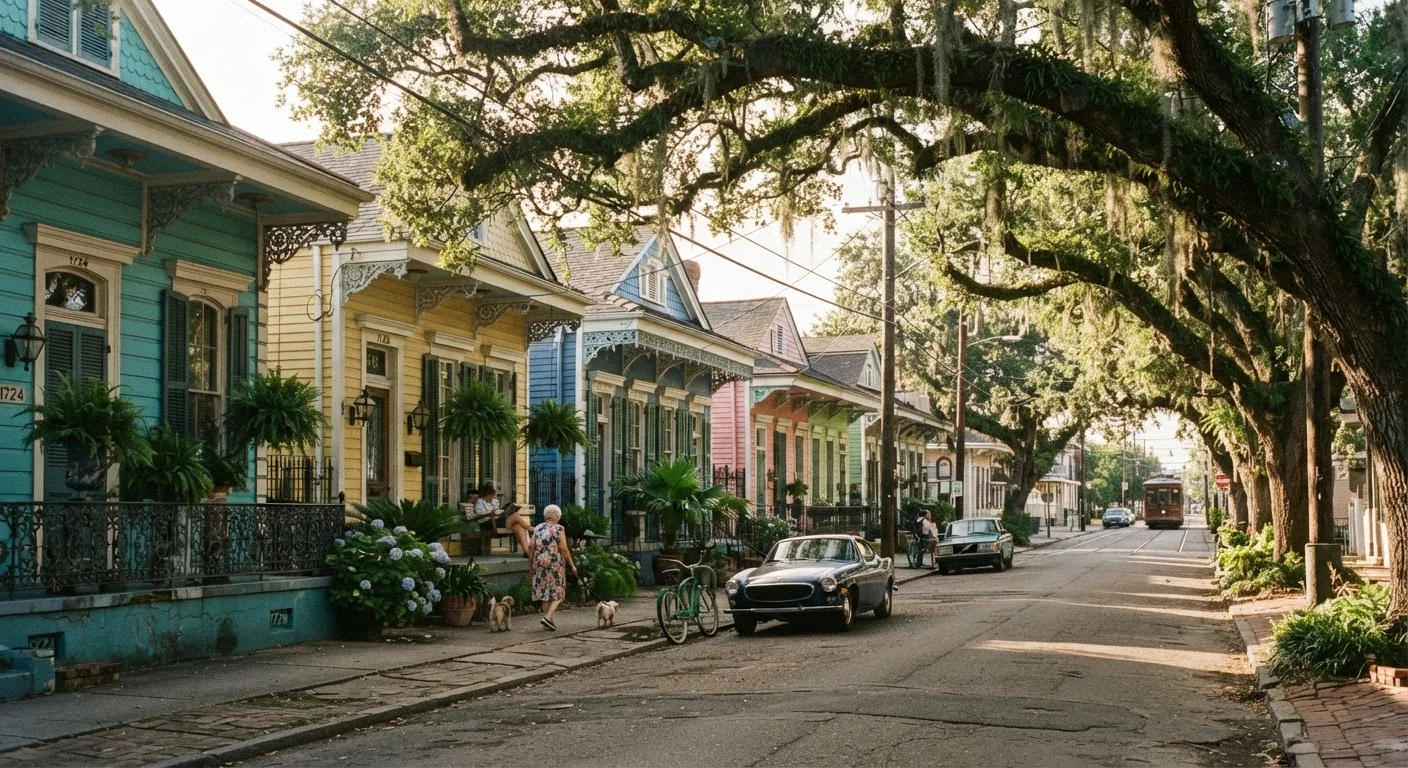
Photo credit: TrendingFaqs.com
Discover the real New Orleans in Tremé, Bywater, and Mid-City, where local culture, food, and history run deeper than the French Quarter.
Key Takeaways
- Tremé is one of the oldest African American neighborhoods in the country, with deep musical and cultural roots.
- Bywater draws visitors with street art, independent restaurants, and a walkable, residential pace.
- Mid-City sits along Bayou St. John and gives access to City Park, one of the largest urban parks in the US.
- The Marigny is a short walk from the French Quarter but operates on an entirely different, local rhythm.
- Magazine Street in Uptown runs for miles and connects independent shops, cafes, and historic architecture.
- Each neighborhood rewards slow exploration on foot or by bike rather than rushed sightseeing.
Why the French Quarter is only the beginning
Bourbon Street delivers exactly what it promises: loud crowds, souvenir shops, and frozen drinks in plastic cups. For a lot of first-time visitors, that is the whole trip. But New Orleans is a city of distinct neighborhoods, each with its own character, food scene, and history, and most of them sit within a short distance of the Quarter. Spending time in them changes how the whole city reads.
The neighborhoods below are not secrets. Locals live in them, eat in them, and care about them. What they are is genuinely different from the tourist corridor, and worth building a day or two around. If this kind of off-the-main-drag travel appeals to you, the approach works well for other cities too: cities like Pittsburgh and Tucson reward exactly the same mindset.
Tremé
Just north of the French Quarter, Tremé is widely recognized as one of the oldest African American neighborhoods in the United States. It shaped the city's musical identity in ways that are hard to overstate. Jazz funerals, brass bands, and social aid and pleasure clubs all have roots here, and some of those traditions are still active on the streets today.
Congo Square, inside Louis Armstrong Park, is where enslaved Africans gathered on Sundays to sing, dance, and maintain cultural connections during the colonial era. That history makes it one of the most significant public spaces in American music history. The Backstreet Cultural Museum on St. Claude Avenue documents Mardi Gras Indians, second-line parades, and jazz funerals with a collection that is personal and specific in a way no larger institution has matched.
Tremé shaped New Orleans music in ways the French Quarter only reflects back.
Bywater
Bywater sits downriver from the Marigny and has a distinctly residential, artsy character. The streets are full of shotgun houses painted in deep colors, and murals appear on fences, sides of buildings, and utility boxes throughout. It is a neighborhood where people actually live, which gives it a pace that tourist-heavy areas rarely have.
The food scene here leans independent and specific. Small restaurants and cafes with short menus and local ingredients have set up along St. Claude Avenue and the surrounding blocks. The Crescent Park riverfront trail runs along the Mississippi and gives a different angle on the city skyline, with almost none of the crowds found closer to the Quarter.
Bywater's streets reward slow walking more than any other part of the city.
The Marigny
The Faubourg Marigny sits immediately downriver from the French Quarter, separated by Esplanade Avenue. It reads as a quieter continuation of the Quarter's architecture but without the party strip atmosphere. Frenchmen Street is the neighborhood's social center, and on most nights it has live music spilling out of multiple venues within a single block.
The difference from Bourbon Street is real. The crowds on Frenchmen are smaller, the music more varied (jazz, funk, brass band, Latin), and the bars are neighborhood spots rather than tourist traps. Locals go there. The surrounding residential blocks have their own food options and the kind of corner stores and coffee shops that mark a functioning neighborhood rather than a set piece.
Frenchmen Street has live music most nights and a crowd that is mostly local.
Mid-City and Bayou St. John
Mid-City is where a lot of working New Orleans lives. It does not have a single landmark that draws visitors, which is part of why it stays off most itineraries. But Bayou St. John runs through it, a narrow waterway with a walking and cycling path that connects to City Park. On weekends, the bayou path fills with locals jogging, sitting on the grass, and gathering at the small restaurants nearby.
City Park covers more than 1,300 acres and includes the New Orleans Museum of Art, a sculpture garden, a botanical garden, and oak trees that predate the city itself. The Degas House on Esplanade Avenue marks where the French painter Edgar Degas stayed with family in 1872 and 1873, and it still operates as a historic inn and tour site.
City Park's ancient oaks and sculpture garden are worth a half-day on their own.
Uptown and Magazine Street
Uptown covers a large section of the city along the St. Charles Avenue streetcar corridor. The architecture shifts here toward grand Victorian houses and canopy streets, and the neighborhood feels calmer than anywhere near the Quarter. Magazine Street runs parallel to St. Charles for several miles and has a concentration of independent bookstores, antique shops, clothing boutiques, and neighborhood restaurants.
Audubon Park and the Audubon Zoo anchor the upper end of Uptown. The park has a 1.8-mile loop path around a lagoon that is popular with runners and cyclists. Tulane and Loyola universities are nearby, which gives the area a consistent neighborhood infrastructure of coffee shops and low-key eateries that operate outside of tourist patterns.
Magazine Street's independent shops and cafes stretch far enough to fill an entire afternoon.
How to move through these neighborhoods
Most of these areas are best explored on foot or by bike. New Orleans has a flat terrain that makes cycling easy, and several bike-share and rental options operate across the city. The streetcar lines along St. Charles Avenue and Canal Street connect several neighborhoods without requiring a car.
Street conditions and safety vary by block, so asking locally or checking current neighborhood guides before wandering at night is worth doing. Neighborhood restaurants often fill up without reservations, especially on weekends, so planning a loose itinerary a day ahead helps.
Timing your neighborhood visits
Weekday mornings are the least crowded time to walk Tremé and Bywater. Frenchmen Street in the Marigny is liveliest Thursday through Saturday nights, typically from around 9 p.m. onward. City Park and the Bayou St. John path are most active on weekend mornings and worth visiting early if you want quiet.

Author
Travel Editorial Team
Travel Editorial Team is the collective byline for our editorial team and contributor network. Articles published under this byline or an editorial pen name are researched, written, and reviewed according to our editorial standards for clarity, consistency, and independence before publication.
View all articles →