
How Cruise Ship Safety Drills and Emergency Procedures Work
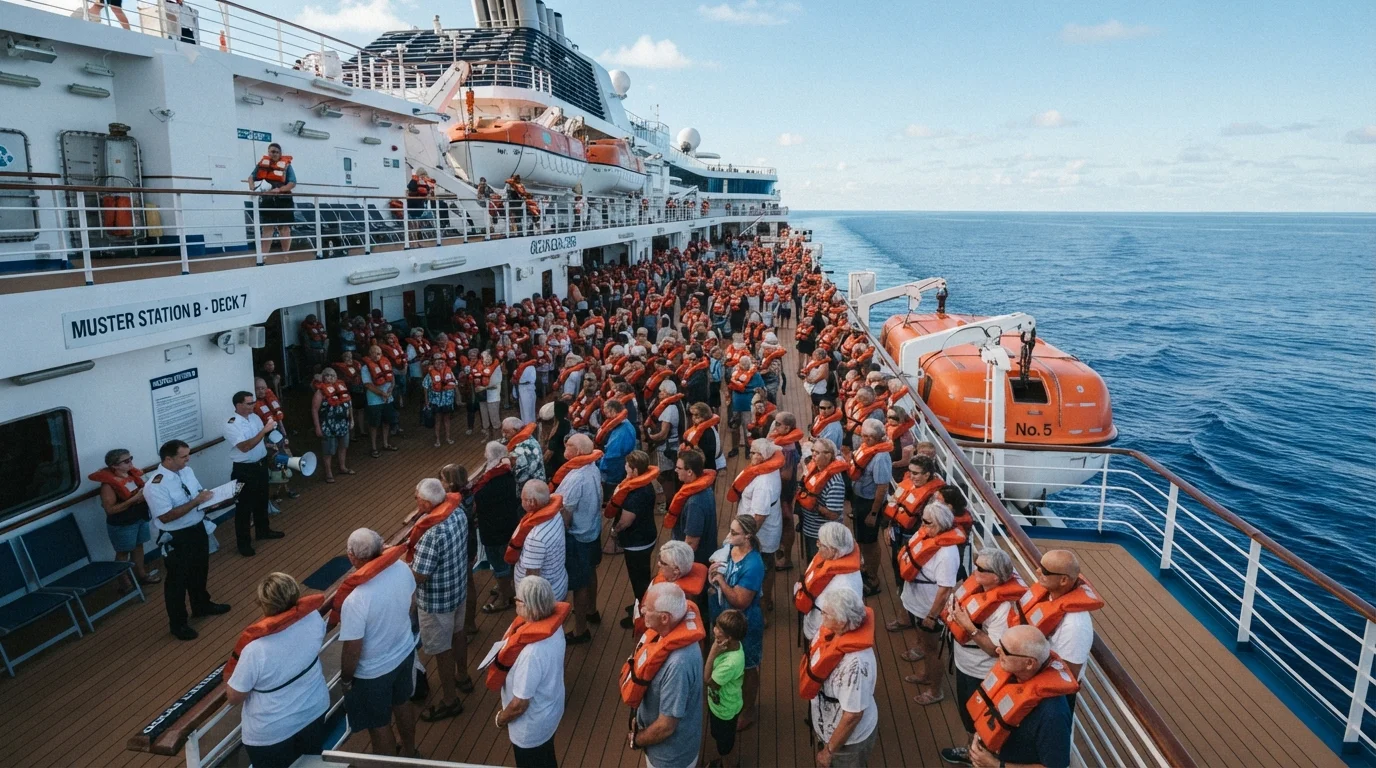
Photo credit: TrendingFaqs.com
In this article
Learn what muster drills involve, how lifeboat assignments work, and what safety systems modern cruise ships use to protect passengers.
Key Takeaways
- Every passenger receives an assigned muster station and lifeboat number at check-in.
- SOLAS regulations require a safety drill within 24 hours of embarkation for all passengers.
- Modern cruise ships carry enough lifeboat and life-raft capacity for well over 100 percent of people on board.
- The ship's alarm system uses a specific sequence of horn blasts to signal different emergencies.
- E-muster programs let passengers watch a safety video in their cabin before reporting to their station.
What the muster drill actually involves
When you board a cruise ship, your stateroom key card or boarding pass lists a muster station, typically labeled with a letter or number like 'Station D.' That is your designated assembly point if the ship's alarm sounds. Before or shortly after the ship leaves port, every passenger is required to go to that station for the muster drill.
At the station, a crew member explains what the ship's emergency alarm sounds like, how to put on a life jacket correctly, and what actions to take if the captain orders an evacuation. The whole process usually runs 20 to 30 minutes. Many cruise lines now use an 'e-muster' format, where passengers first watch a safety video on the cabin TV or a phone app, then check in electronically at their station. The in-person component is shorter, but attendance is still required and tracked.
If you are traveling with children or have mobility considerations, this is the right moment to speak with a crew member about where to go and who can assist you. For a broader sense of what to expect across your whole voyage, our first-cruise guide walks through embarkation to disembarkation.
How lifeboat assignments and evacuation systems work
Every cruise ship must carry lifeboats and life rafts with enough capacity for at least 125 percent of everyone on board, passengers and crew combined. That buffer exists because SOLAS regulations, set by the International Maritime Organization, account for scenarios where some equipment cannot be deployed from one side of the ship.
Lifeboats on modern ships are fully enclosed, motorized vessels that can hold hundreds of people. They launch from davits (mechanical arms on the side of the ship) and are designed to operate in rough seas. Crew members assigned to each lifeboat station train regularly in launch procedures. Passengers do not operate the boats; their role is to board when directed and follow crew instructions.
Beyond lifeboats, ships carry inflatable life rafts stored in canisters on deck. These deploy automatically if the ship sinks rapidly, or manually by crew. Additional personal flotation devices are stored throughout the ship, and life rings are mounted at intervals along the outer decks.
Walk your route before the drill
After settling into your cabin, take a few minutes to walk the path to your muster station before the official drill begins. Count the stairwells between your cabin and the station, and note any alternative routes. In a real emergency with reduced lighting, having a physical memory of the path is more reliable than reading posted signs.
The ship's public address system will relay all instructions during an actual emergency. Crew members are trained to direct foot traffic at every stairwell and corridor, so following their directions is the most reliable way to reach your station.
Alarm signals and what they mean
Cruise ships use a standardized set of signals defined by SOLAS. The one every passenger should memorize is the general emergency alarm: seven short blasts followed by one long blast on the ship's horn and internal bell system. This signal means put on your life jacket and report to your muster station immediately.
Other signals you may hear include a continuous ringing bell for fire and a series of short blasts for specific crew alerts. The captain or officer on watch makes announcements over the public address system to explain what is happening and what passengers should do. In most situations, you will receive verbal instructions before any alarm escalates to the general emergency signal.
Onboard safety systems beyond the drill
Modern cruise ships carry multiple layers of safety technology that work continuously, not just during drills. Fire detection and suppression systems are installed throughout the ship, including in cabins, engine rooms, and kitchens. Watertight doors can be closed remotely from the bridge to contain flooding to a single compartment. The bridge is staffed around the clock, and advanced navigation systems track weather, sea depth, and nearby vessels in real time.
Ships also carry emergency position-indicating radio beacons (EPIRBs), which transmit the ship's location to satellites automatically if the vessel sinks. Lifeboats have their own EPIRBs and two-way radios. Coast guard and maritime rescue coordination centers monitor distress signals globally.
Passengers can also take practical steps before boarding. Packing a small flashlight in your carry-on bag is useful during any nighttime evacuation scenario. Our cruise packing guide covers the items worth bringing that many travelers overlook.
This article is for general informational purposes only. Always follow the instructions of the ship's crew and officers during drills and emergencies. Verify current safety regulations and procedures with your cruise line before sailing.
Frequently Asked Questions

Author
Travel Editorial Team
Travel Editorial Team is the collective byline for our editorial team and contributor network. Articles published under this byline or an editorial pen name are researched, written, and reviewed according to our editorial standards for clarity, consistency, and independence before publication.
View all articles →