
HVAC Filters: What They Do and How Often They Actually Need Changing
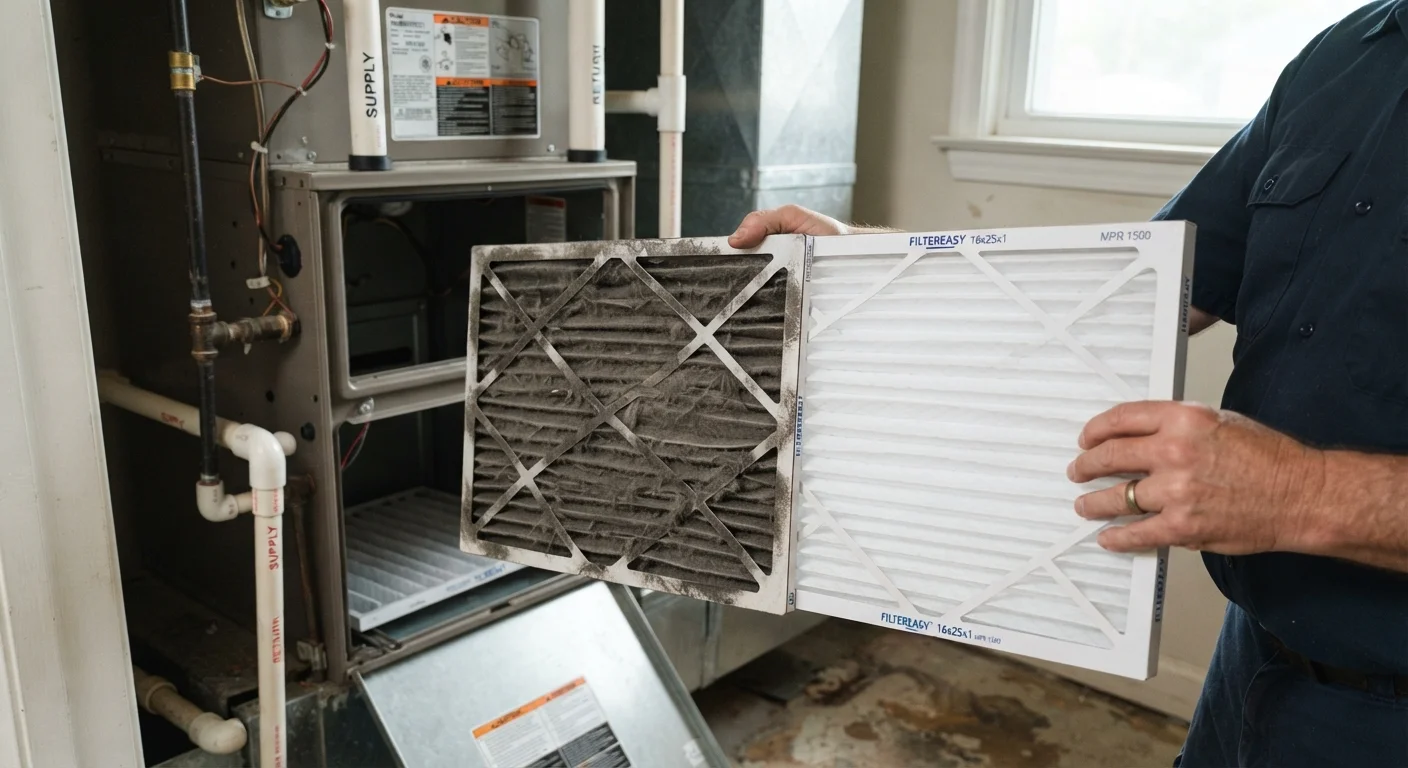
Photo credit: TrendingFaqs.com
In this article
Filter change intervals depend on filter type, household size, and air quality. Here is how to figure out the right schedule for your home.
Key Takeaways
- Filter type and MERV rating are the biggest factors in how often you need to change your filter.
- Most households need a filter change every one to three months, but the range is wider than that label suggests.
- Pets, allergies, and construction dust all shorten how long a filter stays effective.
- A clogged filter raises energy costs and can cause your HVAC system to overheat or freeze up.
- Checking the filter visually each month takes under a minute and removes any guesswork.
What an HVAC filter actually does
Your HVAC system pulls air from inside your home, conditions it, and pushes it back through the ductwork. The filter sits at the point where that return air enters the system. Its job is to catch particles before they coat the blower motor, coil, and ductwork with grime.
This matters for two reasons. First, a clean system runs more efficiently: buildup on internal components forces the motor to work harder. Second, a functioning filter removes a meaningful portion of common indoor irritants, including dust mite debris, pollen, and pet dander, from the air that circulates through your living spaces.
What a filter cannot do is eliminate all pollutants. Very fine particles, gases, and volatile organic compounds pass through most residential filters. If indoor air quality is a concern beyond basic particle filtration, consult an HVAC professional about additional options. For everyday context, see our guide on how indoor humidity affects air quality and your home's surfaces.
Filter types and what they mean for your schedule
The type of filter you use is the single largest variable in your replacement schedule.
- Fiberglass filters (MERV 1 to 4): thin, inexpensive, and effective only against large particles like lint and dust. Replace every 30 days.
- Pleated filters (MERV 8 to 13): the most common choice for residential use. The accordion-fold design gives more surface area, so they last 60 to 90 days under typical conditions.
- Thick media filters (4 to 5 inches, MERV 10 to 16): installed in a dedicated housing, these have far more surface area and typically last 6 to 12 months.
- Washable/reusable filters: designed to be rinsed and reinstalled, but they require a MERV rating check and must be completely dry before going back in to avoid mold.
Always check your system's owner's manual for the maximum MERV rating it can handle. A filter that is too restrictive for your blower can cause the same airflow problems as a clogged one.
Keep a spare filter on hand
Buy your next filter when you install the current one. That way, when your monthly check shows a filter that needs replacing, you can swap it immediately rather than letting a clogged filter run while you wait for delivery. Store the spare in a dry location away from moisture.
Household factors that shorten filter life
Published filter lifespans assume average conditions. Several common variables pull that number down significantly.
Pets: Dogs and cats shed dander and hair continuously. A single large dog can reduce a 90-day filter to a 30 to 45-day filter in practice.
Occupancy: More people means more skin cells, tracked-in debris, and cooking particles. A five-person household should check filters more often than a single-occupant apartment.
Allergies or asthma: Anyone sensitive to airborne particles benefits from more frequent changes, since a partially loaded filter loses efficiency before it looks fully gray.
Renovation or construction nearby: Drywall dust and sawdust load filters very fast. Check weekly during any active work in or around your home.
Dusty or rural environments: Homes near unpaved roads, farms, or dry open land see higher baseline particle loads.
MERV 8-11
Recommended range for most households
The U.S. Environmental Protection Agency notes that filters in this range capture common household particles like dust, mold spores, and pet dander without over-restricting typical residential HVAC airflow.
5-15%
Potential energy waste from a clogged filter
The U.S. Department of Energy has noted that a dirty filter can increase HVAC energy consumption measurably, though the exact figure varies by system type and degree of restriction.
30 days
Maximum lifespan for basic fiberglass filters
Fiberglass filters have very limited surface area and are designed for the shortest replacement cycle among common residential filter types.
How to tell when your filter actually needs changing
The most reliable method is a monthly visual check. Pull the filter out and hold it up to a light source. A new filter looks white or light gray and lets light pass through clearly. A filter that needs replacing looks dark gray or brown, with visible debris covering the surface.
Beyond the visual check, your HVAC system will give you signals. Reduced airflow from vents, the system running longer than usual to reach the set temperature, or a musty smell when the system kicks on are all signs that the filter deserves a look.
Some programmable thermostats and smart HVAC systems include a filter reminder function. That reminder is based on elapsed time, not actual filter condition, so treat it as a prompt to inspect rather than a definitive change date.
Building filter checks into a regular routine is the simplest approach. Our article on habits that keep a home feeling fresh covers how small maintenance checks like this fit into a broader weekly rhythm. A complete home maintenance calendar is also worth setting up: see what a home maintenance schedule should actually include for a broader look at what needs regular attention.
Frequently Asked Questions

Author
Home Editorial Team
Home Editorial Team is the collective byline for our editorial team and contributor network. Articles published under this byline or an editorial pen name are researched, written, and reviewed according to our editorial standards for clarity, consistency, and independence before publication.
View all articles →