
Key Mental Health Terms You'll Encounter in Everyday Conversations
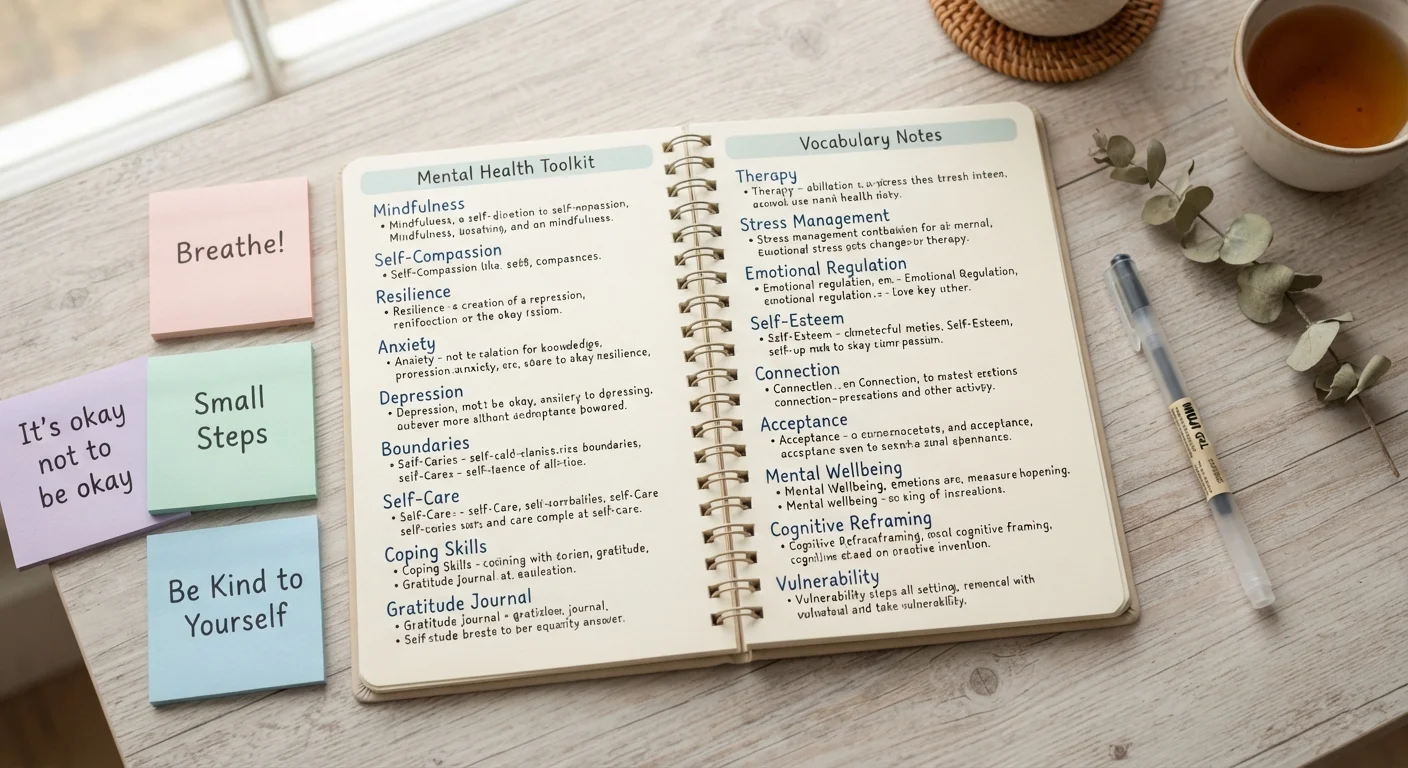
Photo credit: TrendingFaqs.com
In this article
A quick-reference glossary of common mental health vocabulary, from anxiety and burnout to resilience and psychotherapy, explained in plain English.
Why mental health vocabulary matters
Words shape how people understand and talk about their experiences. When mental health terminology is unfamiliar, it can feel like a barrier: conversations with clinicians become harder to follow, news stories about mental health lose context, and people may struggle to describe what they are going through to someone they trust.
This reference guide defines the terms you are most likely to encounter in everyday conversations, healthcare settings, and media coverage. The goal is not clinical precision but practical clarity. For a broader look at how these concepts connect, see the mental wellness overview covering stress, sleep, and emotion regulation.
This content is general information, not medical advice
The definitions and explanations in this article are for educational purposes only. They are not a substitute for evaluation, diagnosis, or treatment by a qualified mental health or medical professional. If you have concerns about your mental health, please speak with a licensed clinician.
Core terms defined
The definitions below cover the vocabulary that appears most often in mental health discussions, from clinical concepts to everyday language around well-being and stress.
For a closer look at one of these concepts in practice, the guide to emotional regulation explains why managing emotions is a skill, not a personality trait, and how people can develop it.
Terms that often get confused
Sadness versus depression
Sadness is a normal emotional response to loss, disappointment, or difficulty. Clinical depression involves a pattern of symptoms, including persistent low mood, loss of interest, disrupted sleep, and changes in appetite or energy, that lasts at least two weeks and significantly affects daily life. Only a qualified clinician can make that distinction.
Stress versus anxiety
Stress is typically a reaction to an external pressure and tends to ease when that pressure lifts. Anxiety can persist even when there is no identifiable threat, and it often involves physical symptoms such as a racing heart or muscle tension. Both experiences are real, but they call for different responses.
Therapy versus medication
Psychotherapy and psychiatric medication are distinct approaches that are sometimes used together. Therapy helps people develop skills and insight through structured conversation. Medication addresses neurological and physiological factors. Neither is universally superior; a clinician can help someone weigh which approach, or combination, suits their situation.
| Number of adults with any mental illness (U.S.) | Approximately 1 in 5 adults per year (National Institute of Mental Health (NIMH)) |
| Most common mental health conditions | Anxiety disorders and depression (NIMH and WHO) |
| WHO classification of burnout | Occupational phenomenon, not a disease (World Health Organization, ICD-11) |
| CBT evidence base | One of the most studied forms of psychotherapy globally (American Psychological Association) |
| Stigma impact on care | Many people with mental illness do not seek treatment (NIMH and SAMHSA reports) |
Building on this vocabulary
Knowing these terms is a starting point. Applying them to daily habits is what shapes long-term mental wellness. The guide to sustainable emotional well-being habits covers movement, rest, connection, and stress response in practical terms grounded in evidence.
Mental health vocabulary also appears outside health contexts. Financial stress, for example, is one of the more common triggers for anxiety and burnout. If you want to build financial literacy alongside health literacy, a plain-language financial terms glossary covers the concepts that come up most often for everyday Americans.
This article is for informational purposes only and is not medical advice. If you have concerns about your mental health, please consult a licensed healthcare professional.

Author
Health Editorial Team
Health Editorial Team is the collective byline for our editorial team and contributor network. Articles published under this byline or an editorial pen name are researched, written, and reviewed according to our editorial standards for clarity, consistency, and independence before publication.
View all articles →