
Anxiety vs. Worry: Two Words People Use Interchangeably That Mean Very Different Things
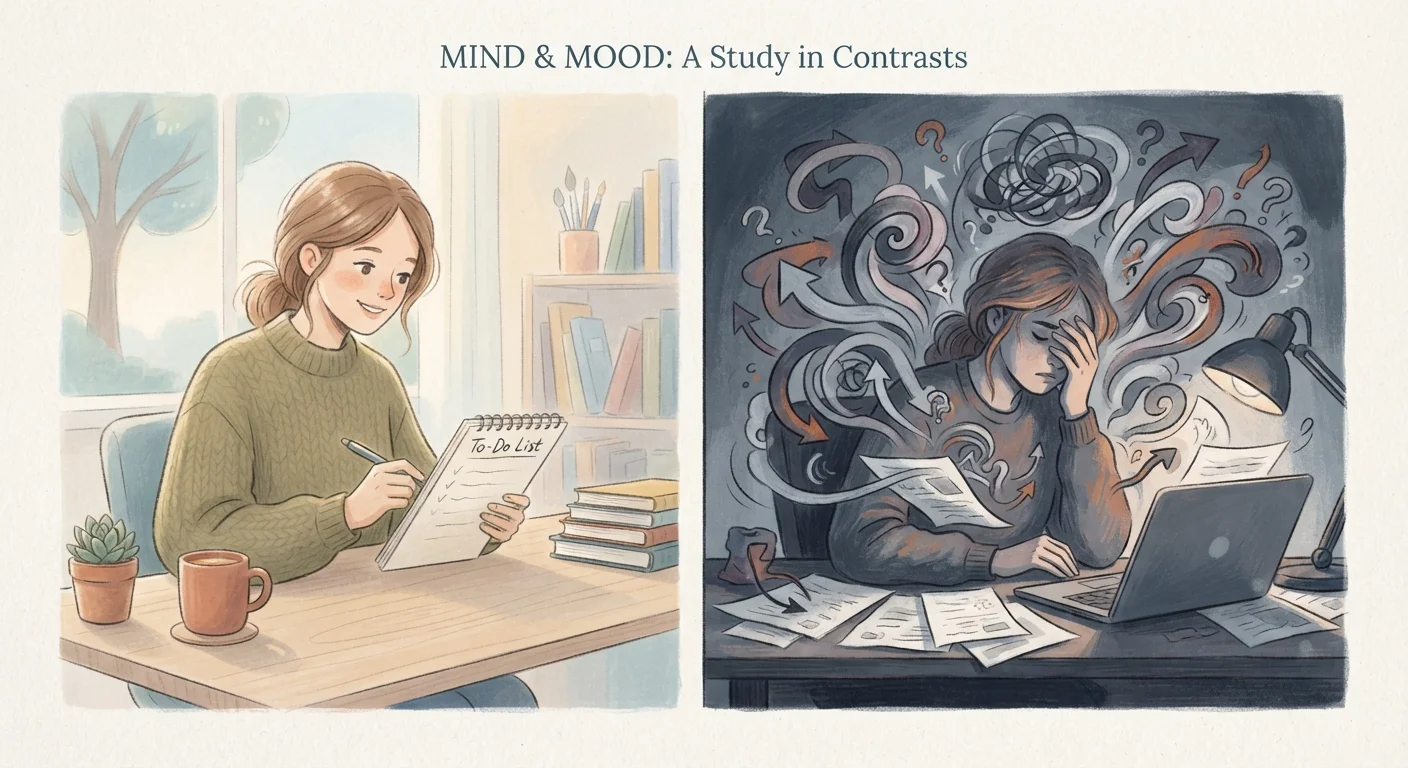
Photo credit: TrendingFaqs.com
In this article
Worry and anxiety are not the same experience. Understanding how they differ can help you respond to each one more effectively.
Key Takeaways
- Worry is typically tied to a specific, identifiable situation; anxiety is more diffuse and persistent.
- Worry usually stays in the realm of thought; anxiety involves physical symptoms like muscle tension and rapid heartbeat.
- Worry often motivates problem-solving; anxiety can interfere with daily functioning even without a clear cause.
- Both exist on a spectrum, and distinguishing them helps you choose more effective coping strategies.
- Persistent anxiety that disrupts daily life warrants evaluation by a qualified mental health professional.
What each one actually is
The words worry and anxiety appear in the same sentences so often that most people treat them as synonyms. They are not. Each describes a distinct psychological process, and the difference shapes how you can respond to each one.
Worry is a cognitive activity. It is the mind turning a specific concern over repeatedly, running through scenarios and possible outcomes. You worry about a job interview on Thursday, a bill due next week, or a friend who has not called back. The content is concrete and usually has some connection to a real situation. Psychologists sometimes describe worry as verbal and thought-based: it tends to stay in language rather than spreading into the body.
Anxiety is broader. It is an emotional and physiological state characterized by a sense of threat or unease that does not always point to a single identifiable cause. Anxiety involves the body, including muscle tension, a faster heartbeat, shallow breathing, and a heightened state of alertness. It can arrive without an obvious trigger, and it often persists after a specific worry has been resolved.
The American Psychological Association defines anxiety as an emotion characterized by feelings of tension, worried thoughts, and physical changes such as increased blood pressure. Worry is one component that can accompany anxiety, but anxiety is the larger state, not just the thought pattern.
How they behave differently in practice
One of the clearest practical differences is duration and resolution. Worry typically fades when the situation is resolved or a decision is made. Once the interview is over or the bill is paid, the specific worry dissolves. Anxiety is less responsive to resolution. Even after the stressor passes, the physical and emotional tension can remain, or shift to a new target.
Another difference is controllability. Most people can, with some effort, redirect worry: they can write a list, make a phone call, or consciously set the concern aside for later. Anxiety is harder to dismiss through direct action because it does not always have a specific action that addresses it.
Worry also tends to be future-focused and problem-oriented, which can be useful. Research published in journals on cognitive behavior therapy has noted that moderate worry can prompt people to prepare, plan, and avoid real risks. Anxiety, by contrast, can produce avoidance: the sense of threat becomes so uncomfortable that people pull back from situations, relationships, or responsibilities, which can compound the problem over time.
| Criterion | Worry | Anxiety |
|---|---|---|
| Primary form | Cognitive (thought-based) | Emotional and physiological |
| Trigger | Usually specific and identifiable | Often diffuse or unclear |
| Duration | Fades when situation resolves | Persists beyond specific events |
| Physical symptoms | Minimal | Tension, racing heart, fatigue |
| Effect on behavior | Can motivate problem-solving | Can produce avoidance |
| Controllability | Usually redirectable | Harder to dismiss directly |
For a broader, evidence-based look at how anxiety affects daily life and what clinical approaches exist, see Living With Anxiety: What the Research Actually Shows.
When worry becomes anxiety
Worry and anxiety are not fully separate categories with a sharp line between them. Chronic, uncontrolled worry is a feature of generalized anxiety disorder (GAD), the condition characterized by excessive, hard-to-control concern about many different areas of life over an extended period. In that context, what starts as ordinary worry has become part of an anxiety pattern.
The shift tends to happen when:
- Worry is frequent and difficult to stop even when you recognize it is disproportionate.
- Physical symptoms such as fatigue, headaches, or gastrointestinal discomfort accompany the mental tension.
- The concern spreads across topics rather than staying attached to one specific situation.
- Functioning at work, in relationships, or in daily routines becomes harder.
None of this is a diagnosis. If you recognize several of these patterns in yourself, a licensed mental health professional is the right person to evaluate what is happening and what would help. General information about patterns is not a substitute for that conversation.
Practical ways to respond to each
Because worry and anxiety operate through different mechanisms, they respond to somewhat different approaches.
For worry, cognitive strategies are often effective. Scheduling a specific window to think through concerns, rather than letting them run throughout the day, can reduce how much mental space they occupy. Writing concerns down and noting what action, if any, is available gives the mind a sense of completion. These approaches work precisely because worry is cognitive and tied to specific content.
For anxiety, approaches that address the body alongside the mind tend to be more useful. Slow, deliberate breathing activates the parasympathetic nervous system and reduces the physical arousal that anxiety produces. Regular physical activity has consistent support in the research literature for reducing anxiety symptoms over time. Structured therapies, particularly cognitive behavioral therapy (CBT), have strong clinical evidence for treating anxiety disorders when the pattern is persistent and impairing.
Mindfulness practice occupies a useful middle ground: it helps with both worry (by reducing rumination) and anxiety (by building tolerance for uncomfortable physical sensations without escalating them).
This article is for general informational purposes only and does not constitute medical or mental health advice. If you are experiencing persistent distress, please consult a qualified mental health professional.

Author
Health Editorial Team
Health Editorial Team is the collective byline for our editorial team and contributor network. Articles published under this byline or an editorial pen name are researched, written, and reviewed according to our editorial standards for clarity, consistency, and independence before publication.
View all articles →