
Hawaii Island vs. Maui: How to Pick the Right Island for Your Trip
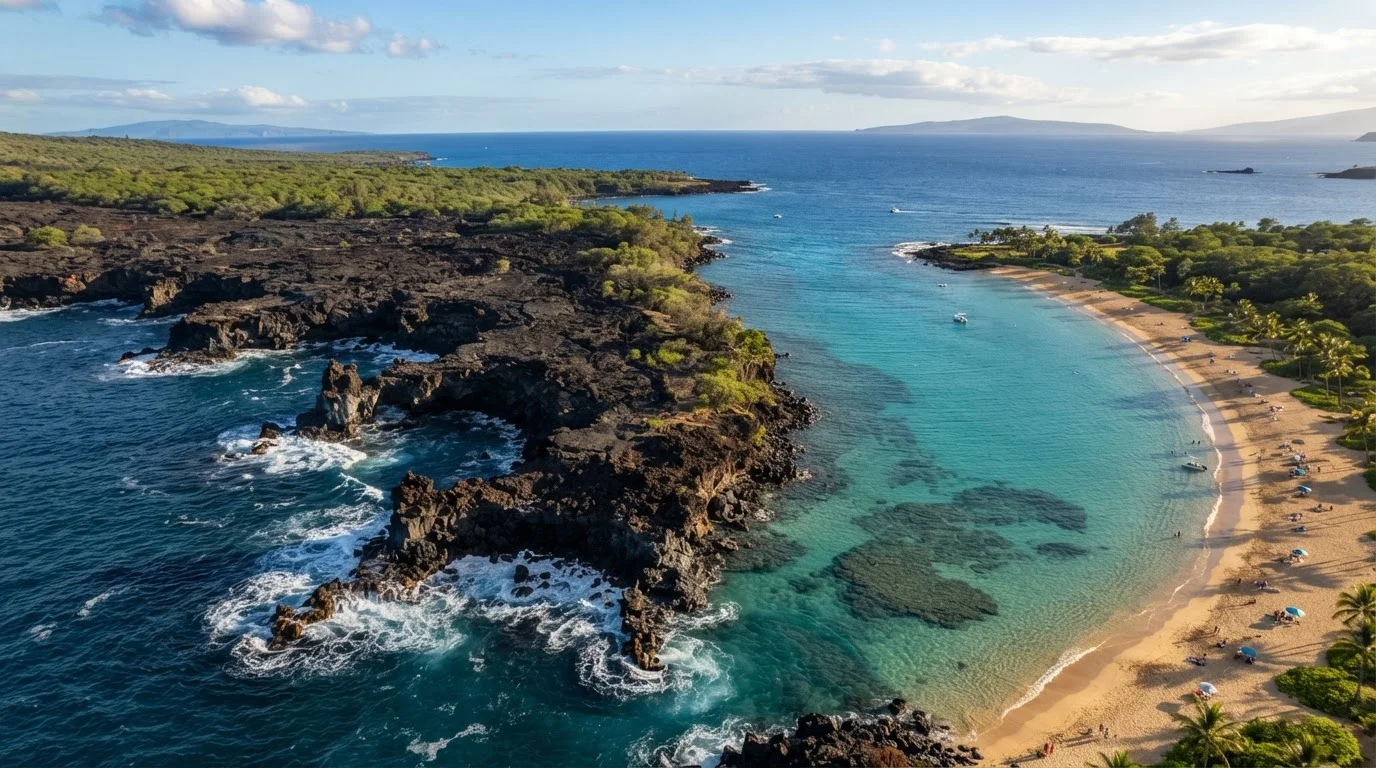
Photo credit: TrendingFaqs.com
In this article
The Big Island and Maui offer very different Hawaiian experiences. This comparison covers landscapes, activities, resort density, and traveler fit.
Key Takeaways
- Hawaii Island is more than twice the size of all other Hawaiian islands combined, giving visitors far more geographic variety.
- Maui has a higher concentration of resort areas and sandy beaches, making it easier to plan a predictable beach vacation.
- Hawaii Island is the only place in the U.S. where visitors can see active volcanic activity in a national park setting.
- Maui's Haleakala National Park draws visitors for sunrise views and the island's one active shield volcano above its crater.
- Both islands have snorkeling and whale-watching opportunities, but Maui's whale season is especially well-documented.
- Getting around Hawaii Island requires more driving time due to its size, so car rental planning matters more there.
Size, geography, and what that means for your trip
Hawaii Island covers about 4,028 square miles, which is larger than all the other Hawaiian islands put together. Maui covers roughly 727 square miles. That difference shapes everything from driving logistics to how many distinct environments you can realistically visit in one week.
On Hawaii Island, a drive from the Kohala Coast resorts to Hawaii Volcanoes National Park takes about two hours in each direction. The island holds 11 of the world's 13 climate zones, so you can move from dry, sunny coastline to dense rainforest to high-altitude desert in a single day. That range is genuinely unusual and appeals to travelers who want to see as much natural variety as possible.
Maui is more contained. The Haleakala summit, the beaches of Kihei, and the town of Lahaina are all within a manageable drive of each other. That compactness makes day-tripping straightforward, which matters for families or anyone who dislikes long car rides.
| Criterion | Hawaii Island (the Big Island) | Maui |
|---|---|---|
| Land area | ~4,028 square miles | ~727 square miles |
| Active volcano access | Yes, in national park | Dormant summit only |
| Sandy beach variety | Limited, but distinctive | Abundant, consistent |
| Resort concentration | Kohala Coast corridor | Wailea, Kaanapali, Kapalua |
| Whale-watching season | Available | Particularly strong Dec-Apr |
| Stargazing | World-class at Mauna Kea | Limited high-altitude access |
| Driving between attractions | Long distances required | Compact, shorter drives |
| Climate variety | 11 climate zones | 2 to 3 climate zones |
Beaches: what each island actually has
Maui earns its beach reputation. The island has a long stretch of well-maintained sandy beaches along its western and southern shores, from the calm waters at Kapalua Bay to the wide, swimmable stretches at Wailea. Water clarity in sheltered bays is generally reliable, and beach facilities are well-developed at most popular spots.
Hawaii Island has fewer classic sandy beaches, but the ones it has are genuinely distinct. Punaluu Black Sand Beach is formed by cooled lava and surrounded by Hawaiian green sea turtles. Green Sand Beach (Papakolea) gets its color from olivine crystals in the surrounding cinder cone and requires a hike or unpaved drive to reach. The Kohala Coast has white sand beaches as well, primarily around the resort corridor, though some are more exposed to wind and surf.
Travelers who want a predictable, lie-on-the-sand experience will generally have an easier time on Maui. Those curious about unusual coastal geology will find Hawaii Island more rewarding.
Activities beyond the beach
Hawaii Island's signature activity is visiting Hawaii Volcanoes National Park. The park contains Kilauea, one of the world's most active volcanoes, and features lava tube walks, crater rim drives, and, depending on current volcanic conditions, visible lava activity. Conditions change, so checking the National Park Service site before your trip is worth doing.
Mauna Kea on Hawaii Island draws visitors for two reasons: hiking and stargazing. The summit visitor center at around 9,200 feet elevation runs free public stargazing programs most clear evenings. The summit itself, at nearly 14,000 feet, requires a 4-wheel-drive vehicle and caution around altitude sickness.
Maui's Road to Hana is among the most traveled scenic drives in Hawaii, a 64-mile route with waterfalls, jungle pools, and coastal pullouts. Haleakala National Park draws visitors for both sunrise above the cloud line and downhill bike tours from the summit. Snorkeling at Molokini Crater, a partially submerged volcanic caldera, is popular for its visibility and marine life.
Both islands have whale-watching tours in winter, but Maui's proximity to the Auau Channel, a primary humpback habitat, gives it more consistent sightings during the December-through-April season.
Resort density and overall trip feel
Maui has a concentrated resort infrastructure, particularly in Wailea, Kaanapali, and Kapalua. Hotels, restaurants, and beach services cluster in these corridors, which makes for a convenient experience if a polished, amenity-rich vacation is what you want. The island also has a lively restaurant and nightlife scene in areas like Lahaina and Kihei.
Hawaii Island's resort corridor sits along the Kohala Coast, with high-end properties set against lava fields. Outside that area, the island is more rural. Hilo on the eastern side is a small, rain-heavy town with a farmers market and botanical gardens. The overall feel is less packaged than Maui, which some travelers prefer and others find less convenient.
Check current conditions before you book
Both Hawaii Island and Maui have seen significant changes to local infrastructure in recent years. The 2023 Lahaina wildfires caused extensive damage to one of Maui's most historic towns, and portions of the area are still in recovery. On Hawaii Island, volcanic activity and lava flow conditions at Hawaii Volcanoes National Park can shift with little notice. Verify current access, park status, and community guidance through official state tourism and National Park Service resources before finalizing plans.
Both islands had parts of their infrastructure affected by natural events in recent years, including lava flows on Hawaii Island and the 2023 wildfires that significantly damaged the town of Lahaina on Maui. Conditions are continuing to change, so checking current travel advisories and official sources before booking is genuinely useful.

Author
Travel Editorial Team
Travel Editorial Team is the collective byline for our editorial team and contributor network. Articles published under this byline or an editorial pen name are researched, written, and reviewed according to our editorial standards for clarity, consistency, and independence before publication.
View all articles →