
LinkedIn Profile vs. Resume: When Each One Matters Most
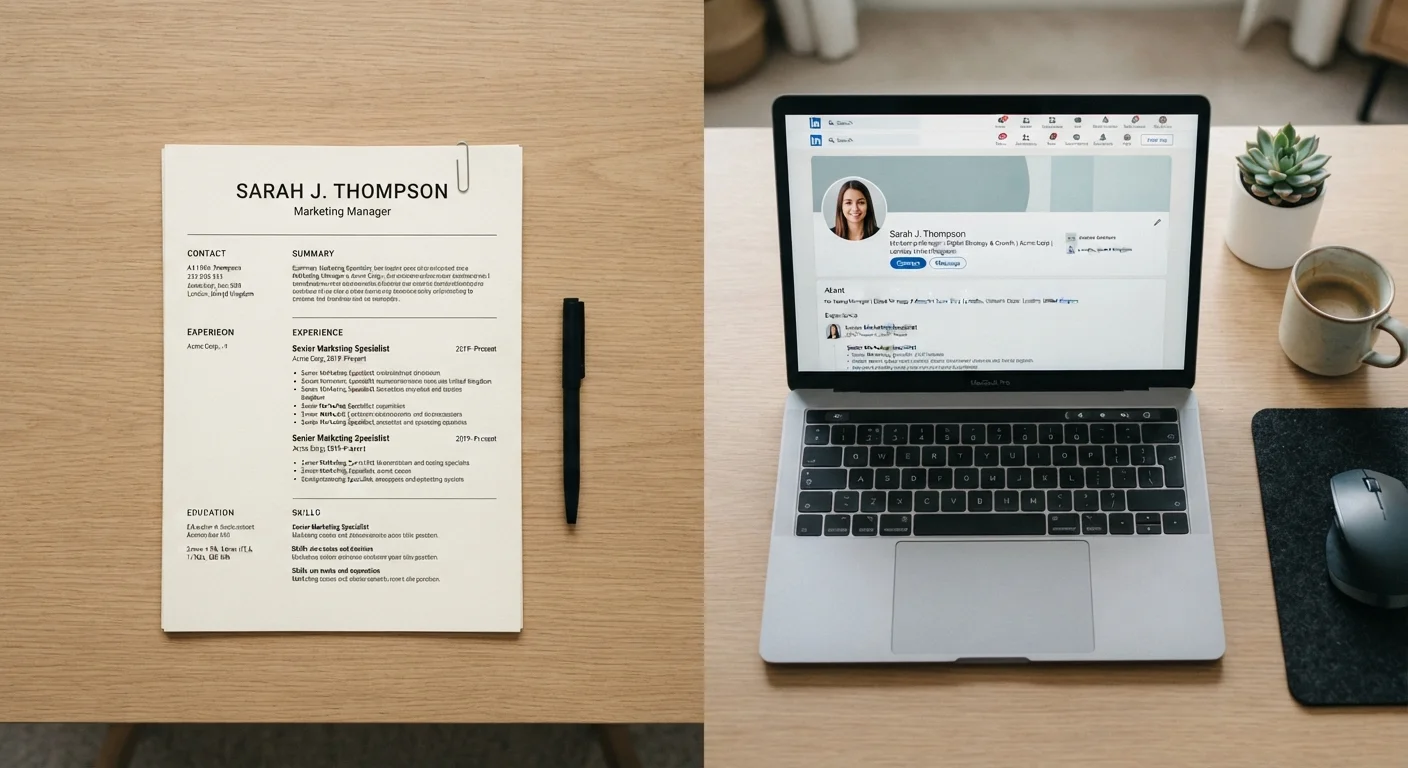
Photo credit: TrendingFaqs.com
In this article
Your LinkedIn profile and resume serve different purposes. Learn when recruiters rely on one over the other and how to align them strategically.
Key Takeaways
- Recruiters use LinkedIn to search and vet candidates, but hiring managers review resumes to make decisions.
- A resume should be tailored to each job posting; a LinkedIn profile can be broader and more narrative.
- Gaps or inconsistencies between the two documents raise red flags for hiring teams.
- LinkedIn allows endorsements, media, and recommendations that a resume cannot include.
- Both documents must be current and consistent to support a credible job search.
How recruiters actually use each document
Most hiring processes involve both documents, but at different stages and for different purposes. Recruiters typically discover candidates through LinkedIn first, using filters for job title, location, skills, and years of experience. The profile acts as a public record that anyone with a LinkedIn account can find at any time.
Once a candidate moves past initial screening, the resume takes over. Hiring managers and interview panels use it to assess specific qualifications against the job description. Applicant tracking systems (ATS), which many mid-size and large employers use to filter applications, parse resumes rather than LinkedIn profiles. That means the format, keywords, and structure of your resume directly affect whether a human ever reads it.
| Criterion | LinkedIn Profile | Resume |
|---|---|---|
| Primary audience | Recruiters searching proactively | Hiring managers reviewing applicants |
| Format | Narrative, expandable, multimedia | Concise, structured, static |
| Tailoring | Broad, keyword-optimized | Customized per job posting |
| Social proof | Endorsements and recommendations | Not applicable |
| ATS compatibility | Not parsed by most ATS systems | Parsed directly by ATS |
| Privacy | Public by default | Sent only when you choose |
| Best moment to use | Before and during job search | When applying to a specific role |
Understanding this division of labor helps you invest your editing time in the right place. Polishing your LinkedIn headline matters most before you start your search. Tailoring your resume matters most the moment you find a role worth applying for.
What each document can and cannot do
A resume is a controlled, static snapshot. You choose exactly what appears, you format it for scannability, and you deliver it at a moment of your choosing. Its constraint is also its strength: a well-structured one-page or two-page document communicates focus. Recruiters typically spend a few seconds on an initial scan, so clean formatting and specific accomplishments with numbers carry real weight.
A LinkedIn profile has more surface area. The About section allows a first-person narrative. The Featured section lets you attach work samples, articles, or presentations. Skills can be endorsed by colleagues, and written recommendations from managers or clients appear directly on your profile. These social proof signals do not fit on a resume and can meaningfully influence how a recruiter evaluates you.
The tradeoff is control. Anyone can view your profile, including your current employer. Anything you write there is public by default unless you adjust privacy settings. A resume goes only where you send it.
Keeping both documents consistent without making them identical
Dates, job titles, and employer names must match exactly across both documents. A gap or discrepancy that appears minor to you can stop a hire. Background check services compare the information candidates provide against public sources, and LinkedIn is one of the first places they look.
Consistency does not mean copying text. Your resume bullet points should use tight, metric-driven language: "Reduced onboarding time by 30% by redesigning the training curriculum." Your LinkedIn summary can expand on that same experience in a tone that sounds like a person talking, because recruiters read it differently than a formal application.
One practical approach: write your resume entries first, then use the underlying story behind each bullet to write your LinkedIn About section. This keeps the facts aligned while letting each format do what it does well.
Practical steps to align and strengthen both
Start with your current job title. Make sure the title on LinkedIn matches what appears on your resume and what your employer would confirm in a reference check. If your internal title is informal, use the industry-standard equivalent in your LinkedIn headline with a note about the actual title in the body.
Next, audit your skills sections. LinkedIn allows up to 50 skills. Prioritize the 10 to 15 that are most relevant to the roles you want, because those are the terms recruiters filter by. Your resume should include the same core skills, either in a dedicated skills section or woven into your bullet points.
Request at least two or three LinkedIn recommendations from direct managers or close colleagues. A resume cannot carry this kind of third-party validation, and a profile with several strong recommendations stands out from one with none.
Finally, set a calendar reminder to review both documents every six months or after any significant project or promotion. Stale information on either document can cost you opportunities you never knew you were being considered for.

Author
Careers Editorial Team
Careers Editorial Team is the collective byline for our editorial team and contributor network. Articles published under this byline or an editorial pen name are researched, written, and reviewed according to our editorial standards for clarity, consistency, and independence before publication.
View all articles →